Home
Xiaomi
News
Xiaomi Unveils Custom Chip For Driver-Assist Features
Xiaomi revealed new powerful in-house chips this week that will power everything from cell phones to electric cars.
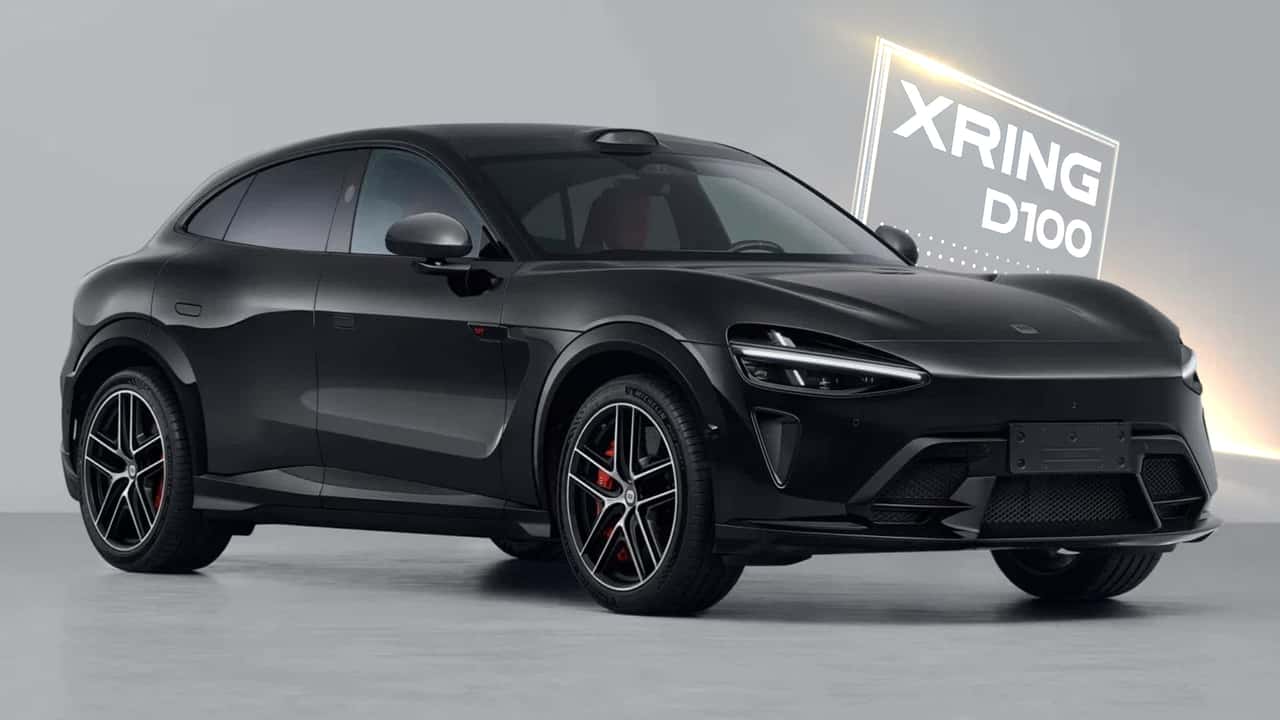
Photo by: Xiaomi
Rob Stumpf 
By: Rob Stumpf
Aug 24, at 4:37pm ET
Add InsideEVs as a preferred source in Google
- (https://twitter.com/intent/tweet?url=https%3A%2F%2Finsideevs.com%2Fnews%2F805921%2Fxiaomi-self-driving-chip-nvidia%2F&text=Xiaomi%20Unveils%20Custom%20Chip%20For%20Driver-Assist%20Features&via=InsideEVs)
- copy
Share
Comment
- Xiaomi has unveiled its first in-house chips dedicated to AI and self-driving.
- The automaker currently relies on Nvidia for its hardware, though that could change as early as next year.
- This makes Xiaomi the latest Chinese automaker to ditch U.S.-sourced chips in favor of self-produced silicon.
Xiaomi's next move in cars is happening somewhere you'll never see it: buried deep inside the dashboard, under a heatsink, doing the ungodly amount of math required advanced driver-assistance features.
On Monday, Xiaomi unveiled a family of in-house silicon, including the Xring D100 chip designed for "intelligent driving." This makes Xiaomi the latest EV maker investing in home-grown AI inference rather than relying on a market cornered by Nvidia.
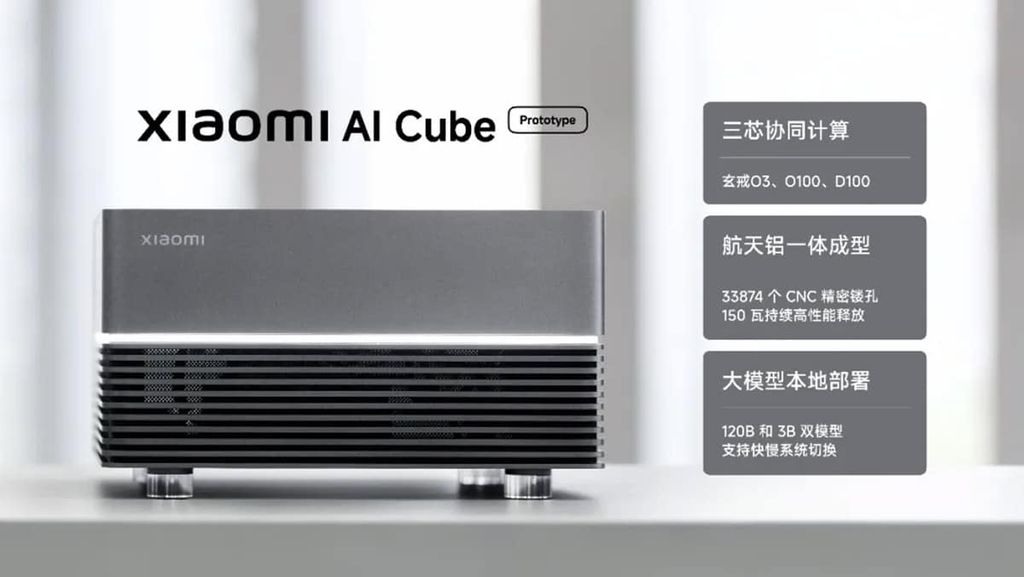
Photo by: Xiaomi
Xiaomi's SU7 and YU7 EVs have historically relied on Nvidia's hardware, beginning with the older Drive Orin system and now the Drive Thor. That decision locked the Chinese brand in with the American GPU producer at a time when the entire world is looking at the same company for chips to power the insatiable appetite for AI.
Designing chips in-house comes with a few potential upsides. The D100 could be a buffer against soaring AI chip costs. It means Xiaomi gets to tune its hardware to its own sensor, software, and driving models. It also means that Xiaomi gets more control over cost, supply, and development timing.
Other Chinese automakers like BYD, Nio, Xpeng have begun exploring in-house silicon development too. This is extremely important as key players in the U.S. AI arms race, like Anthropic's Dario Amodei, call for stricter export control of AI compute. Here in the States, Rivian recently announced a custom chip for advanced driving features that is debuting in the R2. Tesla has been designing its own chips to run Full Self-Driving (Supervised) for years.
Let's nerd out on the Xiaomi silicon's specs for a moment.
The D100 packs a 20-core CPU and a 16-core NPU. Xiaomi says that this is the first chip build in mainland China on a 3-nanometer chip production process (meaning it can potentially offer more efficiency and processing density in a single chip). It also supports up to 160 gigabytes of unified memory—enough to run up to a 200-billion-parameter model directly on the device.
For comparison, Nvidia's current Thor hardware is offered with a 14-core, 4-nanometer processor and up to 128GB of memory. Tesla's current Hardware 4 offers 16GB of memory on a single chip and is built on a 7nm process. Its upcoming Hardware 5 is targeting an even more efficient 2nm manufacturing process and is expected to feature up to 144GB of memory.
It's important to point out that it is possible for a system to offer more compute capacity but have lower overall performance due to optimization of overall efficiency. It's not clear if that's the case with Xiaomi's hardware compared to Nvidia or, say, Tesla, because Xiaomi has yet to reveal the system's actual Trillions of Operations Per Second (TOPS), which is a key measurement of speed and performance in AI inference.

Stay informed with our newsletter every weekday
back
Subscribe For more info, read our Privacy Policy & Terms of Use.
What do you think?
View
Comments
Xiaomi says that it's poured more than $3 billion into the development of its new hardware. That might seem like an expensive way to avoid buying another company's chips, but Xiaomi's top brass clearly believe the independence outweighs the R&D costs.
That figure includes the Xring D100, as well as its O100 AI acceleration chip and O3 System-on-Chip (SoC) platform meant for mobile devices. The O3 is slated to debut in Xiaomi's upcoming 18 Fold cell phone, and the D100 and O100 are planned for commercial applications starting next year.
More Self-Driving Tech News
 Waymo’s New Robotaxi Minivans Are Now Taking Paying Passengers
Tesla Says It Will Need To Build Micro Factories To Retrofit Old Cars For FSD
China’s 'Smart Car' Tech Could Get To The U.S. Through Volkswagen
We want your opinion!
What would you like to see on Insideevs.com?
Take our 3 minute survey.
- The InsideEVs team
Share this Story
- (https://twitter.com/intent/tweet?url=https%3A%2F%2Finsideevs.com%2Fnews%2F805921%2Fxiaomi-self-driving-chip-nvidia%2F&text=Xiaomi%20Unveils%20Custom%20Chip%20For%20Driver-Assist%20Features&via=InsideEVs)
- copy
GO TO COMMENTS
(
)
Got a tip for us? Email: tips@insideevs.com
View all comments ( )
Trending
Diesel Prices Are Surging. This Electric Trucking Company Is Seeing More Interest
Tesla Opens Self-Driving Cybercab Orders To 'Select Customers' At $29,990
Solid-State Cells Can Make The U.S. Competitive In Batteries Again: CEO
I Took A Rivian R2 On A Camping Trip To The Middle Of The Desert
Latest Stories
- Diesel Prices Are Surging. This Electric Trucking Company Is Seeing More Interest Nov 14 - News -
- Tesla Opens Self-Driving Cybercab Orders To 'Select Customers' At $29,990 Nov 13 - News -
- Do EVs Wear Tires Faster? Here's What The Studies Show Nov 13 - Features -
- The VW ID. Buzz Is Getting A New Job As A Robotaxi Nov 13 - News -
- Audi A4 EV Delayed Amid VW Group Financial Troubles: Report Nov 13 - News -
- Tesla Just Killed Its Cheapest All-Wheel-Drive Model Y Nov 13 - News -
- A Record Number Of Uber Miles Are Happening In EVs Nov 13 - News -
RECOMMENDED FOR YOU
How Cheap Chinese EVs Are Sneaking Around Europe's Tariffs
Do EVs Wear Tires Faster? Here's What The Studies Show
Diesel Prices Are Surging. This Electric Trucking Company Is Seeing More Interest
Audi A4 EV Delayed Amid VW Group Financial Troubles: Report
Tesla Opens Self-Driving Cybercab Orders To 'Select Customers' At $29,990
Tesla Just Killed Its Cheapest All-Wheel-Drive Model Y
The VW ID. Buzz Is Getting A New Job As A Robotaxi