Home
Genesis
News
Genesis Will First Add Hybrids To Its Lineup, Then Range Extenders
The company is backtracking on its previously announced plan to only introduce electric vehicles after 2025.
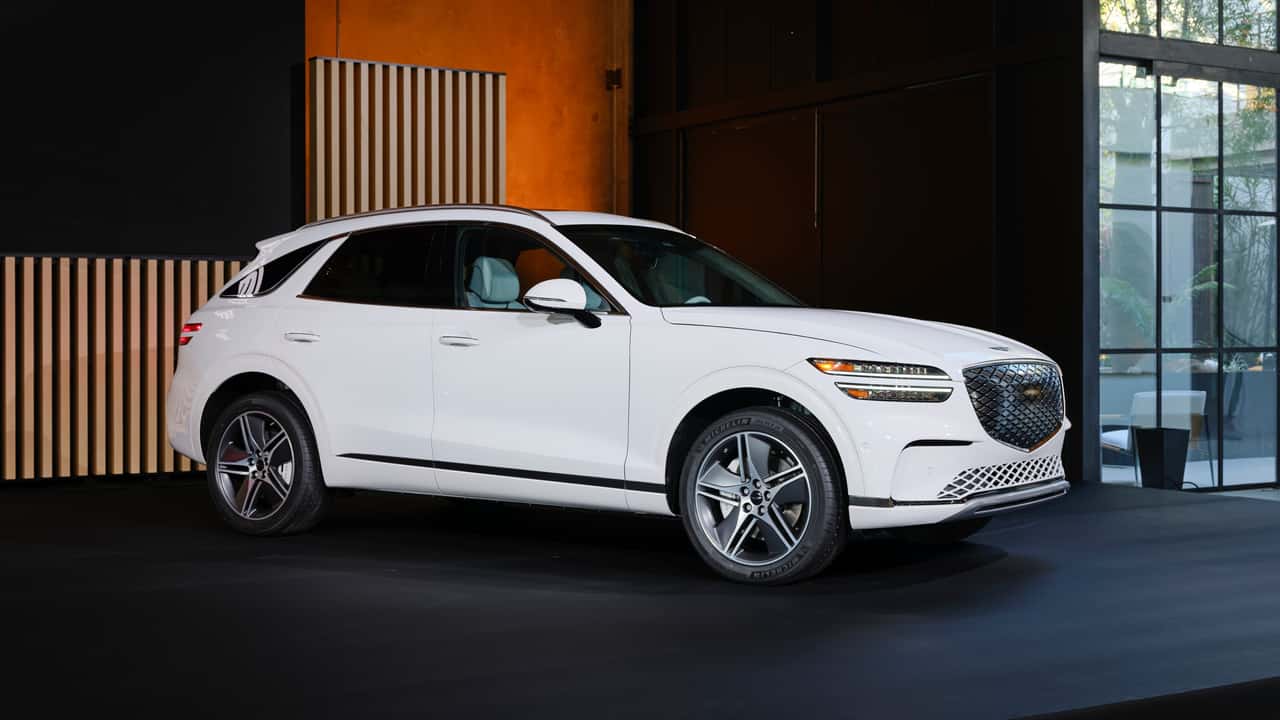
Photo by: Genesis
Andrei Nedelea 
By: Andrei Nedelea
Dec 4, 2024 at 1:00pm ET
Add InsideEVs as a preferred source in Google
- (https://twitter.com/intent/tweet?url=https%3A%2F%2Finsideevs.com%2Fnews%2F743249%2Fgenesis-range-extenders-coming-2027%2F&text=Genesis%20Will%20First%20Add%20Hybrids%20To%20Its%20Lineup%2C%20Then%20Range%20Extenders&via=InsideEVs)
- copy
Share
Comment
- Genesis will add hybrid powertrains into its ICE lineup prioritizing SUVs.
- The first in this new line of hybrids will be based on the GV70 and it will arrive sometime next year.
- Starting in 2027, Genesis will also begin offering extended-range powertrains.
Genesis isn’t going ahead with its plan to only introduce electric cars after 2025 (and go EV-only after 2030), and it’s going to add hybrid powertrains for most combustion-powered models in its lineup starting next year. Once that’s done, the next step won’t be full EVs (of which it already offers several) but range extenders instead, which the manufacturer expects will be really popular in America.
When Hyundai’s CEO Jaehoon Chang spoke during the automaker’s CEO Investor Day event earlier this year, he said extended-range EVs (EREVs) are seen as “the same as EVs by North American environmental standards.” American regulators do indeed see EREVs as being closer to a pure EV than a hybrid, even though that’s basically what they are.
Range extenders, like the upcoming Ram 1500 Ramcharger or the Mazda MX-30 R-EV, have a smaller battery pack compared to an EV. This allows manufacturers to sell them cheaper since they have fewer (expensive) lithium-ion battery cells. You can look at a range extender as one step above a plug-in hybrid, usually offering more range than a PHEV, but not quite an EV.
Gallery: 2026 Genesis Electrified GV70

18


Source: Genesis
Earlier this year, the Korean Car Blog published a report stating that Genesis was going to start building a range-extender GV70 in late 2026 and begin selling it in the U.S. in 2027. The hybrid version of the GV70 will come first, likely next year, followed by the EREV, making the GV70 (pictured) the first Genesis model to offer combustion, hybrid, range extender and full electric powertrains.
The GV70 for the U.S. market is currently being built at the Hyundai manufacturing facility in Alabama, but the range extender will reportedly roll off the assembly line at the manufacturer’s Georgia plant, which currently builds the Ioniq 5 and Ioniq 9.
Hyundai previously announced that the Georgia facility would also produce hybrids, but it seems now that the manufacturer was likely referring to range extenders.
More On Range Extenders
Mazda Plans New EV For 2027, Maybe With Range Extender
Scout Motors' EV Gas Range Extender May Give It A Big Edge
Thor’s New Extended Range RV Packs Off-Grid Power For Days, 500 Miles Of Range
Hyundai Mulls Extended-Range Electric Pickup After Cybertruck Teardown
This Sleek Chinese Wagon Runs The BMW i3 Playbook
Leapmotor C10 Mid-Size Electric SUV: Better Than A Tesla Model Y?
We don’t know the specifics of the GV70 EREV, but Hyundai has already shared some more general details. We know that even though EREV versions will have a smaller battery, they will have more combined range than pure EVs by including a full tank of fuel. Hyundai says its EREVs will go up to 560 miles (900 km), and it also wants to sell them in China.
What do you think?
View
Comments
The manufacturer wants to sell 40% hybrids globally by 2028, or about 1.33 million vehicles. Offering vehicles with varying levels of electrification (from none to full) is a smart approach by Hyundai that broadens the appeal of its vehicles, and even though it will be first implemented for its Genesis luxury brand, it will likely also be used for Hyundai and Kia too.
More manufacturers will follow and partly shift to range extenders, with the market for pure EVs not looking quite as strong as projections were suggesting a few years ago. Porsche has announced that it wants to add gasoline back into the mix going forward, while Mercedes-Benz reportedly ended its research project into extended-range EVs, although it too has backtracked on its EV plans—the new CLA, which will be available as a hybrid or EV shows Mercedes' midterm strategy.

Get the best news, reviews, columns, and more delivered straight to your inbox.
back
Subscribe For more info, read our Privacy Policy & Terms of Use.
We want your opinion!
What would you like to see on Insideevs.com?
Take our 3 minute survey.
- The InsideEVs team
Share this Story
- (https://twitter.com/intent/tweet?url=https%3A%2F%2Finsideevs.com%2Fnews%2F743249%2Fgenesis-range-extenders-coming-2027%2F&text=Genesis%20Will%20First%20Add%20Hybrids%20To%20Its%20Lineup%2C%20Then%20Range%20Extenders&via=InsideEVs)
- copy
GO TO COMMENTS
(
)
Got a tip for us? Email: tips@insideevs.com
View all comments ( )
Trending
I Tried Mercedes' Answer To Tesla FSD. Here's How It Went
Driven: BMW's Electric M3 Is The Real Deal
Tesla Opens Self-Driving Cybercab Orders To 'Select Customers' At $29,990
Tesla Model 3 Maintenance Guide: What Needs Servicing And What Doesn't
Latest Stories
- The Electric Baby Land Rover Defender And Range Rover GT Will Begin Production Next Year Nov 16 - News -
- Mercedes Is Bringing Hands-Free Driving To Certain U.S. Highways In 2027 Nov 16 - News -
- Tesla Keeps Killing Cars. Now It Wants To Build Cybercabs In Germany Nov 16 - News -
- Tesla Model 3 Maintenance Guide: What Needs Servicing And What Doesn't Nov 16 - Repair / Maintenance -
- Audi A2 e-tron First Drive: Does The Iconic Nameplate Live Up To The Hype? Nov 16 - First Drives -
- I Tried Mercedes' Answer To Tesla FSD. Here's How It Went Nov 16 - Tech Review -
- BMW Just Started Making EV Batteries In America. The New iX5 Will Be First In Line Nov 16 - Manufacturing / Production -
RECOMMENDED FOR YOU
The Best EV Lease And Finance Deals In November 2026
Tesla Model 3 Maintenance Guide: What Needs Servicing And What Doesn't
The Electric Baby Land Rover Defender And Range Rover GT Will Begin Production Next Year
Audi A2 e-tron First Drive: Does The Iconic Nameplate Live Up To The Hype?
Mercedes Is Bringing Hands-Free Driving To Certain U.S. Highways In 2027
I Tried Mercedes' Answer To Tesla FSD. Here's How It Went
Tesla Keeps Killing Cars. Now It Wants To Build Cybercabs In Germany