
Renault’s Latest EV Was Designed For The Army’s Toughest Missions
The Forefront Concept is completely silent, making it an ideal choice for high-risk, hard-to-reach areas.
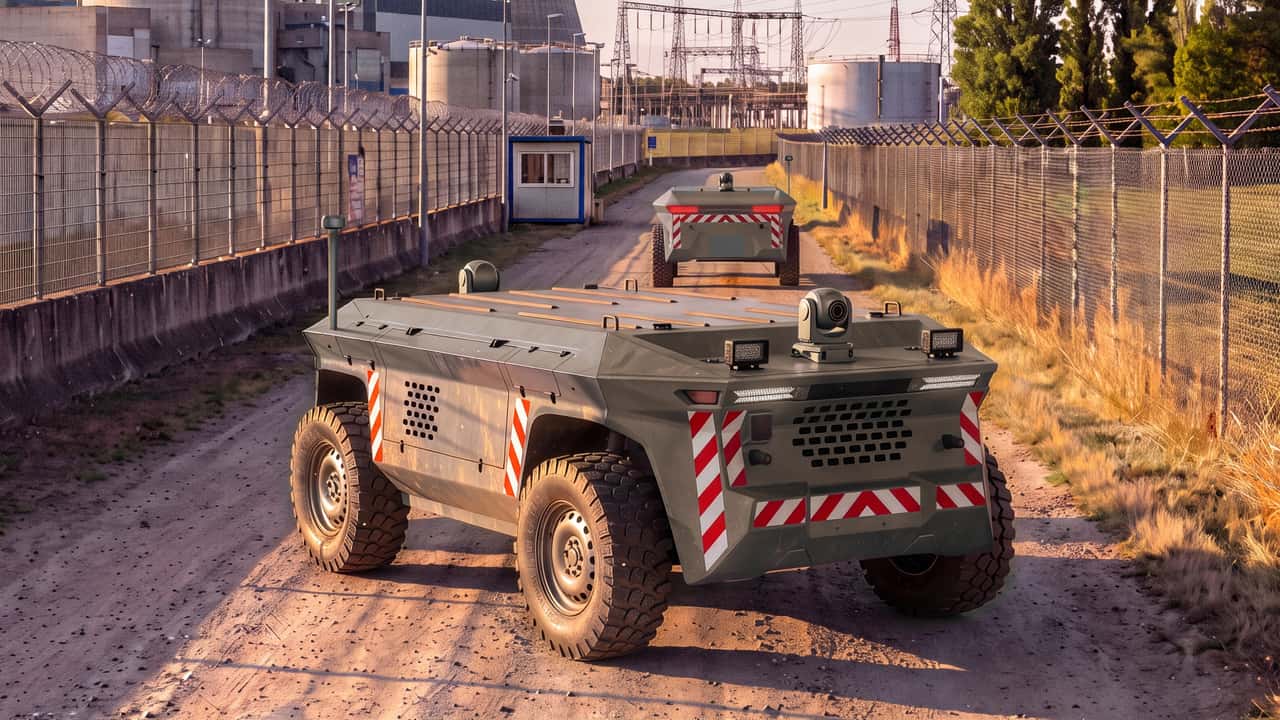

- France’s Renault Group has developed a remotely operated electric vehicle for military use.
- The Forefront Concept uses proven automotive components to keep costs down.
- It features dual-motor all-wheel drive, four-wheel steering, and roughly 250 miles of range.
Renault Group has developed an all-electric, all-wheel-drive modular electric vehicle for military operations. Dubbed the Forefront Concept, it uses proven automotive components to keep costs down and boost production times.
The electric field vehicle was designed for both defense and civilian applications, and can be remotely operated by a human or sent into high-risk, hard-to-reach areas on its own, using its autonomous driving capabilities.

Renault Group built the vehicle, while John Cockerill designed the EV’s remote-operation and autonomy functions. The defense company listened to input from the French armed forces, which will use the Forefront Concept in several exercises and trials in the coming weeks to put it through its paces. After the trials, Renault will further refine the concept based on operational feedback.
Powered by two electric motors, the cab-less field machine has four-wheel steering and can travel in complete silence in some of the harshest terrain. The French automaker said the projected range is roughly 250 miles (400 kilometers) on a full charge, but an add-on range extender can further extend the driving distance. That said, Renault didn’t say how much energy the on-board battery or range extender can store.
With a 2,200-pound (1-tonne) payload, the dual-motor buggy can be used for logistics support, anti-drone operations, fire support, and evacuation. In highly disputed areas, sending in a vehicle that doesn’t have a human behind a steering wheel means fewer potential casualties. At the same time, the Forefront Concept can be used by companies that need a safe way to access dangerous sites.
Gallery: Renault Group and John Cockerill Forefrunt Concept

Renault Group said the remotely-operated EV was designed to be quickly put into production at competitive costs. There’s no price yet, but if there’s enough interest, we might see the boxy R/C car for adults become a reality sooner rather than later.
As the world’s battlefields continue to transform into places where machines do the heavy lifting while being controlled from hundreds of miles away by human operators, vehicles like Renault’s Forefront will become increasingly ubiquitous.
Renault Group isn’t alone in this game
Ukrainian companies have churned out thousands of remotely controlled robots in the fight against Russia. The models range from pint-sized mini-tanks to big drones that can airlift wounded soldiers.
Over in the United States, the Army has recently awarded an 18-month contract to American Rheinmetall to develop and deliver the next generation of uncrewed ground vehicles (UGV). The cab-less prototype is based on Harbinger’s extended-range EV platform, which uses a gas engine as a generator for an all-electric powertrain.
With a full tank of gas and a full battery, the military-grade plug-in hybrid can deliver over 500 miles of range, with the big benefit being its ability to shut off the gas engine for silent operations. Compared to Renault’s new concept, the Harbinger-based UGV platform can accommodate larger and heavier payloads of up to 18,000 lbs.
More Electric Military Vehicles

RECOMMENDED FOR YOU
Renault’s E-Space Concept Brings Back The Minivan With A 1980s-Inspired Twist
Nearly 1 In 3 Hyundais Sold In October Was A Hybrid As High Gas Prices Push Buyers To Pivot
Used EVs Are Selling Like Hotcakes. The Fastest Movers May Surprise You
Finding And Using BP Pulse EV Chargers Just Got A Whole Lot Easier
Defying Online Backlash, The Ferrari Luce EV Is Already Sold Out Through 2027
Mercedes-Benz Is Giving Up On Its EV Charging Network In Europe
Gas Vs. Electric: Which BMW Goes Further Without Stopping For Fuel?