
The Tiny Smart EV Is Back With An Answer To Its Biggest Weakness
The electric #2 keeps the city-friendly dimensions, but its battery and charging upgrades should make venturing farther less daunting.
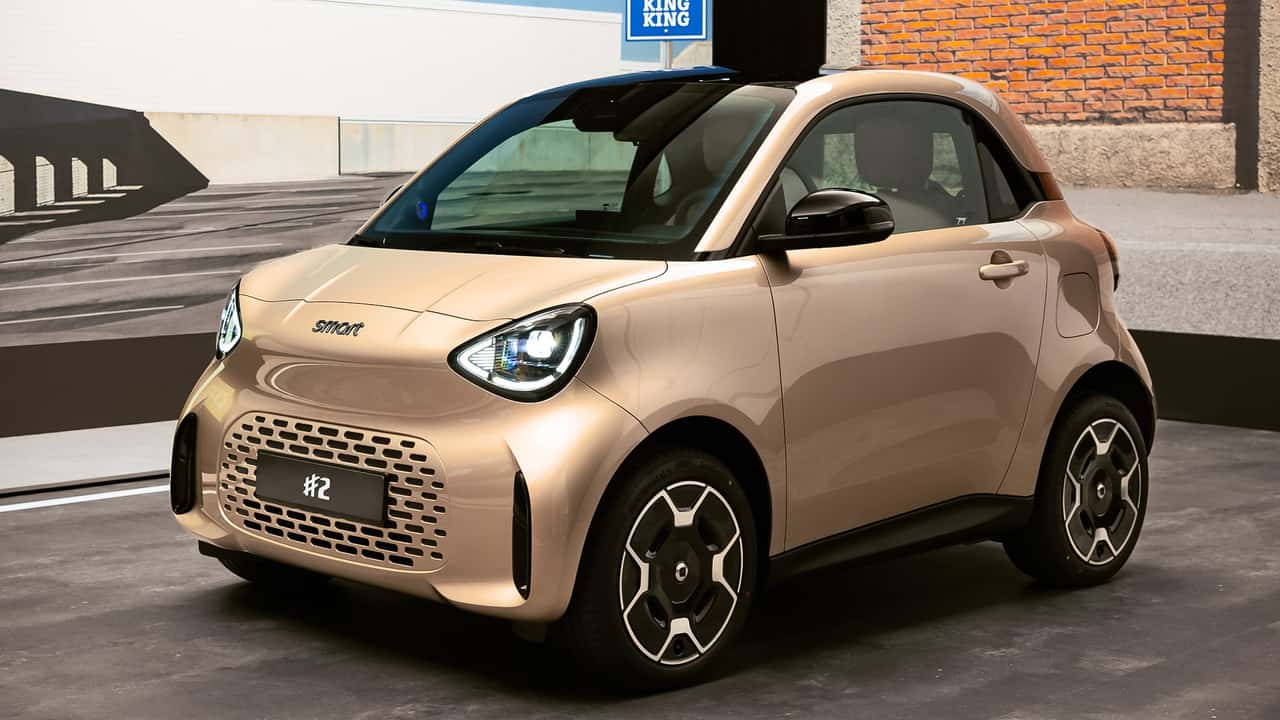

- The Smart #2 targets 180 miles of WLTP range, roughly doubling its electric predecessor’s reach.
- A claimed 20-minute 10–80% charge should make trips beyond the city less daunting.
- The Fortwo successor keeps its tiny footprint and two-seat layout, with rear-wheel drive and a tight turning circle.
The electric Smart Fortwo was always excellent at getting through the city. Going much farther than your usual urban rounds required a lot more planning because of its limited electric range. Its replacement, the Smart #2, aims to keep the first part while making the second far less of a concern.
Unveiled at the Paris Motor Show, the new Smart two-seater targets 180 miles (290 kilometers) of combined WLTP range from its 35.8-kilowatt-hour LFP battery. That’s roughly twice the range of the outgoing EQ Fortwo, whose battery measured just 17.6 kWh.
Charging should be significantly better, too. Smart claims 65-kilowatt DC charging and a 20-minute stop to go from 10% to 80%, and vehicle-to-load (V2L) lets the car power external devices.
Gallery: Smart #2 (2026)

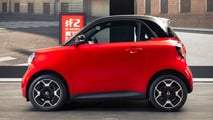
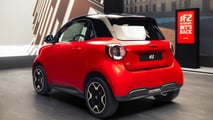
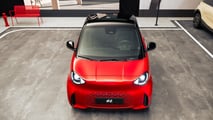
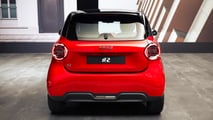


This is also a welcome return to familiar territory. Smart’s transformation into a Mercedes-Benz–Geely joint venture brought Chinese production and a lineup of much larger vehicles. Smart has changed a lot, but Mercedes handled the design of the new two-seater (though it will also be built in China).
At 108.1 inches (2.75 meters) long, the #2 remains properly tiny with a familiar wheel-at-each-corner stance. Its short wheelbase gives it a curb-to-curb turning circle radius of just 22.8 feet (6.95 meters). It still has only two seats, but a split-opening tailgate and a surprisingly cavernous trunk (for its footprint) should handle daily shopping needs.
It rides on the dedicated Electric Compact Architecture and features a rear motor producing 80 horsepower. It has wider rear tires and a five-link rear suspension, which Smart promises will balance agility and comfort.

It also features an updated occupant-safety structure, now called the Tridion Cell Evo, that forms the greenhouse. It comes with adaptive cruise control, with Stop & Go and Highway Assist functions as standard.
The cabin has a bench-style seat, a 10.1-inch touchscreen in the middle of the dashboard, and an 8.8-inch display opposite the driver. A dashboard “Smart Pillar” holds all the accessories, and the layout gives this little car a lot of its own personality without trying too hard to copy the original’s style.
With twice the battery, the new Smart #2 retains its predecessor’s footprint and style while addressing its biggest shortcoming. Its design and proportions are still instantly recognizable, but the extra range and faster charging should make it easier to choose for more than just the shortest trips. It also needs to be cheap enough to make sense.
More Smart EV Stories
RECOMMENDED FOR YOU
Smart’s New City EV Is Already Off To A Great Start
Hyundai Says Hydrogen Cars Aren’t Dead. Finding Customers Is Another Story
VW’s EV Factory Is Now Taking Cars Apart. There’s Money In It
The Rivian R1T Is An Awkward Fit For Britain. This Reviewer Loved It Anyway
Tesla's Cybercab Is Built In A Radical New Way. Here's How It Works
Rivian Has Invested Millions In 3D Printing. Its Biggest Plans Are Still Ahead
Volkswagen Can't Afford Its Upcoming Electric Golf Right Now