Home
News
News
This 80 MPH Chevy Bolt Range Test Shows The Value Of Not Speeding
Who woulda thought that driving slower gets you better range. You might be surprised by how much, though.
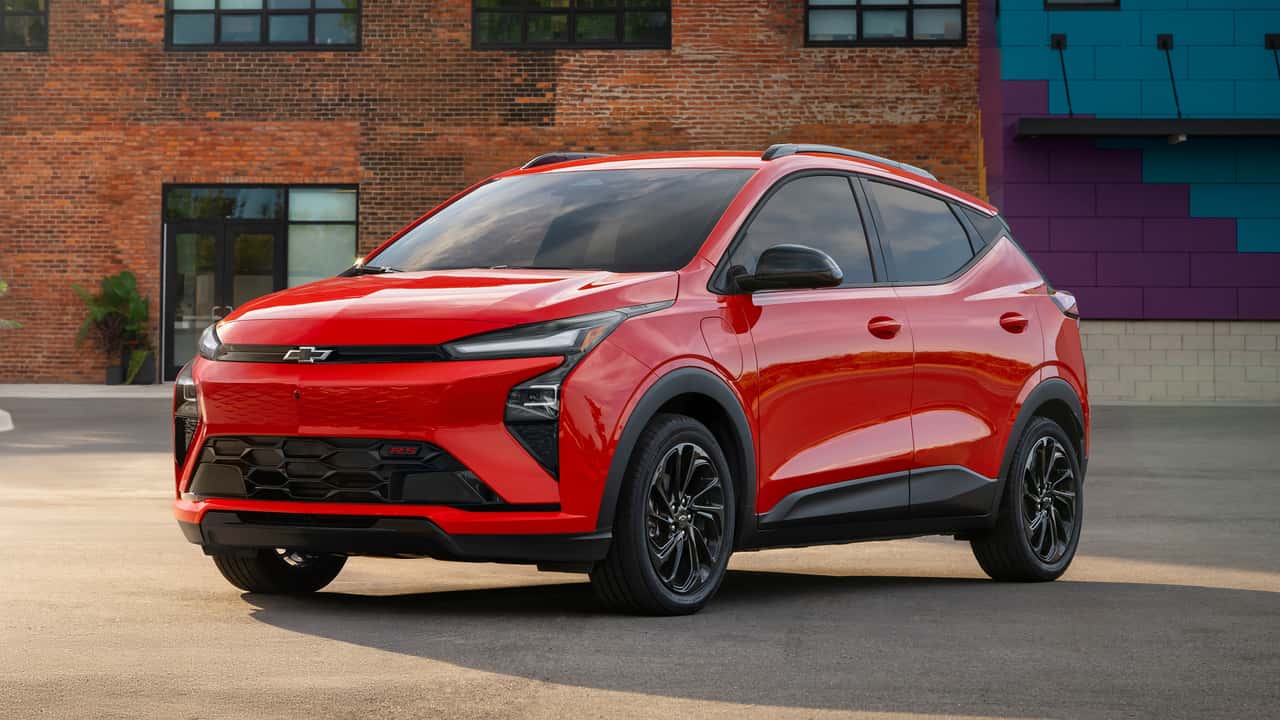
Photo by: Chevrolet
Nico DeMattia 
By: Nico DeMattia
Sep 11, at 8:00am ET
Add InsideEVs as a preferred source in Google
- (https://twitter.com/intent/tweet?url=https%3A%2F%2Finsideevs.com%2Fnews%2F807884%2Fchevy-bolt-highway-range-test%2F&text=This%2080%20MPH%20Chevy%20Bolt%20Range%20Test%20Shows%20The%20Value%20Of%20Not%20Speeding&via=InsideEVs)
- copy
Share
Comment
- Tom Moloughney of the State of Charge YouTube channel range-tested the 2027 Chevy Bolt at 70 mph and 80 mph.
- The results show how much speed can impact your highway range.
- At 70 mph, the Bolt managed to travel a very solid 243 miles before hitting 1%.
Driving slower for increased efficiency isn't a new idea. In the '70s, during the gas crisis, the U.S. government effectively dropped the national speed limit to 55 mph in an explicit bid to conserve fuel. In today's electric era, that tactic is just as effective—if not more—State of Charge host Tom Moloughney highlighted while testing a Chevy Bolt.
While gas cars are more efficient on the highway than in the city, the opposite is true for EVs. Higher speeds and more wind resistance make EVs drain their batteries quicker. There's also the charging issue. Sacrificing some fuel economy to get to a destination faster in a combustion vehicle may be well worth it, since pumping gas is quick and stations are abundant. In an EV, eking out extra range can make the difference between needing to plan another 30-minute charging stop.
As little as a 10-mph drop in speed can make a big difference on your EV's range, Moloughney found.
He took a 2027 Chevy Bolt LT on a highway test, averaging 70 mph, and drove 243 miles. Then, one of his team members drove the same car, on a different day, on the same route, averaging 80 mph. Both range tests took the car from 100% state-of-charge (SoC) down to 1%. So it was an apples-to-apples test that ran the battery all the way through its capacity both times.
Both tests used about the exact same amount of energy, 66.6 kWh in the 70 mph test and 66.3 kWh in the 80 mph test. The 80 mph test, unsurprisingly, averaged fewer miles/kWh, with 3.2 versus the 70 mph test's 3.6. That might not seem like a big difference but over the course of more than 200 miles, that small difference becomes a big one.
While averaging 70 mph on the highway, the Chevy Bolt was able to go 243.1 miles, handily beating the EPA's estimated range of 232 miles. However, while averaging 80 mph on the highway, its total range dropped to 219.3 miles. Again, that might not seem like a huge difference, but 24 additional miles can be a lifesaver when you're running low on battery.

What's interesting is how the efficiency changed as the battery level dropped. The efficiency gap between the two speeds actually shrunk as the SoC went down. For the first 25%, the 70 mph test drove almost 11 additional miles. From 75-50%, that difference shrunk to 6.9 miles. From the final 25-1%, the 70 mph test only saw 4.7 additional miles. So the biggest difference in efficiency between 70 mph and 80 mph happens at the top of the battery's SoC.
What do you think?
View
Comments
It's obvious that averaging a lower speed nets you more range. But to see the numbers and know just how much more efficient 70 mph is, you can adjust your driving style accordingly. By the same token, the range penalty in this particular car for going a little faster isn't actually all that high. Moloughney ran a similar test in the beefy Escalade IQ, comparing its performance at 60 mph and 70 mph. At 60 mph, he was able to go a whopping 607 miles, a full 125 miles more than he managed at the higher speed. The Escalade IQ's size and brick-like design definitely play a role there.
In the Bolt, at least, it's good to know that if you're running low on battery and need to get to a charger, you can give it a bit of extra speed to hurry up and you won't waste as much battery as you might think.
Here be some similar stories
 He Charged A Chevy Bolt At A Hyundai Dealer. Then He Got A $418 Bill
2027 Chevrolet Bolt 70-MPH Range Test: Here’s How Far America’s Cheapest EV Goes
We want your opinion!
What would you like to see on Insideevs.com?
Take our 3 minute survey.
- The InsideEVs team
Share this Story
- (https://twitter.com/intent/tweet?url=https%3A%2F%2Finsideevs.com%2Fnews%2F807884%2Fchevy-bolt-highway-range-test%2F&text=This%2080%20MPH%20Chevy%20Bolt%20Range%20Test%20Shows%20The%20Value%20Of%20Not%20Speeding&via=InsideEVs)
- copy
GO TO COMMENTS
(
)
Got a tip for us? Email: tips@insideevs.com
View all comments ( )
Trending
I Tried Mercedes' Answer To Tesla FSD. Here's How It Went
Driven: BMW's Electric M3 Is The Real Deal
Tesla Opens Self-Driving Cybercab Orders To 'Select Customers' At $29,990
Tesla Model 3 Maintenance Guide: What Needs Servicing And What Doesn't
Latest Stories
- BYD Is Winning Over Japan With A Very Japanese Kind Of EV Nov 17 - News -
- Bentley’s First EV Is Already Sold Out, And Production Hasn’t Even Started Nov 17 - Sales -
- The Electric Baby Land Rover Defender And Range Rover GT Will Begin Production Next Year Nov 16 - News -
- Mercedes Is Bringing Hands-Free Driving To Certain U.S. Highways In 2027 Nov 16 - News -
- Tesla Keeps Killing Cars. Now It Wants To Build Cybercabs In Germany Nov 16 - News -
- Tesla Model 3 Maintenance Guide: What Needs Servicing And What Doesn't Nov 16 - Repair / Maintenance -
- Audi A2 e-tron First Drive: Does The Iconic Nameplate Live Up To The Hype? Nov 16 - First Drives -
RECOMMENDED FOR YOU
BYD Is Winning Over Japan With A Very Japanese Kind Of EV
Bentley’s First EV Is Already Sold Out, And Production Hasn’t Even Started
The Electric Baby Land Rover Defender And Range Rover GT Will Begin Production Next Year
Tesla Model 3 Maintenance Guide: What Needs Servicing And What Doesn't
Mercedes Is Bringing Hands-Free Driving To Certain U.S. Highways In 2027
Audi A2 e-tron First Drive: Does The Iconic Nameplate Live Up To The Hype?
Tesla Keeps Killing Cars. Now It Wants To Build Cybercabs In Germany