Home
News
Pricing
EV Depreciation Is Still Brutal. But Hybrids Should Give Us Hope
Seven years ago, hybrids suffered terrible depreciation. Now they depreciate less than gas cars.
Mack Hogan 
By: Mack Hogan
Apr 3, at 4:14pm ET
Add InsideEVs as a preferred source in Google
- (https://twitter.com/intent/tweet?url=https%3A%2F%2Finsideevs.com%2Fnews%2F792049%2Fevs-vs-hybrid-depreciation%2F&text=EV%20Depreciation%20Is%20Still%20Brutal.%20But%20Hybrids%20Should%20Give%20Us%20Hope&via=InsideEVs)
- copy
Share
Comment
- The average five-year-old EV has lost 57.2% of its value, new data from iSeeCars shows.
- That means they depreciate far faster than the industry average—41.8% over five years.
- Hybrids used to depreciate faster than the market, but are now the slowest-depreciating powertrain type. That shows that this condition probably won't affect EVs in the long-term.
Depreciation is a sneaky force. Ask buyers about their car budget and they'll complain about payments, insurance, gas, and repairs. But few ever bring up depreciation until it's time to sell, even though it is by far the most expensive part of car ownership. Unfortunately, it hits even harder if you have an EV, as new data from iSeeCars shows.
The company's newest Depreciation Study found that the average EV loses a brutal 57.2% of its value over its first five years of ownership, far worse than either the overall average (41.8%) or the figure for hybrids (35.4%). Electric models account for half of the top ten fastest depreciating models. Of the 25 models with the lowest depreciation, zero are fully electric.

Early Volkswagen ID.4s have seen severe depreciation. Five-year-old models lost 62.1% of their value on average.
But hybrids do make that list, and serve as an important success model for EVs. They currently depreciate less than gas or electric vehicles, with 35.4% depreciation over five years. But just seven years ago, that wasn't the case. iSeeCars data shows that hybrid depreciation peaked 56.7% in 2019, just 0.5% less than EV depreciation right now. It's not like hybrid technology has fundamentally changed over that timeline, so what happened?
I'd posit that this represents a natural curve for a new technology. When a technology is novel, it is perceived as both niche and untested. But as consumers get more familiar with the technology, they get more open to its benefits, and eventually recognize that it is superior to their existing equipment. Often these changes are driven by improvements in the technology itself, as kinks are ironed out and costs are driven down.
More Used EV Stories
Used EVs Are The Cheapest Cars To Own: Study
New EV Sales Dropped 28%. But Used EVs Are Booming.
Five Underrated Used EVs To Help You Through The Impending Gas Crisis
Want A Great EV Deal? Buy One That's A Year Old
That's a big win for everyone on the new-tech market, whatever it is. But if you get on board during the early adopter phase, your second-hand value is going to plummet. Early in a technology's life is often when we see the most rapid pace of improvement, which means a five-year-old model goes out of date quickly.
This tracks with what we saw in the hybrid market. While Toyota has been steadily playing the game for two decades, a five-year-old hybrid from 2019 was a 2014 model year. Back then, most companies were not making compelling hybrids, with early German and American designs arriving to lukewarm receptions. Of course they depreciated quickly.
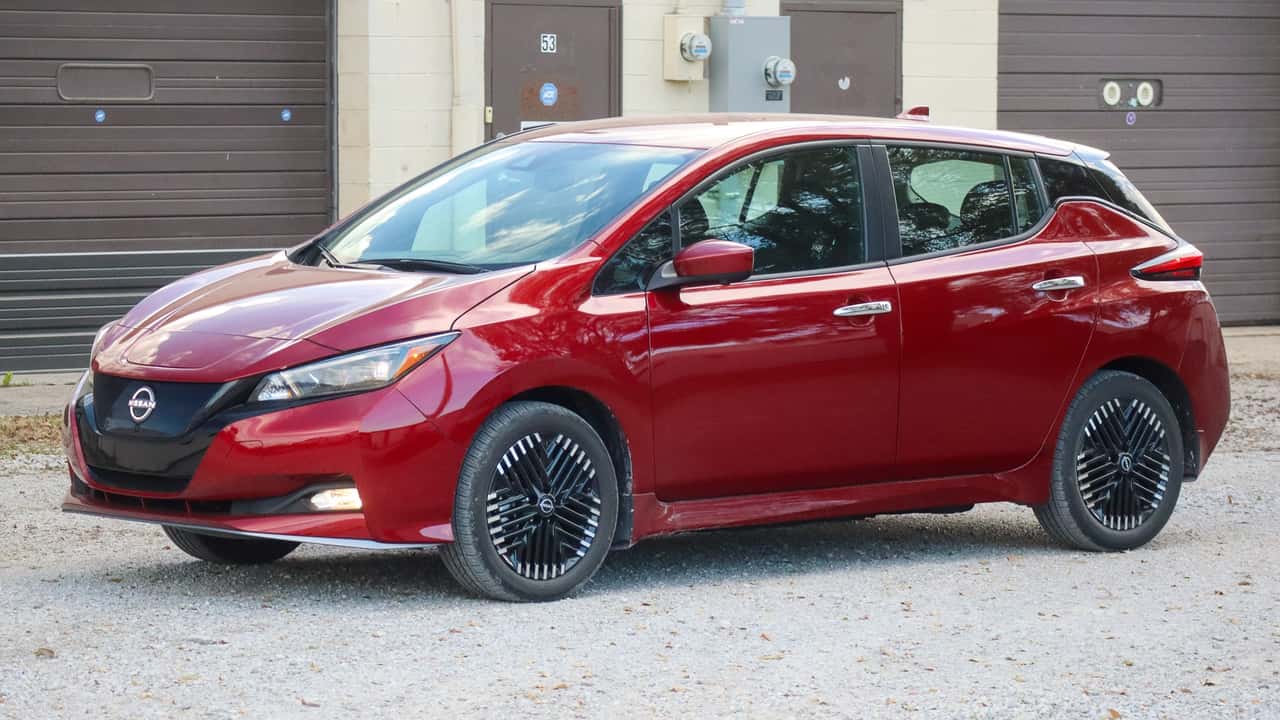
The EV market is in that phase right now. A five-year-old EV today is a 2021 model, which means you're either getting a wholly obsolete model or a model that's had steady improvements since. It's no wonder that the Nissan Leaf tops the list, for instance, losing 63.1% of its value over five years. A base model 2021 Leaf offers 149 miles of range, utterly forgettable styling, out-of-date technology, and a charging port that doesn't work with the vast majority of fast-charging infrastructure. Nobody is paying close to sticker price for that, especially when you factor in that the sticker price was likely offset by a $7,500 federal tax credit, which itself spurs depreciation.
Other EVs that were on sale in 2021—including the Hyundai Ioniq 5, Tesla Model Y, and Ford Mustang Mach-E—have received dramatic improvements, price cuts, and new trims since then. Ultra-cheap lease deals fueled by the federal tax credit have also created a glut of used EVs, driving down prices.
So does this mean consumers don't want used EVs? I'd say absolutely not, just as consumer disdain for used hybrids in 2019 didn't signal long-term aversion but short-term skepticism. Many buyers still fret over EV battery longevity, even though they shouldn't, and others are looking for the latest and greatest.
What do you think?
View
Comments
In the long term, this should level out, as EVs are cheaper to maintain and likely to last longer than the average gas vehicle. In the short term, it means you can get a great deal on an excellent used EV. Read about your best options here.
Contact the author: Mack.Hogan@InsideEVs.com
We want your opinion!
What would you like to see on Insideevs.com?
Take our 3 minute survey.
- The InsideEVs team
Share this Story
- (https://twitter.com/intent/tweet?url=https%3A%2F%2Finsideevs.com%2Fnews%2F792049%2Fevs-vs-hybrid-depreciation%2F&text=EV%20Depreciation%20Is%20Still%20Brutal.%20But%20Hybrids%20Should%20Give%20Us%20Hope&via=InsideEVs)
- copy
GO TO COMMENTS
(
)
Got a tip for us? Email: tips@insideevs.com
View all comments ( )
Trending
Lucid Is Slashing $15,000 Off The Gravity, But The Deal Won’t Last Long
The Remnants Of The Electric Saab That Never Was Are Going Up For Auction
What We Both Thought After Driving The Rivian R2
Aptera Finally Built Its First Car For Customer Delivery
Latest Stories
- The Mercedes-Benz EQS Sedan, EQS SUV, And EQE SUV Soldier On For 2027 Nov 23 - Pricing -
- The U.S. Let Volvo Keep Selling Cars. Polestar Got A No. What About Mercedes? Nov 22 - News -
- Tesla FSD V15 Makes Your Drive Look Like Grand Theft Auto Nov 22 - News -
- Waymo Is Recalling Its Robotaxis Because They're Not Great At Dealing With Human Instructions Nov 21 - Autonomous Vehicles -
- This EV-Swapped 1967 Porsche 912 Has 300 HP And A Split Battery Pack Nov 21 - News -
- This Plug-In Hybrid SUV Towed A Boeing 747 On Only 2 Wheels. Yes, Really. Nov 21 - Towing -
- BYD's Latest SUV Can Hide Its Steering Wheel When You Don't Need It Nov 20 - China -
RECOMMENDED FOR YOU
Lucid Is Slashing $15,000 Off The Gravity, But The Deal Won’t Last Long
The U.S. Let Volvo Keep Selling Cars. Polestar Got A No. What About Mercedes?
The 2027 Kia EV9 Gets Some Standard Features That Used To Be Optional
Tesla FSD V15 Makes Your Drive Look Like Grand Theft Auto
Kia EV3 Lease Deals Are Here, And It’s Cheaper Than The Chevy Bolt And Nissan Leaf
Waymo Is Recalling Its Robotaxis Because They're Not Great At Dealing With Human Instructions
The Volkswagen ID.4 Just Got Up to $12,500 Cheaper in America