Home
News
Range / Efficiency
Here's How Much Range EVs Really Lose After 150,000 Miles
The data is clear: battery anxiety doesn’t match battery reality.
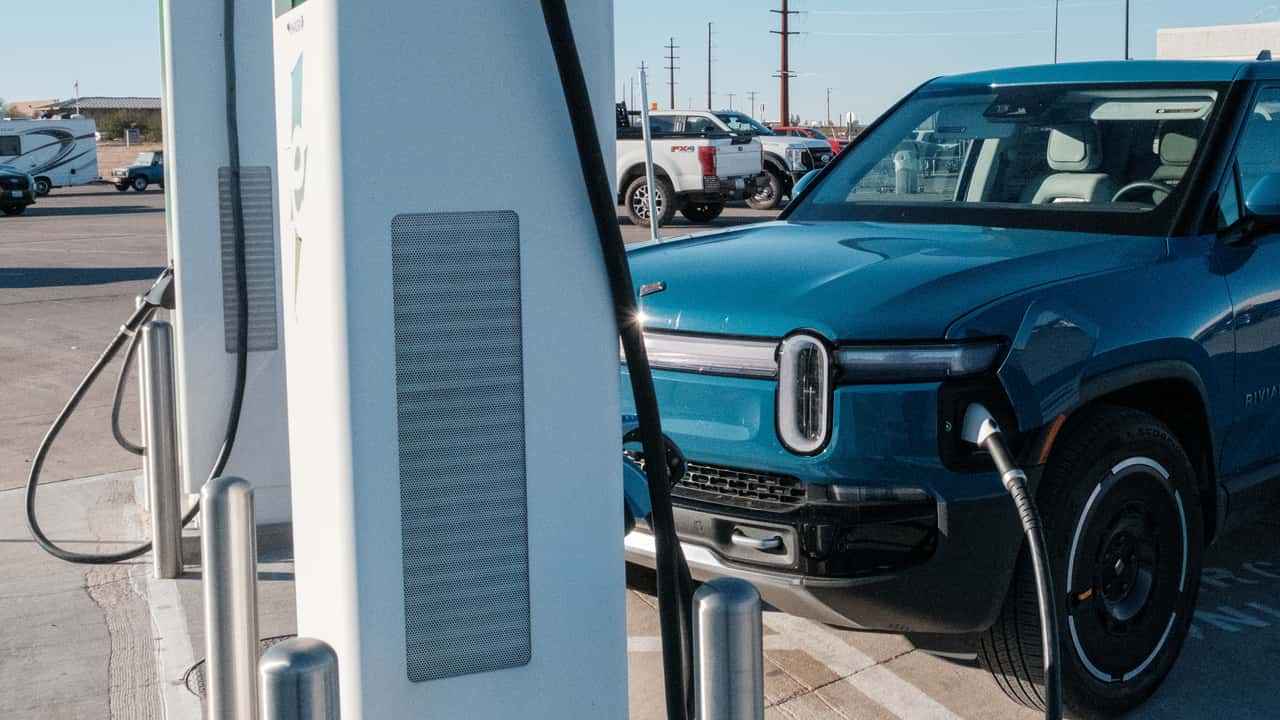
Photo by: Patrick George
Iulian Dnistran 
By: Iulian Dnistran
Jan 29, at 3:19am ET
Add InsideEVs as a preferred source in Google
- (https://twitter.com/intent/tweet?url=https%3A%2F%2Finsideevs.com%2Fnews%2F785794%2Fev-range-loss-high-mileage-data%2F&text=Here%27s%20How%20Much%20Range%20EVs%20Really%20Lose%20After%20150%2C000%20Miles&via=InsideEVs)
- copy
Share
Comment
- Battery degradation on high-mileage EVs is not as big a deal as some might make you believe.
- Real-world data shows that EVs with over 150,000 miles are still going strong, with minimal degradation.
- Older EVs are more affected by high mileage, but technology has made newer models more resilient.
Battery degradation is inevitable, but new research shows that EV owners should just keep driving their cars without worrying about what happens with the thousands of cells that live in their cars’ floors.
That’s because battery degradation–especially in newer electric cars–is pretty much a non-issue, according to real-world data published by Recurrent, a company that keeps track of thousands of EVs worldwide using its telematics tools.

Research shows that EV batteries are now much more resilient than their predecessors, thanks to new technologies.
Photo by: Suvrat Kothari
The firm looked at the real-world range of about 1,000 EVs in its portfolio that have driven over 150,000 miles since new. Then, Recurrent compared these findings with the real-world range of the vehicles when they were new, instead of the official EPA estimates.
The findings clearly show that technology has progressed a lot in the past decade, to the point where a 2023 model has 10% less degradation than a 2012 EV with the same mileage on the clock. Advancements in battery chemistry, thermal management and buffer strategies have made third-generation electric cars extremely dependable.
The oldest EVs with 150,000 miles in Recurrent’s analysis are from 2012, while the newest were made in 2023. The 14-year-old cars on the chart have an average range retention of 81%, but the trend is obviously toward better range retention. With every passing year, EVs have gotten better at retaining their original range to the point where 2023 models still deliver 91% of their original capacity.

Recurrent's data shows that even EVs from 14 years ago with 150,000 miles on the clock can still deliver 80% of their original real-world range.
Photo by: Recurrent

Stay informed with our newsletter every weekday
back
Subscribe For more info, read our Privacy Policy & Terms of Use.
In other words, if a Tesla Model 3 could drive 270 miles when it was new in 2023, it can now do roughly 247 miles on a full charge. Similarly, if a brand-new 2015 Nissan Leaf could deliver a real-world range of around 67 miles, it can do about 56 miles on a full charge after 150,000 miles. Besides being hit harder by degradation, older EVs also have much smaller-capacity batteries to begin with.
This data goes hand in hand with another set of findings from Recurrent, which show that the latest wave of EVs, which were made starting in 2022, have an extremely low battery replacement rate.
According to the telematics company, only 0.3% of Gen 3 EVs have so far needed a battery replacement. That’s a big improvement from the previous generation of cars, built between 2017 and 2021, where 2% of the batteries have been replaced (excluding recalls). It’s also a huge leap in the right direction compared to the first mass-produced EVs–think first-generation Nissan Leaf and Volkswagen E-Golf–where 8.5% of the batteries have been replaced.
What do you think?
View
Comments
In an interview with InsideEVs last year, Liz Najman, Recurrent's director of market insights, said that the company now expects new EVs to not have any issues for at least 15 years. "I think that car companies have really figured out how to keep lithium-ion batteries safe and happy," she said.
Problems can still occur, but when they do, it’s usually because of a manufacturing defect that will be handled through a recall, so owners don’t have to pay out of pocket for the repairs. And even if something happens out of warranty, battery prices and the costs to replace them have gone down significantly in the past 10 years.
More Stories Like This
'Cell-To-Body': How The Volvo EX60's Battery Changes How EVs Are Built
Why LFP Became The Dominant EV Battery Chemistry In 2025
High-Power Fast Charging Is The Leading Cause Of EV Battery Degradation: Report
The Facts Are In: You Shouldn't Worry About EV Battery Replacements
We want your opinion!
What would you like to see on Insideevs.com?
Take our 3 minute survey.
- The InsideEVs team
Share this Story
- (https://twitter.com/intent/tweet?url=https%3A%2F%2Finsideevs.com%2Fnews%2F785794%2Fev-range-loss-high-mileage-data%2F&text=Here%27s%20How%20Much%20Range%20EVs%20Really%20Lose%20After%20150%2C000%20Miles&via=InsideEVs)
- copy
GO TO COMMENTS
(
)
Got a tip for us? Email: tips@insideevs.com
View all comments ( )
Trending
Diesel Prices Are Surging. This Electric Trucking Company Is Seeing More Interest
Tesla Opens Self-Driving Cybercab Orders To 'Select Customers' At $29,990
Solid-State Cells Can Make The U.S. Competitive In Batteries Again: CEO
I Took A Rivian R2 On A Camping Trip To The Middle Of The Desert
Latest Stories
- Tesla Drivers Can Now Plug In And Charge Automatically at Ionna Stations Nov 16 - Charging -
- Diesel Prices Are Surging. This Electric Trucking Company Is Seeing More Interest Nov 14 - News -
- Tesla Opens Self-Driving Cybercab Orders To 'Select Customers' At $29,990 Nov 13 - News -
- Do EVs Wear Tires Faster? Here's What The Studies Show Nov 13 - Features -
- The VW ID. Buzz Is Getting A New Job As A Robotaxi Nov 13 - News -
- Audi A4 EV Delayed Amid VW Group Financial Troubles: Report Nov 13 - News -
- Tesla Just Killed Its Cheapest All-Wheel-Drive Model Y Nov 13 - News -
RECOMMENDED FOR YOU
This BMW i3 Drove 3,658 Miles. It Needed Less Than 3 Hours Of Charging
Diesel Prices Are Surging. This Electric Trucking Company Is Seeing More Interest
This Mercedes Went 539 Miles On A Charge. Is Range Anxiety Finally Dead?
Tesla Opens Self-Driving Cybercab Orders To 'Select Customers' At $29,990
How Far Can Your EV Go After It Says It’s Empty?
Do EVs Wear Tires Faster? Here's What The Studies Show
The BMW iX3 Destroyed The Rivian R2 In A Highway Range Test