Home
News
Tesla vs. The Rest: Which EVs Have The Most Range After 3 Years
Range loss isn't a big issue in modern EVs, but some brands do better than others, according to a study from Recurrent.
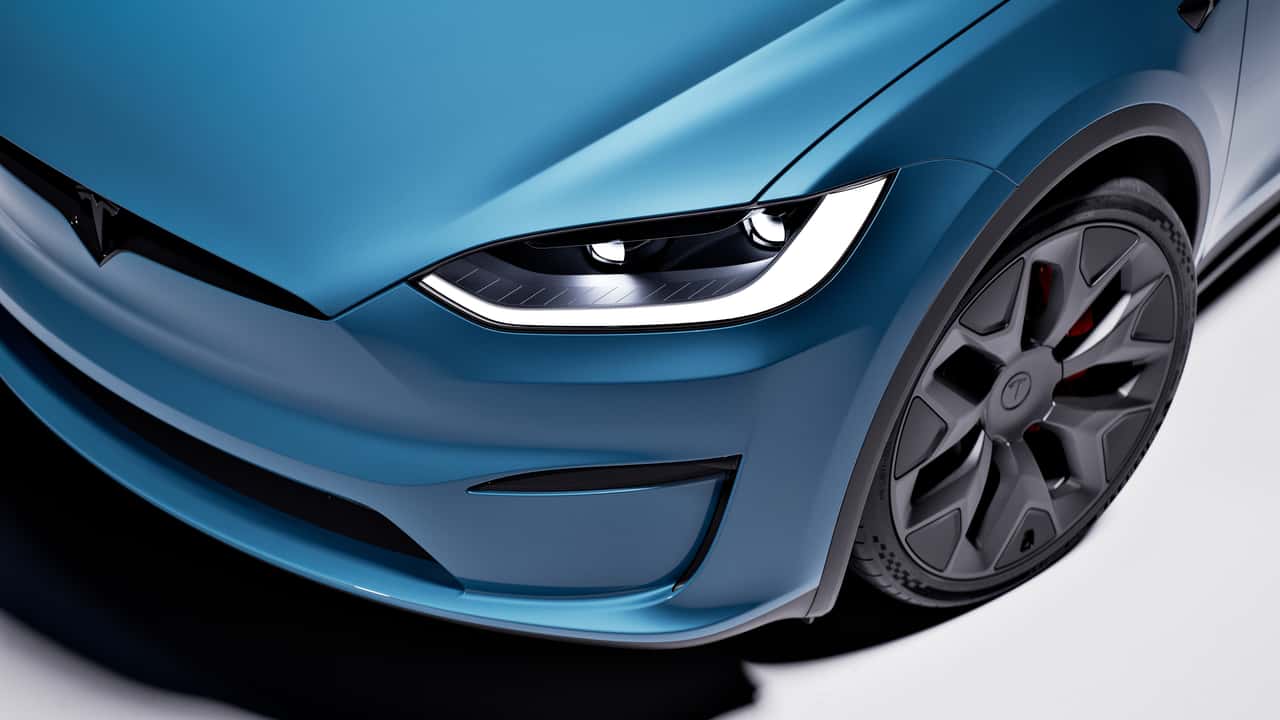
Photo by: Tesla
Tim Levin 
By: Tim Levin
Nov 16, 2025 at 8:00am ET
Add InsideEVs as a preferred source in Google
- (https://twitter.com/intent/tweet?url=https%3A%2F%2Finsideevs.com%2Fnews%2F779038%2Fev-range-degradation-study-three-years%2F&text=Tesla%20vs.%20The%20Rest%3A%20Which%20EVs%20Have%20The%20Most%20Range%20After%203%20Years&via=InsideEVs)
- copy
Share
Comment
- In general, you shouldn't worry too much about battery degradation in modern electric cars.
- Still, cars from some brands appear to fare better over time as far as range is concerned.
- In any EV, the battery will lose capacity over the years. According to Recurrent, Hyundais are among the best, while BMWs and Jaguars lose more range.
Battery degradation in electric cars is definitely real—but it's not as big a problem as many people think. Yes, any electric vehicle will lose its capacity to hold a charge over time. But no, the impact typically won't be that significant, particularly in a modern car.
Still, the technology in this industry is constantly improving, and there are some brands that appear to handle range degradation better than others. Recurrent, a company that analyzes how EVs perform over time to help guide purchase decisions, ranked 14 brands based on how much range their vehicles tend to lose after three years on the road.
Recurrent's research, which draws from real-world telematics data from actual cars, found that Cadillac, Hyundai and Mercedes-Benz fared among the best. Tesla did well too, with over 96% range retention after three years. Volkswagens, BMWs and Jaguars experienced the most range loss over time, but still retained over 90% of their original range.
Here's the rest of the data:
Some additional context: The range benchmark for each vehicle is not its EPA-rated range, but rather the real-world range that customers experienced when the car first left the dealership. Liz Najman, Recurrent's director of market insights, told me that the sample sizes range from hundreds of vehicles to thousands, depending on the brand.
With that, let's dig a little deeper into these results. One obvious question is: How come some brands exhibit zero range loss at all? There may be a few reasons for that, Najman explains. And it doesn't mean those batteries are not aging at all.
For one, car companies build in battery buffers into their cars. And over time, as the battery degrades, they can unlock access to more of the battery pack so that the end user doesn't see any change in performance. Software updates can also influence efficiency and range—by tweaking regenerative braking or acceleration.
So this data isn't necessarily a pure measure of an EV's quality or longevity. However, there are definitely differences in the ways automakers approach things like heat management or charging. All of that can impact how a battery performs over time.

Cadillacs have some of the best range retention over three years, according to Recurrent.
Photo by: Kevin Williams/InsideEVs
I can think of a few other explanations for the variety of outcomes here. Chevrolet may be ranked lower than Cadillac—despite the brands sharing a parent company in General Motors—because of the Chevy Bolt. It uses older technology that's probably more prone to age-related issues, versus the Cadillac EVs that all use GM's latest tech.
Similarly, Jaguar's I-Pace launched way back in 2018, so it isn't using cutting-edge tech either. BMW's results may be dragged down by the i3, an early electric effort it sold from 2014 to 2022.
It's important to note, too, that EVs typically have a predictable degradation curve. They bleed range more quickly in their first few years of life, then lose capacity gradually from then on. So the capacity loss an owner witnesses early on will be most of the damage they see over a vehicle's lifetime.

Get everything you need to know about the EV transition sent to your inbox daily.
back
Subscribe For more info, read our Privacy Policy & Terms of Use.
Although there are variations across brands, the bottom line for buyers based on Recurrent's research, Najman told me, is that you really don't have to worry about losing range.
What do you think?
View
Comments
"We found that most EVs actually exceed their EPA rating for the first year or two at least that they're on the road," she said. "So even though the batteries are aging, and even though the car is getting older, the range really should stay at or above the EPA range for several years, which should be a very wonderful surprise and a great driving experience for a lot of people."
Contact the author: Tim.Levin@InsideEVs.com
More EV Battery Stories
Sodium-Ion Batteries Have Landed In America. Now Comes The Hard Part
Some Plug-In Hybrid Batteries Degrade Much More Slowly Than Others
The 800-Volt Volvo EX60 Will Be Cheaper Than You Think
Toyota's 40-Year Solid-State Battery Could Change Everything We Know About EVs
We want your opinion!
What would you like to see on Insideevs.com?
Take our 3 minute survey.
- The InsideEVs team
Share this Story
- (https://twitter.com/intent/tweet?url=https%3A%2F%2Finsideevs.com%2Fnews%2F779038%2Fev-range-degradation-study-three-years%2F&text=Tesla%20vs.%20The%20Rest%3A%20Which%20EVs%20Have%20The%20Most%20Range%20After%203%20Years&via=InsideEVs)
- copy
GO TO COMMENTS
(
)
Got a tip for us? Email: tips@insideevs.com
View all comments ( )
Trending
GM's Next-Generation EV Platform Has 30% Less Wiring And 20% Less Battery
Can The BMW iX3 Take Down The Tesla Model Y L And Rivian R2?
GM's OnStar AI Assistant Debuts In The Cadillac Lyriq
Electrify America’s Largest EV Charging Station Is Missing One Big Thing
latest articles
- Seattle Is Installing Hundreds Of Curbside EV Chargers Oct 22 - Charging -
- Spotify’s First Native In-Car App Is Hitting Audi EVs First Oct 22 - Software -
- Tesla Says 75% Of New Car Buyers Subscribe To FSD In North America Oct 21 - News -
- 'End Of The Year': Tesla Says Cybercab Customer Deliveries Will Begin Soon Oct 21 - News -
- The Midterms Won't Mean Much For EV Policy, Analysts Say Oct 21 - News -
- General Motors Isn't 'Walking Away' From EVs, Top Exec Says Oct 21 - News -
- GM Is Adding Its Own Version Of Tesla's Sentry Mode To Cars Oct 21 - News -
RECOMMENDED FOR YOU
Ford Opens Fathom EV Pickup Invite List Ahead of Launch
Seattle Is Installing Hundreds Of Curbside EV Chargers
This YouTuber Got Burned By His Lucid Air And Elon Musk. So He Bought A Mustang Mach-E GT
Spotify’s First Native In-Car App Is Hitting Audi EVs First
The Longest-Range EVs You Can Buy In 2026
Tesla Says 75% Of New Car Buyers Subscribe To FSD In North America
The Fathom Is Ford's Shot At EV Redemption. The CEO Knows He Has To Get It Right