Home
News
Battery Tech
Breakthrough Device Promises To Cut Charging Times And Boost EV Range
In independent testing, the Dectravalve showed it can slash the charging time from 30 minutes to roughly 10 minutes.
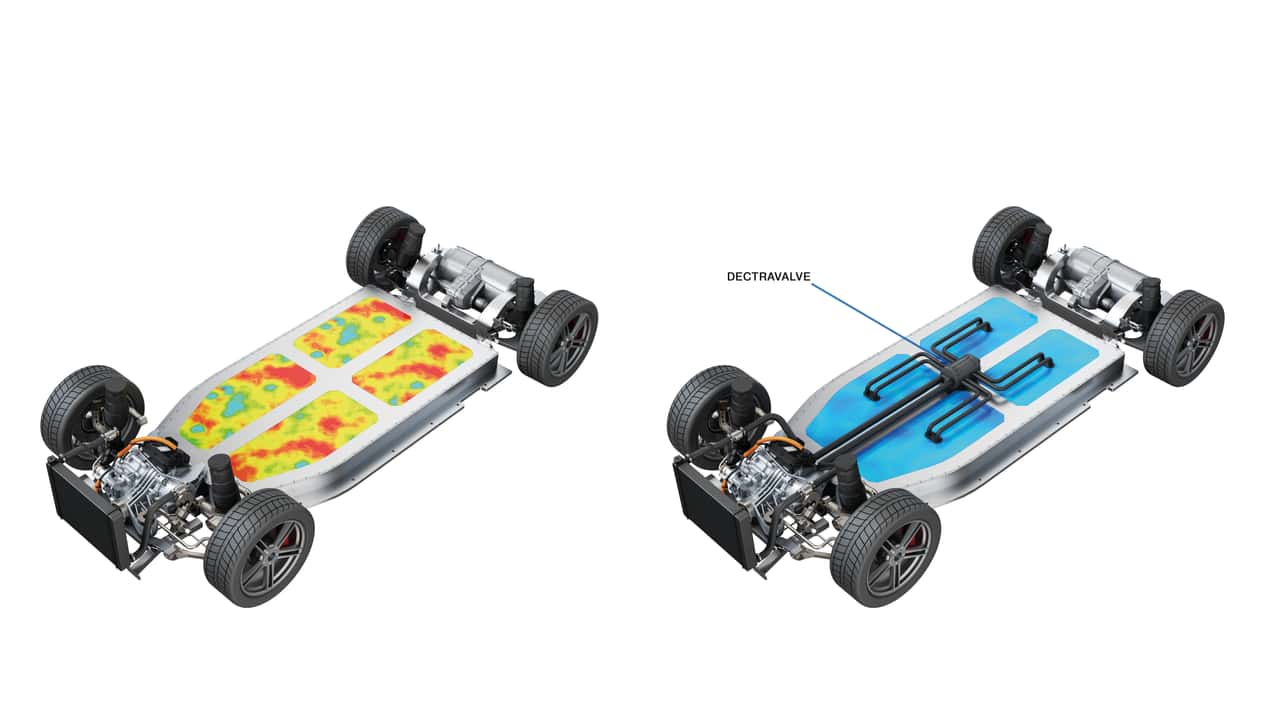
Photo by: Hydrohertz
Iulian Dnistran 
By: Iulian Dnistran
Nov 13, 2025 at 5:00am ET
Add InsideEVs as a preferred source in Google
- (https://twitter.com/intent/tweet?url=https%3A%2F%2Finsideevs.com%2Fnews%2F778799%2Fdectravalve-ev-battery-cut-charge-time-boost-range%2F&text=Breakthrough%20Device%20Promises%20To%20Cut%20Charging%20Times%20And%20Boost%20EV%20Range&via=InsideEVs)
- copy
Share
Comment
- An innovative thermal management device promises to slash charging times, boost range and minimize battery degradation in EVs.
- It’s called the Dectravalve and it can be fitted to any battery, no matter the chemistry.
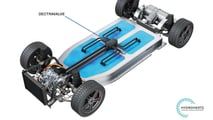
- The device can independently cool or heat up to four independent battery zones with no cross-flow and a single inlet.
Keeping an electric car’s battery in the right temperature zone is essential. That’s why almost all new EVs have some sort of heating and cooling system that ensures the battery can be fast-charged safely and that it will deliver as many miles of range as possible, whatever the weather.
That said, making an efficient heat management system is not easy or cheap. Usually, an EV battery will have a cooling plate that runs above or below the modules. That’s fine for most situations, but it also means that some cells might get too hot in certain situations because they’re too far from the coolant. And if one cell is too hot, it forces the whole pack to throttle the power input or output.

Hydrohertz Dectravalve
Photo by: Hydrohertz
Now, though, there’s a company out there that believes it can solve this problem at a fraction of the cost of developing an all-new battery pack. It’s called the Dectravalve, and it’s made by United Kingdom-based Hydrohertz.
The compact device’s main selling point is its ability to deliver “incredibly precise” heating, cooling or energy recovery of an EV battery, according to the company. It uses a single inlet for coolant and can control up to four zones independently without having to use multiple actuator valves or complex pipework. Hydroherz claims the Dectravalve can target and isolate heating or cooling to specific zones with no cross-flow, which can significantly improve the efficiency of modern high-voltage batteries.
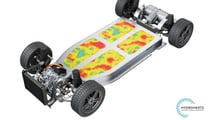
To put it money where its mouth is, the startup had its device independently tested by the Warwick Manufacturing Group (WMG). A 100-kilowatt-hour lithium iron phosphate (LFP) EV battery fitted with the Dectravalve was fast-charged, and the results were impressive. The hottest cell of the pack did not exceed 112.1 degrees Fahrenheit (44.5 degrees Celsius), while the temperature difference across the pack was just 4.68°F (2.6°C).
Gallery: Hydrohertz Dectravalve
4
Source: Hydrohertz
By comparison, typical EV batteries can go as hot as 132.8°F (56°C) when being pushed to the limit, but that usually results in power throttling to protect the cells from damage. In the real world, this means charging stops take longer.
Hydrohertz claims its device can change that without having to re-engineer the entire pack. During testing, the Dectravalve showed that charging times can be slashed by up to 68%, which translates to roughly 10-minute charging sessions instead of 30-minute ones.
Keeping an EV battery at the right temperature, irrespective of the ambient weather, also helps to improve driving range, with the UK-based startup claiming a bump of up to 10%. Battery life is also improved because there’s less stress at the cell level in the long run, so degradation should be slowed compared to conventional thermal management systems.

Stay informed with our newsletter every weekday
back
Subscribe For more info, read our Privacy Policy & Terms of Use.
“With Dectravalve, there is no ‘shared circuit’ where one overheated cell group could cause wider thermal contamination,” said Martyn Talbot, chief technical officer at Hydrohertz. “This stops there being a thermal ‘domino effect’ where hotspots quickly spread, and also ensures that each section of the battery receives exactly the cooling it needs. The result is a clean, controlled thermal environment right across the pack, with zero compromise or crossover.”
What do you think?
View
Comments
Talbot, who has nearly two decades of hands-on industry experience as an electrical and mechanical engineer, works alongside Paul Arkesden, who was recently appointed chief executive officer. Arkesden previously held the roles of Senior Vice President of Engineering at Singer Vehicle Design and Head of Engineering at McLaren Automotive, where he was responsible for developing the P1 hypercar powertrain.
It all sounds really interesting, but it hinges on car manufacturers’ willingness to adopt a device like this. It’s not easy, but it can happen. Just look at Yasa–its axial flux motors were so impressive that Mercedes-Benz scooped up the startup and made it a wholly owned subsidiary.
More Stories Like This
Tesla Loses The Most Range In Extreme Hot Weather Test
These EVs Have The Best Summer Driving Range
These 14 EVs Were Driven In Freezing Cold Until They Died
A Tesla Model 3 Was Deep Frozen At -16 Degrees, Then Charged. Here’s How It Went
We want your opinion!
What would you like to see on Insideevs.com?
Take our 3 minute survey.
- The InsideEVs team
Share this Story
- (https://twitter.com/intent/tweet?url=https%3A%2F%2Finsideevs.com%2Fnews%2F778799%2Fdectravalve-ev-battery-cut-charge-time-boost-range%2F&text=Breakthrough%20Device%20Promises%20To%20Cut%20Charging%20Times%20And%20Boost%20EV%20Range&via=InsideEVs)
- copy
GO TO COMMENTS
(
)
Got a tip for us? Email: tips@insideevs.com
View all comments ( )
Trending
Diesel Prices Are Surging. This Electric Trucking Company Is Seeing More Interest
I Tried Mercedes MB.Drive Assist Pro. It's Like Tesla FSD, But With One Catch
Tesla Opens Self-Driving Cybercab Orders To 'Select Customers' At $29,990
Tesla Model 3 Maintenance Guide: What Needs Servicing And What Doesn't
Latest Stories
- Tesla Keeps Killing Cars. Now It Wants To Build Cybercabs In Germany Nov 16 - News -
- Tesla Model 3 Maintenance Guide: What Needs Servicing And What Doesn't Nov 16 - Repair / Maintenance -
- Audi A2 e-tron First Drive: Does The Iconic Nameplate Live Up To The Hype? Nov 16 - First Drives -
- I Tried Mercedes' Answer To Tesla FSD. Here's How It Went Nov 16 - Tech Review -
- BMW Just Started Making EV Batteries In America. The New iX5 Will Be First In Line Nov 16 - Manufacturing / Production -
- BMW’s iX5 Beat The Lucid Gravity On Highway Range. Not On Efficiency Nov 16 - Range / Efficiency -
- Tesla Just Bumped The Cheapest Model Y’s Range, But The Price Stays The Same Nov 16 - Range / Efficiency -
RECOMMENDED FOR YOU
Solid-State Cells Can Make The U.S. Competitive In Batteries Again: CEO
Tesla Keeps Killing Cars. Now It Wants To Build Cybercabs In Germany
Ford Tested 36,000 Mustang Mach-E Batteries. Here’s How They Held Up After 100,000 Miles
Tesla Model 3 Maintenance Guide: What Needs Servicing And What Doesn't
China Has An Iron Grip On EV Batteries. Here's America’s Plan To Break It
Audi A2 e-tron First Drive: Does The Iconic Nameplate Live Up To The Hype?
Mercedes Wants To Rethink EV Batteries With This Clever New Technology