Home
News
China
Americans Are Increasingly Open To Chinese Cars, Despite Geopolitical Tensions
Huawei, Xiaomi and BYD are the three Chinese brands most considered by Americans.
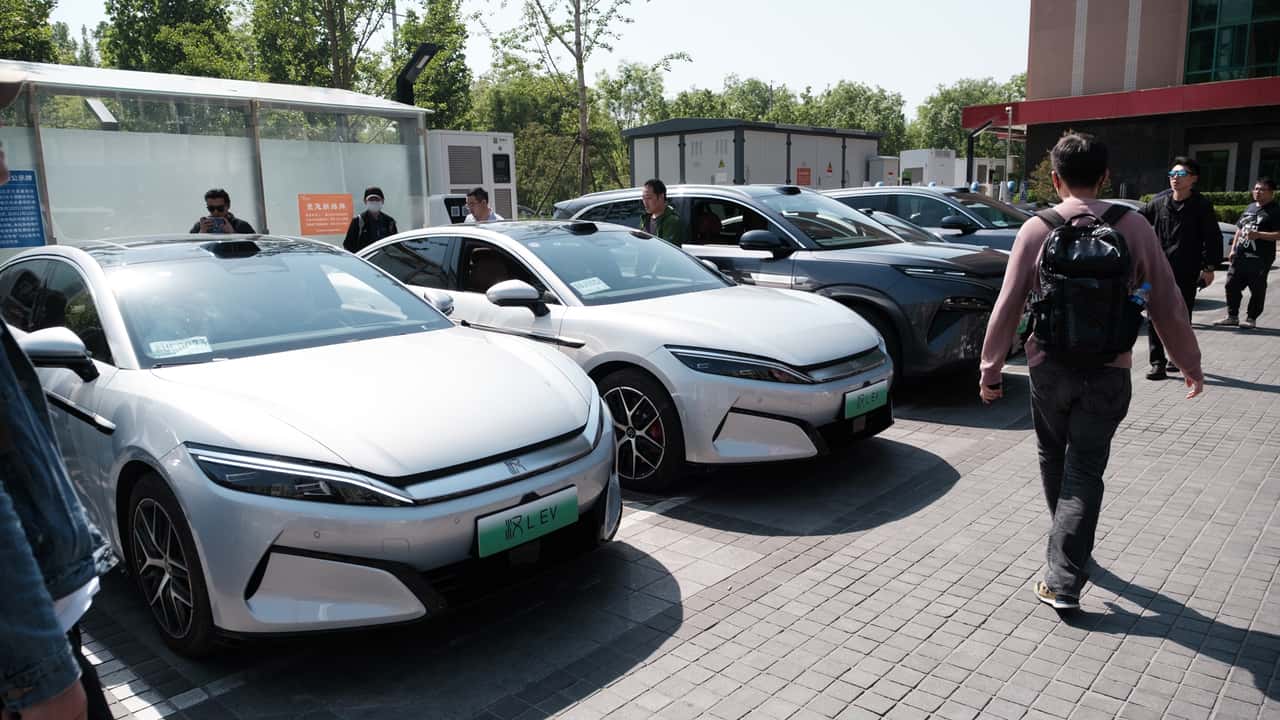
Photo by: Patrick George
Kevin Williams 
By: Kevin Williams
Oct 16, 2025 at 6:45pm ET
Add InsideEVs as a preferred source in Google
- (https://twitter.com/intent/tweet?url=https%3A%2F%2Finsideevs.com%2Fnews%2F776071%2Fchina-survey-usa-desire-analysis%2F&text=Americans%20Are%20Increasingly%20Open%20To%20Chinese%20Cars%2C%20Despite%20Geopolitical%20Tensions&via=InsideEVs)
- copy
Share
Comment
- A study published by AutoPacific says that 65% of Americans surveyed are familiar with Chinese car brands, up from 52% in 2024.
- Similarly, more Americans would consider buying from a Chinese brand if it were sold here.
- Concerns around national security and data privacy still remain high.
There’s a literary device called “haunting the narrative.” That is, when a character barely appears in the main story, yet their presence is felt all the same. Well, you could say that Chinese cars are haunting the American auto industry’s narrative.
There are no Chinese cars on sale on American roads, aside from the rare China-made Polestar, Volvo or Buick. Yet the country’s global presence makes it impossible to ignore. Tech-forward and cheap to buy (in their home country, at least), Chinese cars are an existential threat to American automakers. So the U.S. government has gone to great lengths to keep China at bay and protect the interests of domestic car brands.
The forthcoming ban on cars with certain Chinese-developed software and hardware is one big way that the government plans on keeping Chinese cars off American roads—for national security reasons, it says. Tariffs north of 100% essentially amount to a ban on Chinese electric cars.

Stay informed with our newsletter every weekday
back
Subscribe For more info, read our Privacy Policy & Terms of Use.
Nevertheless, Americans are becoming more aware of and open to Chinese car brands. A recent study published by the market analysis firm AutoPacific shows that the perception of Chinese cars and brands only continues to improve, despite tariff woes and geopolitical tensions putting the U.S.-China relationship on shaky ground.
According to the study, people are becoming more familiar with Chinese brands. Compared to last year, 65% of participants are familiar with some Chinese brands. This is up from 52% last year. On top of that, the portion of buyers willing to consider a Chinese brand is up a fair amount too, from 41% in 2024 to 52% in 2025.

Photo by: Patrick George
Interestingly, Huawei led the pack as the most considered brand by those surveyed. Twenty-seven percent of respondents familiar with Huawei would consider buying one of its cars. Xiaomi took second place with 23% and BYD claimed third with 19%. Great Wall Motors came in at 16%, Geely at 13% and Nio in the rear with 13% of those familiar willing to buy one of its cars.
Still, there are great concerns with data privacy and national security risks—but they’re coming down. In 2024, both categories were above 80%. By 2025, concerns about risks of security dropped from 80% to 77%, while national security risks went from 82% to 79%. Both are still high, but are falling year over year.
“We’ve seen awareness of various disruptors like BYD, Geely, Huawei, and Zeekr grow substantially year over year in our research, and a lot of that can be attributed to an increase in media coverage of these brands’ vehicles (both within the automotive media space and outside it), as well as likely a greater occurrence of in-person engagement and interaction,” Robby DeGraff, manager of product and consumer insights at AutoPacific, said in an email.
This is all “despite fear-mongering language and rhetoric about China from the [Trump] administration,” he continued.
Photo by: Patrick George
What DeGraff said tracks with my experience, too. Chinese car coverage has become ubiquitous. It’s not hard to find a TikTok, Instagram or Facebook Reel post of someone with their take about a Chinese car. Heck, even mainstream news outlets have started to take notice of the strides that China has made with its EV industry. I’ve had more than a few friends send me images of Chinese cars they’ve spotted overseas traveling. Usually, the conversations fall along the lines of “wow, this looks pretty good. When can we get this here?”
Chinese car brands used to be known for making low-quality clones, or building Western cars under license for markets that weren't Europe or North America. Now, the country has taken the EV industry by storm. The cars are making their way outside of China and are generally proving their worth, even if some brands and models aren’t always pitch-perfect in execution.
What do you think?
View
Comments
Will Chinese cars ever come to the United States? Right now, thing aren’t looking so good. But if they ever do—all of the signs point to success.
Contact the author: kevin.williams@insideevs.com
Related Articles
Here's How Ford's $30,000 EV Truck Is Going After China's BYD
China’s EV Market Is Eating Its Own Tail
China’s Xpeng Is Now Building EVs In Europe
Europeans Would Rather Buy Chinese Cars Than American Ones: Study
We want your opinion!
What would you like to see on Insideevs.com?
Take our 3 minute survey.
- The InsideEVs team
Share this Story
- (https://twitter.com/intent/tweet?url=https%3A%2F%2Finsideevs.com%2Fnews%2F776071%2Fchina-survey-usa-desire-analysis%2F&text=Americans%20Are%20Increasingly%20Open%20To%20Chinese%20Cars%2C%20Despite%20Geopolitical%20Tensions&via=InsideEVs)
- copy
GO TO COMMENTS
(
)
Got a tip for us? Email: tips@insideevs.com
View all comments ( )
Trending
Kia EV3 Lease Deals Are Here, And It’s Cheaper Than The Chevy Bolt And Nissan Leaf
I Let Android Auto Plan My EV Roadtrip. Here’s How It Worked
This Chevy Bolt Has 470,000 Miles. Here’s How Much A New Battery Was
Here's What It's Like To Take Delivery Of A Rivian R2
latest articles
- Can The BMW iX3 Take Down The Tesla Model Y L And Rivian R2? Oct 20 - News -
- Waymo Plans To Have 20,000 Cars By The End Of 2027 Oct 20 - News -
- The Boring Company Uses Tesla Model 3 Sleds To Shuttle Shipping Containers Through Its Tunnels Oct 20 - News -
- How Much Range Do EVs Lose When Parked? (And How to Stop It) Oct 20 - EV 101 -
- This Chinese EV Is Now Made In Europe. More Are Coming Oct 20 - News -
- GM Is Closing Its Detroit EV Battery Plant Oct 20 - Industry -
- The 2027 Lexus NX Plug-In Hybrid Gets A Bigger Battery And Fast Charging Oct 20 - Official -
RECOMMENDED FOR YOU
Chinese EVs Are Praised For Value, But This $150,000 Minivan Has A Serious Braking Problem
Can The BMW iX3 Take Down The Tesla Model Y L And Rivian R2?
BYD’s $10,000 EV Is Getting A Huge Upgrade, With 5-Minute Charging
Waymo Plans To Have 20,000 Cars By The End Of 2027
President Trump Says He's Open To Chinese EVs. But Only If They're Made Here
The Boring Company Uses Tesla Model 3 Sleds To Shuttle Shipping Containers Through Its Tunnels
China Has Already Exported More Cars Than Last Year