Home
Tesla
News
Why Xpeng Is Taking Tesla's Controversial Approach To Autonomy
Tesla isn’t the only company using cameras and AI to solve autonomy. Several prominent Chinese companies are in on the tech, too.
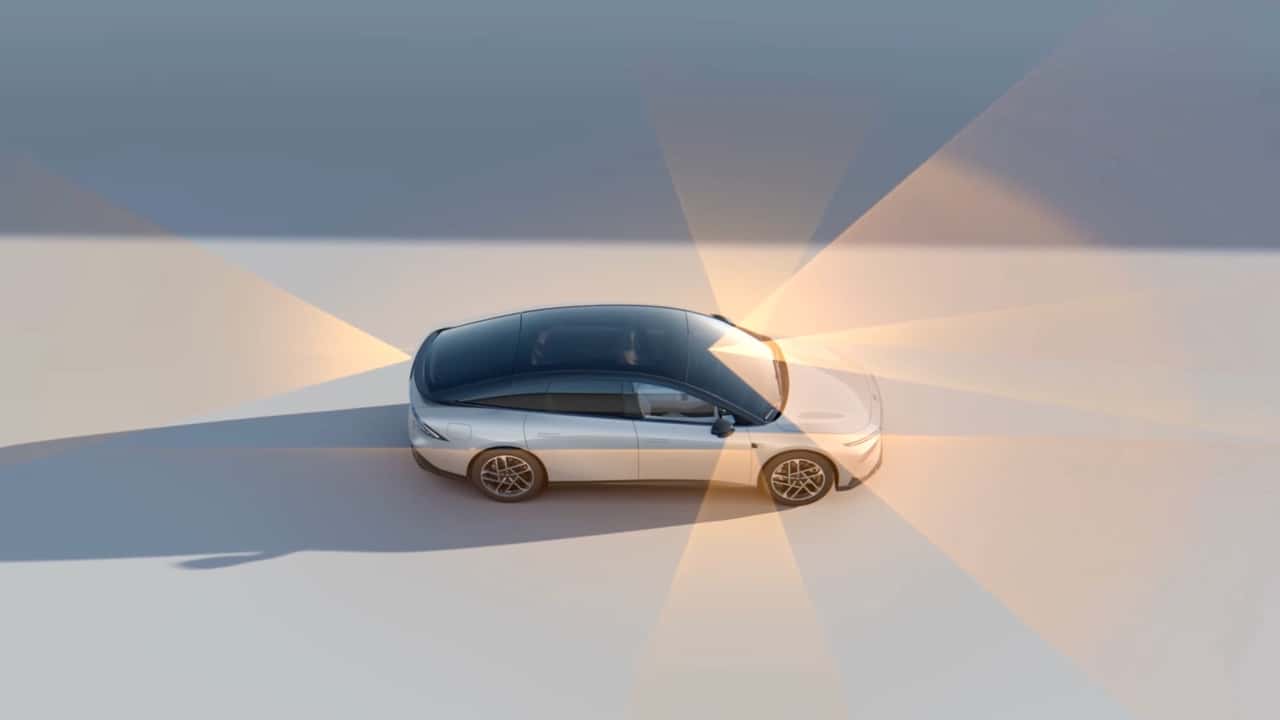
Photo by: Xpeng
Suvrat Kothari 
By: Suvrat Kothari
Sep 21, 2025 at 4:00pm ET
Add InsideEVs as a preferred source in Google
- (https://twitter.com/intent/tweet?url=https%3A%2F%2Finsideevs.com%2Fnews%2F772959%2Fxpeng-tesla-xgnp-fsd-autonomy%2F&text=Why%20Xpeng%20Is%20Taking%20Tesla%27s%20Controversial%20Approach%20To%20Autonomy%C2%A0&via=InsideEVs)
- copy
Share
Comment
Tesla isn’t the only automaker chasing robotaxi dreams with the help of cameras and AI. Chinese automaker Xpeng, which became the world’s first automaker to install lidar into electric vehicles back in 2020, has since had a change of heart.
At the IAA Mobility 2025 show in Munich, Candice Yuan, senior director and head of product at Xpeng’s Autonomous Driving Center, told CarNewsChina that the company has grown increasingly confident in its vision-based approach since pulling lidar from its vehicles.

Xpeng P7 (2026)
Photo by: Opel
“The lidar data can’t contribute to the AI system,” Yuan told the outlet, adding that the company’s large language model is fed mainly 10 to 30-second short videos, taken from its customer vehicles, and then used to train the AI system. “We call it VLA. Vision, language, action. Lidar data is different and can’t be absorbed by the AI system,” Yuan added.
Xpeng’s self-driving system is called Navigation Guided Pilot (XNGP). It sounds far less polarizing than Tesla’s Full Self-Driving (FSD), which still requires constant driver supervision and readiness to take over at all times. Like Tesla, Xpeng is betting big on end-to-end machine learning models that it says could operate anywhere in China, at least theoretically.
That claim might not be entirely true. Robotaxi companies Waymo and Zoox already use lidar data to train their AI, arguing that it helps their systems read the road and environment more accurately, especially in poor lighting, bad weather, or the countless edge cases that happen in complex urban environments.
Photo by: Xpeng
However, studies have said that training AI systems with lidar can be more complex and expensive. It can require heavy data labeling, sensor calibration and complex integration. Unless an AI system is built from the ground up to support lidar, adding it later can mean reengineering the whole system. That’s likely what Yuan meant. Not that lidar is useless, but that Xpeng’s new system wasn’t designed for it.
Tesla has long made the same argument. The company says lidar is too costly, while cameras and video are cheaper, simpler and more scalable across a global fleet.
In fact, Xpeng’s CEO, Xiaopeng He, even visited Silicon Valley last year and tested Tesla’s FSD. He said it worked “extremely well.” Soon after, Xpeng cheekily posted on Musk’s social media platform X, asking to borrow a Tesla equipped with FSD (Wonder why?), while inviting Musk to China to try its XNGP system.
Xpeng is not the only Chinese company using the vision-based approach to autonomy. InsideEVs’ writer Kevin Williams visited China last year and drove a Ji Yue, a brand under Geely’s umbrella. The Ji Yue 01 had a backup radar and also used HD maps to read the environment more accurately, but the core system was vision-based.
“The 01 was pretty competent at judging the mess of pedestrians, impatient drivers, cyclists and motorbikes that don’t seem to have any respect for traffic laws,” Kevin wrote in his review. I myself tested Tesla’s FSD in New York City recently. It was impressive on the highway and in the suburbs, but the edge cases in Manhattan required me to take over multiple times.
The only robotaxis that are truly driverless today are the lidar-heavy fleets from Waymo and Zoox. Waymo is already delivering more than 250,000 fully driverless rides each week across several U.S. cities. Those riders can sit back, read a book, watch Netflix, take a nap, or do whatever they want with their time. Tesla Robotaxis and FSD-equipped EVs still require human babysitting.
Ji Yue driving with its advanced driver assistance system 01 in China.
What do you think?
View
Comments
The company has promised that “true autonomy” is just around the corner. Then again, it’s been around the corner for a decade. So until a camera-only car can pick me up, drop me off, and let me relax in the back seat without a human driver up front quietly intervening in edge cases, I’ll keep treating those promises with a healthy dose of skepticism.
Have a tip? Contact the author: Suvrat.kothari@insideevs.com
Related Stories
This Is The Cheapest Way To Get A 450-Mile EV
Kia EV9 VS. Hyundai Ioniq 9: Which Three-Row Electric SUV Is Really Best?
China’s EV Market Is Eating Its Own Tail
Koreans Are Furious Over The Hyundai ICE Raid. Tesla Could Pay The Price
We want your opinion!
What would you like to see on Insideevs.com?
Take our 3 minute survey.
- The InsideEVs team
Share this Story
- (https://twitter.com/intent/tweet?url=https%3A%2F%2Finsideevs.com%2Fnews%2F772959%2Fxpeng-tesla-xgnp-fsd-autonomy%2F&text=Why%20Xpeng%20Is%20Taking%20Tesla%27s%20Controversial%20Approach%20To%20Autonomy%C2%A0&via=InsideEVs)
- copy
GO TO COMMENTS
(
)
Got a tip for us? Email: tips@insideevs.com
View all comments ( )
Trending
Winter Weather Hits EV Range Hard. One Automaker Handles It Better Than Tesla
Here’s How To Make Your Holiday EV Road Trip Easier
The BMW i3 Won Me Over In The Corners. But It Also Felt Wrong
These Are The Top 10 Black Friday EV Deals. Some Are $25,000 Off
Latest Stories
- Winter Weather Hits EV Range Hard. One Automaker Handles It Better Than Tesla Nov 25 - Range / Efficiency -
- ChargePoint's DC Fast Chargers Are Hitting The Ski Slopes Nov 25 - Charging -
- BMW Cars In The U.S. Will Soon Stop At Red Lights And Automatically Drive Off Again Nov 25 - Software -
- This BMW iX3 Drove Over 600 Miles On One Charge. The Catch? It Took Nearly 18 Hours Nov 25 - Range / Efficiency -
- The BMW i3 Won Me Over In The Corners. But It Also Felt Wrong Nov 24 - Test Drives -
- Here’s How To Make Your Holiday EV Road Trip Easier Nov 24 - Charging -
- New York Says 'Enough Is Enough' To In-Car Subscriptions Nov 24 - News -
RECOMMENDED FOR YOU
Tesla's EVs Could Get One Big Upgrade Next Year
ChargePoint's DC Fast Chargers Are Hitting The Ski Slopes
Tesla FSD V15 Makes Your Drive Look Like Grand Theft Auto
BMW Cars In The U.S. Will Soon Stop At Red Lights And Automatically Drive Off Again
The Best EV Lease And Finance Deals In November 2026
This BMW iX3 Drove Over 600 Miles On One Charge. The Catch? It Took Nearly 18 Hours
Tesla's Driverless Cybercab Is Now Available In Dallas