Home
News
Battery Tech
The U.S. Can ‘Absolutely’ Break Its EV Battery Dependence From China
Panasonic says the U.S. has a chance to become the “front-runner” in locally produced electric vehicle batteries.
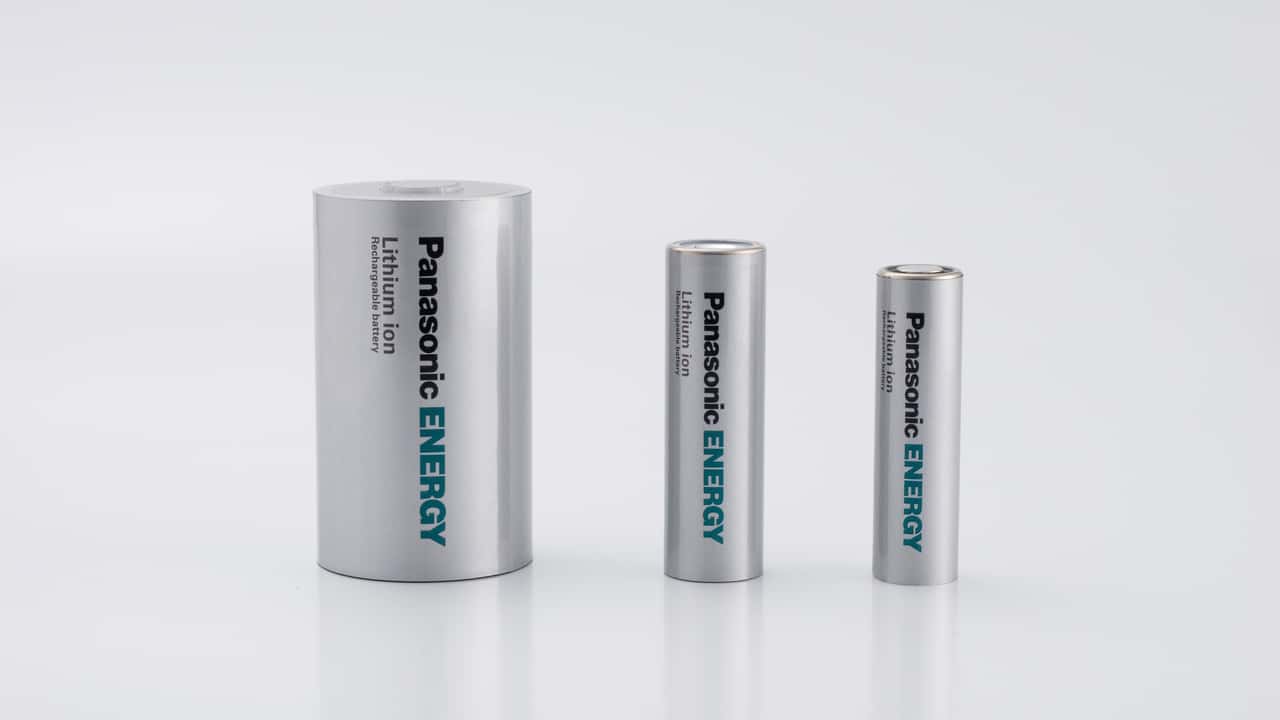
Photo by: Panasonic Energy
Suvrat Kothari 
By: Suvrat Kothari
Jul 29, 2025 at 3:08pm ET
Add InsideEVs as a preferred source in Google
- (https://twitter.com/intent/tweet?url=https%3A%2F%2Finsideevs.com%2Fnews%2F767364%2Fpanasonic-battery-dependence-from-china%2F&text=The%20U.S.%20Can%20%E2%80%98Absolutely%E2%80%99%20Break%20Its%20EV%20Battery%20Dependence%20From%20China&via=InsideEVs)
- copy
Share
Comment
- Panasonic says the U.S. has a chance to reduce its dependence on China for electric vehicle batteries.
- A growing number of battery makers are moving away from the China-centric supply chain for EV batteries.
- The Japanese battery maker opened its second U.S. factory in Kansas in July.
Electric vehicle sales have been on a rollercoaster this year, but the batteries that power them are still being built at a rapid clip as manufacturers race to secure the related supply chains. A big part of the push is to reduce America's reliance on China and build a robust domestic battery industry.
Despite the Trump administration’s rollback of several clean energy programs, the U.S. EV and battery sector is still expected to grow. It could even decouple from China within a decade, said Allan Swan, president and chief operating officer of Panasonic Energy Corporation of North America.
“It’s going to be 10 years of working hard on the supply chain, getting the processes right and efficiencies right [to decouple from China],” Swan told InsideEVs in an interview. “But can the Americans do that? Absolutely. I’m very convinced we can.”
Gallery: Panasonic Battery Plant Kansas

5


Source: Panasonic Energy
Panasonic is doubling down on that bet. Earlier this month, the company opened its second U.S. battery plant. The $4 billion factory in De Soto, Kansas, is slated to be fully operational by the end of 2026. Once complete, it will produce enough cells to power roughly half a million EVs per year.
Tesla is Panasonic’s biggest customer, but the company is broadening its base. Starting next year, it will supply U.S.-made 2170 cylindrical cells to Lucid Motors, which currently uses Panasonic NMC cells manufactured in Japan.
2025 Lucid Gravity
Photo by: Tim Levin/InsideEVs
“Some of the things that have been set up, like 45X [production credit] and the tariffs, have put us in a position to really catch up as quickly as possible,” Swan said. While most pro-EV programs have been scaled back, the Trump administration has so far kept the 45X advanced manufacturing credit intact. The incentive allocates billions for domestic lithium-ion battery production and is critical for the expansion plans of many battery companies, including LG Energy Solution, Tesla and Samsung SDI.
Panasonic is projected to receive $6.8 billion through the Inflation Reduction Act passed under the Biden administration, according to local news reports from Kansas. Swan didn’t confirm the figure but acknowledged the company is on track to qualify for the funding. “[The manufacturing credits] will help us reinvest in batteries as well as invest in our suppliers and customers,” he said. “We should be able to achieve 45X demands in the latest build.”
Photo by: Panasonic Energy
Gigafactories like Panasonic’s also act as an anchor for the broader supply chain. Much like a traditional gas car plant draws in Tier 1 suppliers for engines, transmissions and seats, a battery factory of this scale encourages cathode active material and anode producers to establish operations nearby. The proximity cuts logistics costs and makes production more efficient, effectively helping create a full ecosystem—which is critical for localization plans.
Panasonic also stands to benefit from the groundwork laid by others. For example, suppliers that moved in to serve LG Energy Solution and Samsung SDI can also work with other customers, Swan said, since many supply agreements in the battery industry are non-exclusive.
Still, the growth of the few large battery companies is the opposite of the broader pullback in U.S. clean energy investment so far this year. More than $22 billion worth of projects were canceled in the first half of 2025—including $6.7 billion in June alone—according to environmental policy group E2. The cancellations are estimated to have cost 16,500 jobs, most of them in Republican-led states and districts.

Get the best news, reviews, columns, and more delivered straight to your inbox.
back
Subscribe For more info, read our Privacy Policy & Terms of Use.
The wave of reversals followed a series of Trump administration moves to dismantle federal clean energy programs, including freezing National Electric Vehicle Infrastructure funds, sunsetting federal EV tax credits on Sept. 30, and eliminating penalties under Corporate Average Fuel Economy (CAFE) standards.
Nonetheless, automakers and battery companies seem increasingly focused on their U.S. manufacturing apparatus, as Trump’s tariffs have now started to bite. General Motors will start making lithium manganese-rich (LMR) cells locally from 2028 for its full-size SUVs and trucks. Ford is working on the same chemistry too. And its BlueOval Battery Park Michigan will make low-cost lithium iron phosphate (LFP) batteries by licensing the technology from Chinese battery-maker CATL.
What do you think?
View
Comments
“We believe that what we're doing is bigger than batteries,” Swan said. “It's about creating a much cleaner world and we are very focused on ensuring that our customers and suppliers also have the same mission.”
Have a tip? Contact the author: suvrat.kothari@Insideevs.com
Related Stories
The Tesla Cybertruck May Get A Little Brother
The 2026 Hyundai Ioniq 9 Is The Best Electric People-Mover Yet
'Lot Of Gains' For Current EV Battery Tech Before Solid-State Batteries, Tesla's Top Engineer Says
Why Tesla's Original Founder Is 'Disappointed' With Its Lineup
We want your opinion!
What would you like to see on Insideevs.com?
Take our 3 minute survey.
- The InsideEVs team
Share this Story
- (https://twitter.com/intent/tweet?url=https%3A%2F%2Finsideevs.com%2Fnews%2F767364%2Fpanasonic-battery-dependence-from-china%2F&text=The%20U.S.%20Can%20%E2%80%98Absolutely%E2%80%99%20Break%20Its%20EV%20Battery%20Dependence%20From%20China&via=InsideEVs)
- copy
GO TO COMMENTS
(
)
Got a tip for us? Email: tips@insideevs.com
View all comments ( )
Trending
I Drove Volvo’s Long-Range Plug-In Hybrid XC60. It’s A Great Stepping Stone To An EV.
I've Driven Dozens Of Chinese Cars. Americans Are Missing Out On These 4 Features
I’m Thankful For My Electric Car
$30,000 Ford Fathom: Inside The Structural LFP Battery That Makes It All Possible
Latest Stories
- $30,000 Ford Fathom: Inside The Structural LFP Battery That Makes It All Possible Nov 28 - Battery Tech -
- I've Driven Dozens Of Chinese Cars. Americans Are Missing Out On These 4 Features Nov 28 - China -
- EVs Outsold Gas And Diesel Cars Combined In The EU In October Nov 27 - News -
- This Audi E-Tron EV Has 125,000 Miles. Replacing Its Battery Was A Huge Pain Nov 27 - Repair / Maintenance -
- Rivian's Winter Sale Is Live: Save on Chargers, Accessories, And More Nov 27 - Pricing -
- I Drove Volvo’s Long-Range Plug-In Hybrid XC60. It’s A Great Stepping Stone To An EV. Nov 27 - First Drives -
- A Used Cybertruck Is Selling A Month Faster Than A Ford F-150 Nov 26 - News -
RECOMMENDED FOR YOU
$30,000 Ford Fathom: Inside The Structural LFP Battery That Makes It All Possible
I've Driven Dozens Of Chinese Cars. Americans Are Missing Out On These 4 Features
Ford Has A Dedicated Battery Abuse Team. It Obsesses Over How Cells Fail
EVs Outsold Gas And Diesel Cars Combined In The EU In October
Ford Just Started Fathom LFP Battery Production In Michigan. It's A Big Deal
This Audi E-Tron EV Has 125,000 Miles. Replacing Its Battery Was A Huge Pain
Solid-State Cells Can Make The U.S. Competitive In Batteries Again: CEO