Home
Features
User Experience
Are Plug-In Hybrid Pickups Any Good? Here’s What This Grueling 2,500-Mile Test Reveals
Three PHEV pickups were driven in the Australian outback alongside three diesel rigs. Here’s how they fared.
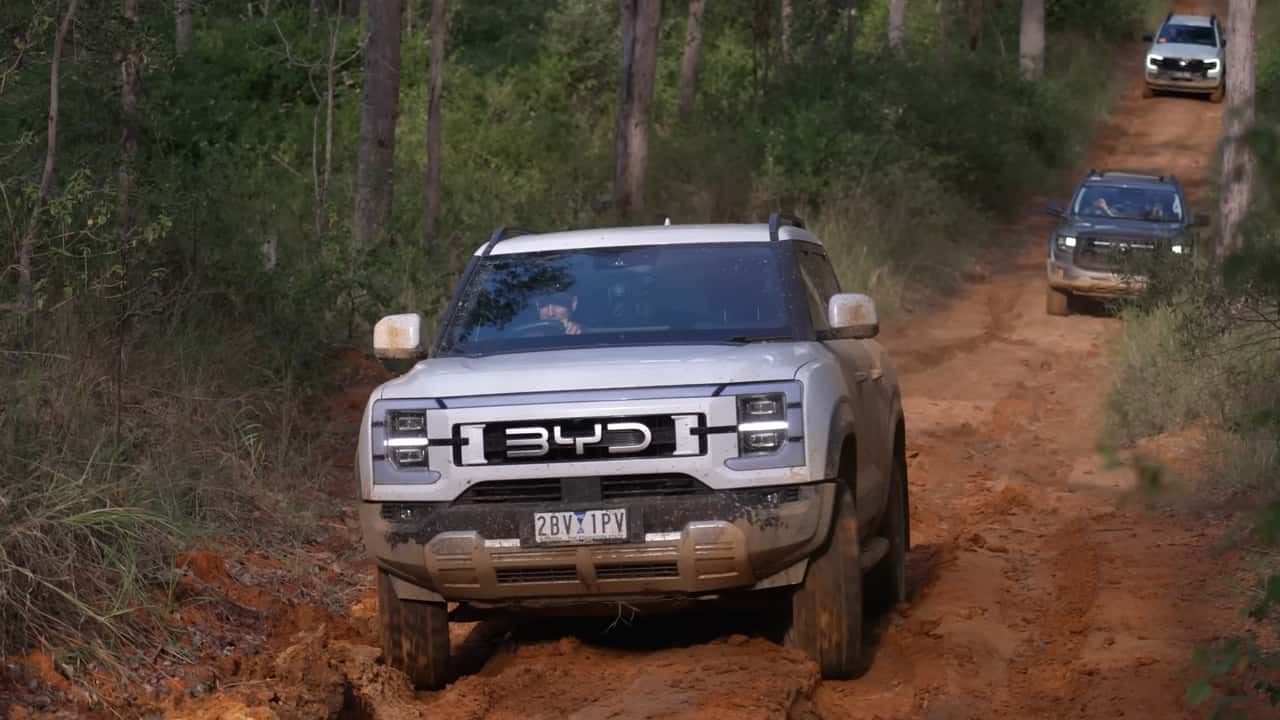
Photo by: 4WD 24/7
Iulian Dnistran 
By: Iulian Dnistran
Jul 9, 2025 at 5:09am ET
Add InsideEVs as a preferred source in Google
- (https://twitter.com/intent/tweet?url=https%3A%2F%2Finsideevs.com%2Ffeatures%2F765241%2Fphev-pickup-test-vs-diesel-byd-shark-gwm-cannon-ford-ranger%2F&text=Are%20Plug-In%20Hybrid%20Pickups%20Any%20Good%3F%20Here%E2%80%99s%20What%20This%20Grueling%202%2C500-Mile%20Test%20Reveals&via=InsideEVs)
- copy
Share
Comment
- Plug-in hybrid vehicles are seen as a stopgap between conventional gas cars and EVs.
- They’re supposed to offer the best of both worlds.
- However, that’s not necessarily the case on long, grueling trips in the desert
Plug-in hybrids promise great fuel efficiency and even some all-electric driving around town, all for the end goal of lowering driving costs. And if the driving conditions are right, they work wonderfully.
I own a plug-in hybrid, and it dramatically slashed my fuel bills compared to my old Land Rover, so I’m not just throwing words out there. So what happens when America’s best-selling vehicles–pickup trucks–go down the PHEV route?
There are quite a few plug-in hybrid pickups out there, but none of them are available in the United States, so the video below is a great way to see if they would work stateside. The production–it’s a little over one hour long–pits the Chinese-made BYD Shark and GWM Cannon Alpha, as well as the Ford Ranger PHEV, against Australia’s great outback and its long stretches of nothingness.
The pickups went on a 2,500-mile adventure, taking turns in towing a 5,500-pound (2,500-kilogram) trailer, going down lonely highways and up sandy dunes. To make things more interesting, three diesel-powered rigs were also part of the convoy.
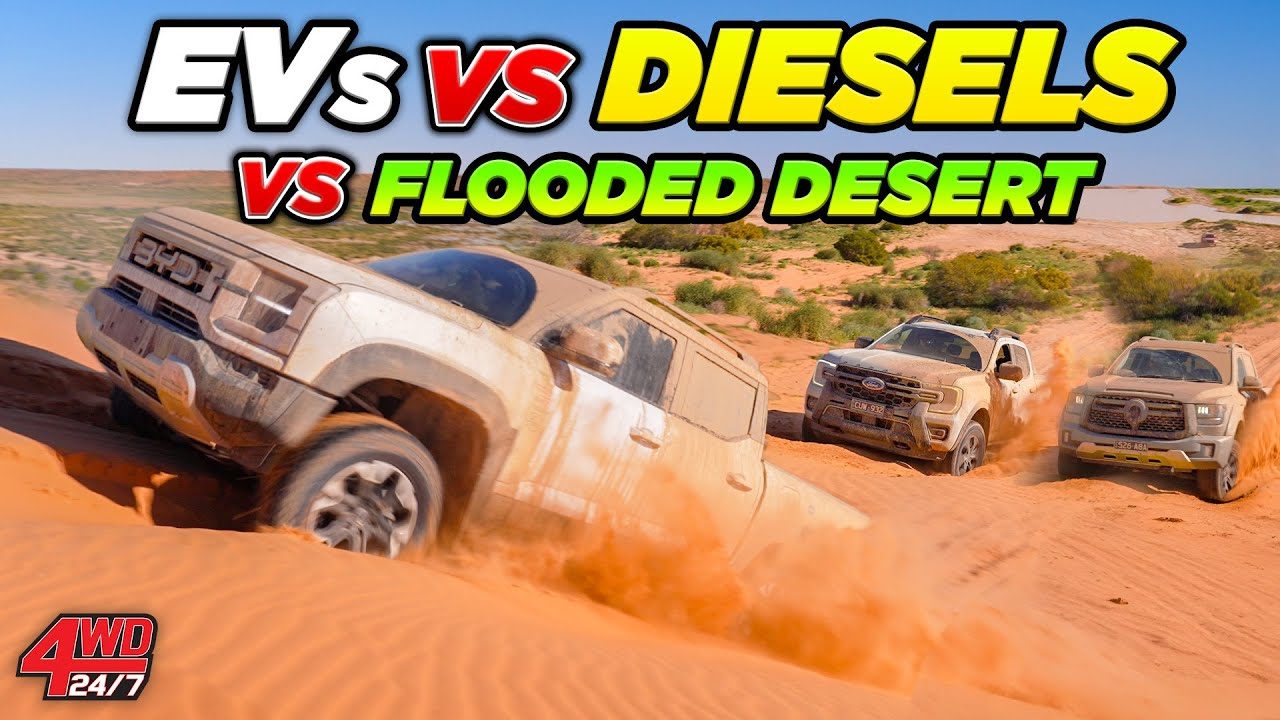
The video was published by the fine people at 4WD 24/7, whom I’ve been following for a few years now, and they’re proper off-road enthusiasts. They have loads of experience driving diesel and gas rigs in the most remote places, but they have little to no experience in the EV world, so they immediately faced the reality that sometimes hits even the most well-versed EV drivers out there: sketchy charging infrastructure.
The fact that it takes roughly an hour to recharge the high-voltage batteries from a DC fast charger doesn’t make the situation any better. To make matters worse, only the BYD Shark and GWM Cannon Alpha support DC fast charging, with the Ford Ranger EV stuck on AC charging alone, which is only useful if you can top up the battery at home overnight.
The BYD Shark has two electric motors and a 1.5-liter gas engine that can only power the front wheels. In theory, it can go 62 miles (100 km) on a full battery. Meanwhile, the GWM Cannon Alpha is rated at 71 miles of all-electric range thanks to a bigger battery. The Cannon also features a traditional transfer case with low range and a pair of locking differential lockers.
The Ford Ranger, which is the only car in the group that can be bought in the U.S. but without a plug-in hybrid powertrain, has the smallest battery of the bunch and can drive on electricity for roughly 30 miles (49 km).
More PHEV Stuff
 Volvo Will Now Sell You An Armored Plug-In Hybrid SUV
Used Volvo V90 PHEV Ownership Update: Costs, Efficiency And Annoyances
The Future Of Plug-In Hybrids: Barely Using Any Gas At All
Used Buying Guide For Plug-In Hybrid Electric Cars
After driving for about two hours with the camper attached to the hitch, the BYD Shark had to stop and refuel because the tank was nearly empty. The electrified pickup managed just 9.4 miles per gallon (25 liters/100 kilometers) because the engine was constantly on, trying to keep the high-voltage battery topped up. So after just 108 miles (175 km), it was in need of some dinosaur juice.
After this first rather short leg of the journey, the RV was hooked up to the Ford Ranger PHEV, which did a little better than the BYD Shark, but not by much. Meanwhile, the GWM Cannon Alpha was the worst of the bunch when it comes to efficiency, despite having the biggest battery.
Without a trailer attached, the plug-in trucks managed around 16 mpg (15 l/100 km) at highway speeds, which is decent, considering they weigh over 6,600 lbs (3,000 kg) each. By comparison, the diesel rigs returned between 25 and 14 mpg (9.5 to 17 l/100 km).
On the outback dirt traveling at 50 mph (80 kph), things improved considerably for the PHEVs, with an average fuel economy of around 23 mpg (10 l/100 km). What’s more, the power outlets that come as standard on some of these trucks mean that you can power appliances at camp without burning any fuel or needing expensive dual battery setups.
BYD Shark
GWM Cannon Alpha PHEV
Photo by: GWM
2025 Ford Ranger PHEV
Photo by: Ford
What about going off-road? They conquered sand dunes effortlessly, while mud proved a little more difficult, but not impossible. That said, the Ford Ranger stood out by being the only vehicle in the group that couldn’t conquer a big dune, even after several attempts. In the sand, the plug-in trucks averaged between 11.7 and 10.2 mpg (20 to 23 l/100 km), while the diesel rigs averaged between 13.8 and 16.8 mpg (17 to 14 l/100 km). So not that great.
What do you think?
View
Comments
The big question is: does it make any sense to get a plug-in hybrid pickup instead of a conventional diesel truck? It depends on the scenario, but the odds are stacked against PHEVs. They make a lot of sense if you mainly drive short distances and can charge at home, but when it comes to overlanding and towing, they’re not that great. At least these three models aren’t, so we’ll have to wait and see what the future holds for this type of vehicle.
The upcoming extended-range EVs from Scout and Ram could make things a little simpler and better because they get big batteries and big engines to act as generators. But I guess we won’t know for sure until we drive them.

Get the best news, reviews, columns, and more delivered straight to your inbox.
back
Subscribe For more info, read our Privacy Policy & Terms of Use.
We want your opinion!
What would you like to see on Insideevs.com?
Take our 3 minute survey.
- The InsideEVs team
Share this Story
- (https://twitter.com/intent/tweet?url=https%3A%2F%2Finsideevs.com%2Ffeatures%2F765241%2Fphev-pickup-test-vs-diesel-byd-shark-gwm-cannon-ford-ranger%2F&text=Are%20Plug-In%20Hybrid%20Pickups%20Any%20Good%3F%20Here%E2%80%99s%20What%20This%20Grueling%202%2C500-Mile%20Test%20Reveals&via=InsideEVs)
- copy
GO TO COMMENTS
(
)
Got a tip for us? Email: tips@insideevs.com
View all comments ( )
Trending
The Best Affordable Electric Cars In 2026: Cheap, Reliable Options For Everyone
Can The BMW iX3 Take Down The Tesla Model Y L And Rivian R2?
Kia EV3 Lease Deals Are Here, And It’s Cheaper Than The Chevy Bolt And Nissan Leaf
Here's What It's Like To Take Delivery Of A Rivian R2
latest articles
- Google Maps Is Getting Gemini AI In CarPlay Oct 21 - Software -
- The Best Affordable Electric Cars In 2026: Cheap, Reliable Options For Everyone Oct 21 - Buying Advice -
- Electrify America’s Largest EV Charging Station Is Missing One Big Thing Oct 21 - Charging -
- Can The BMW iX3 Take Down The Tesla Model Y L And Rivian R2? Oct 20 - News -
- Waymo Plans To Have 20,000 Cars By The End Of 2027 Oct 20 - News -
- The Boring Company Uses Tesla Model 3 Sleds To Shuttle Shipping Containers Through Its Tunnels Oct 20 - News -
- How Much Range Do EVs Lose When Parked? (And How to Stop It) Oct 20 - EV 101 -
RECOMMENDED FOR YOU
What's It Like To Live With A (Mostly) Free Fiat 500e For Two Years? These YouTubers Found Out
Google Maps Is Getting Gemini AI In CarPlay
How To Maximize Your Electric Car's Range In Cold Winter Weather
The Best Affordable Electric Cars In 2026: Cheap, Reliable Options For Everyone
Tesla Fan Attempts Coast-To-Coast FSD Drive, Ends Up With A $22,000 Repair Bill
Electrify America’s Largest EV Charging Station Is Missing One Big Thing
2025 Hyundai Ioniq 5 Six-Month Owner Review: Efficiency, Likes And Dislikes