Home
Slate
News
The Slate Truck Won't Use Gigacasting. Here's Why It Doesn't Need It
Slate is all about reducing costs by reducing complexity, so why isn't it using Gigacasting?

Photo by: InsideEVs
Rob Stumpf 
By: Rob Stumpf
May 2, 2025 at 2:00pm ET
Add InsideEVs as a preferred source in Google
- (https://twitter.com/intent/tweet?url=https%3A%2F%2Finsideevs.com%2Fnews%2F758345%2Fslate-no-gigacasting-reason-truck%2F&text=The%20Slate%20Truck%20Won%27t%20Use%20Gigacasting.%20Here%27s%20Why%20It%20Doesn%27t%20Need%20It&via=InsideEVs)
- copy
Share
Comment
- Slate won't use gigacasting to build its upcoming $20,000 truck.
- Pioneered by Tesla, gigacasting is a new manufacturing technique that can reduce costs and complexity.
- The automaker says that its cost savings are so great elsewhere that it likely doesn't need to do this.
Slate, the Saturn-like EV startup, is building a name for itself extremely quickly among EV aficionados. After all, it's doing the thing that most automakers wouldn't dare to attempt to do: launch a new EV brand with a $20,000 truck with as few features as possible. Sounds wild—especially in a world where BEVs are synonymous with expensive luxury cars.
Even still, Slate is dead-set on using its Jeff Bezos-bucks to accomplish its mission. And it's going to do that without using jumping on the automotive manufacturing hypetrain of gigacasting. That might seem a bit odd, especially since gigacasting promises to revolutionize auto production by reducing costs and complexity. But Slate tells us that there's a method behind its madness.

Photo by: Tim Levin/InsideEVs
Before we get too far into this, let's talk about what gigacasting is and what it looks to improve on.
A car is built using a ton of stamped parts. To create these parts, a sheet of metal is fed into a machine that sandwiches it between a die and squeezes it until it forms a specific shape. This is great for smaller parts, but when you're building something larger (like the underpinnings of a vehicle), these pieces may need to be fastened together using rivets or welding.
Gigacasting, on the other hand, is taking molten metal and using a High-Pressure Die Casting (HPDC) machine to force the liquid metal into a mold. Tesla pioneered this technology and remains arguably its most vocal proponent, but the rest of the auto industry is rapidly chasing it too.
It allows for the creation of complex metal parts without the need to manually fasten each individual stamped part one by one. In Tesla's case, gigacasting allowed Tesla to eliminate 370 parts from the Model Y, all while reducing weight by 10% and improving efficiency.
171 stamped parts and 1,600 welds were eliminated by the use of two parts created by Gigacasting.
Photo by: Tesla
One key metric in automotive manufacturing is cost per minute. That figure is the time it takes a worker or piece of machinery to change the form, fit, or function of a vehicle. You know the saying "time is money"? It's extremely true in manufacturing and is something that automakers are willing to pay industrial engineers big bucks to cut down on.
Gigacasting reduces that cost significantly by optimizing equipment (think reducing the number of robots needed to assemble panels or welders to fasten them together), factory space, and even enabling waste to be easily recycled.
That's the good, but what about the bad? Well, that all comes down to cost—and that's where Slate looked at the tech and shook its head
"Gigacasting takes out complexity in parts but adds complexity in engineering and cost," a Slate spokesperson told InsideEVs. "Slate engineering and manufacturing focused on taking out what’s unnecessary and delivering a radically affordable vehicle."
Translation: We don't need a fancy metal-squirting machine to solve a problem we didn't already have.
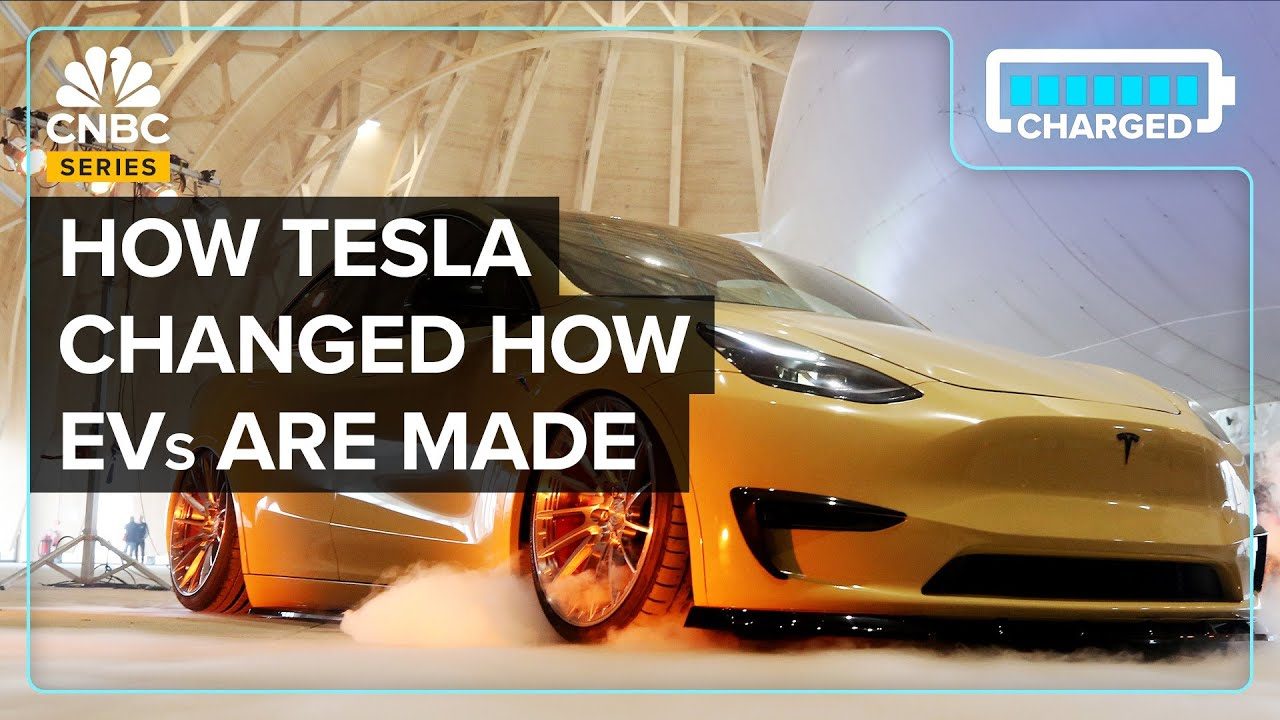
It turns out that gigacasting is really expensive, at least on a small scale. Think $7.5 million (or more) for a single machine and its associated tooling. It's not just the cost of the equipment that adds to the expense, either. The engineering behind it is also a significant price driver, all the way down to the small army of metallurgists who babysit the exotic alloys used in the mold.
It's not like you can just smelt down steel and feed it into the HPDC machine for casting. Well, you could, but the results might not be ideal. These machines need to use alloys that flow extremely well to avoid air pockets and other casting defects that could otherwise render a part unusable. According to Forbes, the cost of these alloys can be two to three times as high as regular steel used in stamped parts.
Slate says it can justify the added uptick in manufacturing complexity because its vehicle assembly is "inherently less complex." A company spokesperson tells us that Slate has just 500 end-items—a manufactured component ready to install as part of the assembly process—delivered to its plant for vehicle production.
Most car factories have around 2,500 unique end-items for each vehicle, according to Slate. Fewer parts work out to a lower cost per minute, which means that Slate can repurpose some of that saved cost into the time that would be reduced by Gigacasting.

Get the best news, reviews, columns, and more delivered straight to your inbox.
back
Subscribe For more info, read our Privacy Policy & Terms of Use.
Admittedly, Slate's minimalist approach feels borderline uncool by modern EV standards. No giant 48-inch screen, no origami metal folding exoskeleton, no zero-to-60 mph run in 1.9 seconds, and no gigacasting.
It certainly won't win the new automaker any points with the tech bro manufacturing guild. But that's not who this truck is meant to win over—it's for the consumers.
What do you think?
View
Comments
It's for the folks who want a minimalistic A-to-B commuter that just happens to be battery-powered and won't break the bank. Or, maybe those who desire the capabilities of a pickup, but want the footprint of a Chevy S-10 from the late 1990s and not a modern Ford F-150 that barely fits in their garage. Sure, it's not a revolutionary manufacturing process, but it doesn't need to be.
And in today's auto industry, well, that feels revolutionary.
More Slate News
Here's Where Slate Will Build Its $20,000 Electric Pickup Truck
Why The Slate Truck Doesn’t Use LFP Batteries
The Slate Truck Online Configurator Is Up. Build Your Perfect Cheap EV
Slate Unveiled A Cheap EV. Tesla's Is Still A Mystery.
We want your opinion!
What would you like to see on Insideevs.com?
Take our 3 minute survey.
- The InsideEVs team
Share this Story
- (https://twitter.com/intent/tweet?url=https%3A%2F%2Finsideevs.com%2Fnews%2F758345%2Fslate-no-gigacasting-reason-truck%2F&text=The%20Slate%20Truck%20Won%27t%20Use%20Gigacasting.%20Here%27s%20Why%20It%20Doesn%27t%20Need%20It&via=InsideEVs)
- copy
GO TO COMMENTS
(
)
Got a tip for us? Email: tips@insideevs.com
View all comments ( )
Trending
Lucid Is Slashing $15,000 Off The Gravity, But The Deal Won’t Last Long
The Remnants Of The Electric Saab That Never Was Are Going Up For Auction
What We Both Thought After Driving The Rivian R2
Aptera Finally Built Its First Car For Customer Delivery
Latest Stories
- Tesla FSD V15 Makes Your Drive Look Like Grand Theft Auto Nov 22 - News -
- Waymo Is Recalling Its Robotaxis Because They're Not Great At Dealing With Human Instructions Nov 21 - Autonomous Vehicles -
- This EV-Swapped 1967 Porsche 912 Has 300 HP And A Split Battery Pack Nov 21 - News -
- This Plug-In Hybrid SUV Towed A Boeing 747 On Only 2 Wheels. Yes, Really. Nov 21 - Towing -
- BYD's Latest SUV Can Hide Its Steering Wheel When You Don't Need It Nov 20 - China -
- What We Both Thought After Driving The Rivian R2 Nov 20 - Podcast -
- Hyundai’s N Vision 74 Was One Of The Coolest Car Designs In Recent Memory. Now It's Shelved Nov 20 - News -
RECOMMENDED FOR YOU
REO Runabout vs. Slate Truck: Which Sub-$30,000 Truck Is Better?
Tesla FSD V15 Makes Your Drive Look Like Grand Theft Auto
Slate Is Selling A $30 'Screenless GPS' For Its Low-Tech Truck
Waymo Is Recalling Its Robotaxis Because They're Not Great At Dealing With Human Instructions
‘Unburdensome’: The Slate Truck Is Easier Than A Tesla To Live With, James May Says
This EV-Swapped 1967 Porsche 912 Has 300 HP And A Split Battery Pack
Slate’s Bare-Bones Electric Truck Surprised This Early Reviewer