Home
News
China
China Cracks Down On Driver Assistance Marketing After Fatal Xiaomi Crash
Yep, that includes Tesla's "Full Self Driving" branding. That was already banned in China, and the restrictions are only getting tighter.
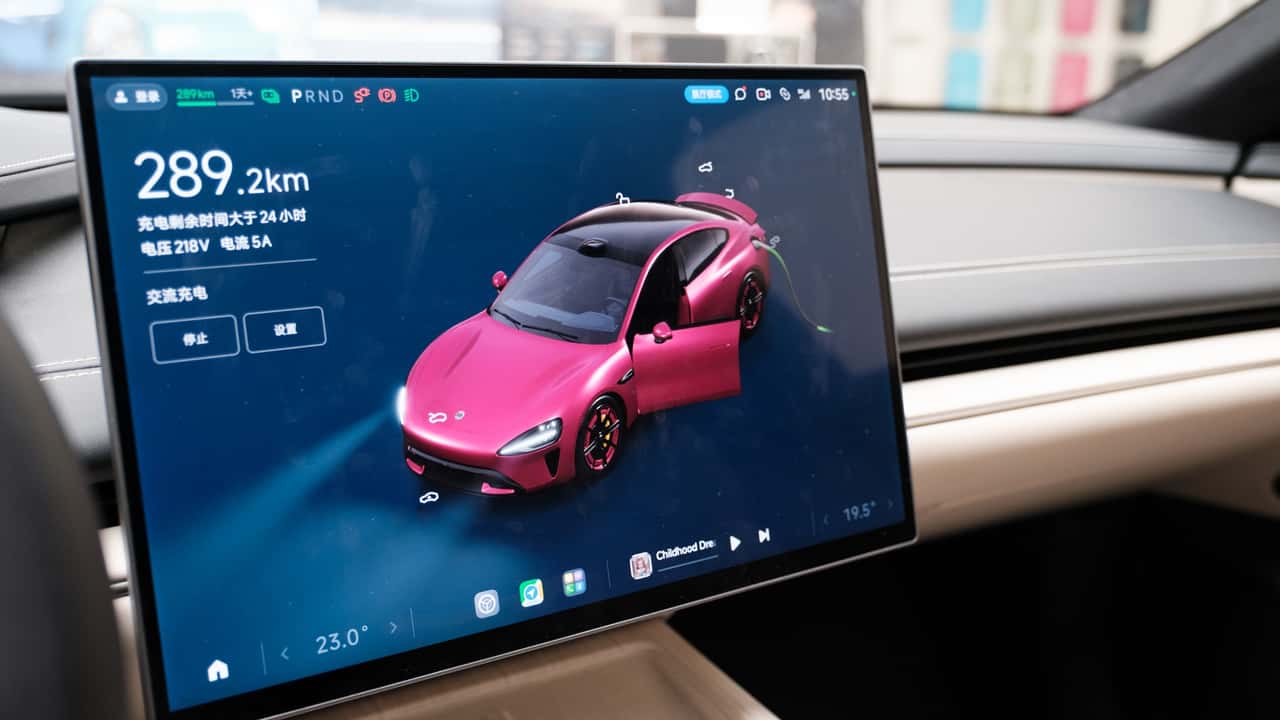
Photo by: Patrick George
Kevin Williams 
By: Kevin Williams
Apr 17, 2025 at 5:46pm ET
Add InsideEVs as a preferred source in Google
- (https://twitter.com/intent/tweet?url=https%3A%2F%2Finsideevs.com%2Fnews%2F757030%2Fself-driving-china-miit-crackdown%2F&text=China%20Cracks%20Down%20On%20Driver%20Assistance%20Marketing%20After%20Fatal%20Xiaomi%20Crash&via=InsideEVs)
- copy
Share
Comment
- China's MIIT (Ministry of Industry and Information Technology) has put out new rules for the marketing and implementation of driver assistance features and over-the-air updates.
- Automakers in China are no longer allowed to market cars with terms like "autonomous, intelligent or automatic" driving instead of the SAE level designations used around the world.
- This comes after a high-profile fatal crash in China involving a Xiaomi SU7 using its NOA (navigate on autopilot) feature.
When it comes to making technical EV innovations, China moves fast. Taking a page from the Silicon Valley textbook, these brands are iterative, constantly upgrading their vehicles and software. Just a few years ago highway driving assistance features were only reserved for high-end vehicles found in and out of China. Now, you can find the tech on BYD’s cheapest $10,000 car.
However, new information suggests that perhaps the brands are moving a little too fast. China’s regulatory bodies are putting the brakes on some of the so-called "autonomous" features found on cars. (No company in any country makes a truly autonomous car that is sold to the public.) The aim is to clarify what exactly these cars can and can’t do, lest the consumer becomes lulled into thinking their cars are completely self-driving when they aren’t.

Get the best news, reviews, columns, and more delivered straight to your inbox.
back
Subscribe For more info, read our Privacy Policy & Terms of Use.
On April 16, China’s MIIT (Ministry of Industry and Information Technology) put a few big guardrails up for car companies. For starters, brands are no longer allowed to advertise self-driving tech as “beta," language Tesla used for years and that Xiaomi still uses. The public is not allowed to be a beta tester, the thinking goes, so any actual public beta testing must be done through the proper government channels.
Secondly, manufacturers must stop using vague or misleading terms such as “autonomous driving” or “automatic driving” in their marketing. They must now refer to the systems as the appropriate level of assisted driving, and the cars themselves must adhere to the rules. Also, since technically Level 2 hands-off driving isn’t approved for commercial use in Chinese consumer products, all cars must be hands-on. Driverless parking or retrieval systems (like Tesla’s Smart Summon) are also banned.

Ji Yue 01 Interior, demonstrating driver assistance features.
Arguably, the most interesting part is that the MIIT is limiting the number and ease with which manufacturers can do over-the-air updates. Any sort of emergency updates must go through the same process which a car would go through for recall work.
This is all on the heels of a very high-profile case in China a few weeks ago, involving a Xiaomi SU7. The SU7 plowed into a construction zone in China at roughly 60-70 mph. It hit a concrete barrier and erupted in flames, killing the three university student occupants inside. It was revealed that the car was using its driver assistance features before the wreck, but the driver manually deactivated them and failed to control the car. The car’s black box revealed the driver had multiple distracted driving warnings before its tragic fate.
What do you think?
View
Comments
I think this is a shrewd move that most governments would be smart to copy. Advanced driver assistance features are clever and help with driving fatigue, but some people don’t understand just what they’re actually able to do. I’m sure it’s not hard to find an average Joe who fell for the FSD or Autopilot hype and now thinks that their cars can drive themselves without any user input. That isn’t really true, and governments across the world are finally realizing just how dangerous that belief can be.
Contact the author: Kevin.Williams@InsideEVs.com
Related Articles
Whoops: Someone Already Crashed A 1,526-HP Xiaomi SU7
The Tesla Model S And Model X Are Dead In China
Michigan Senator Seeks Total Chinese Car Ban
YouTuber Fools Tesla Autopilot With A Painted Wall (Updated)
We want your opinion!
What would you like to see on Insideevs.com?
Take our 3 minute survey.
- The InsideEVs team
Share this Story
- (https://twitter.com/intent/tweet?url=https%3A%2F%2Finsideevs.com%2Fnews%2F757030%2Fself-driving-china-miit-crackdown%2F&text=China%20Cracks%20Down%20On%20Driver%20Assistance%20Marketing%20After%20Fatal%20Xiaomi%20Crash&via=InsideEVs)
- copy
GO TO COMMENTS
(
)
Got a tip for us? Email: tips@insideevs.com
View all comments ( )
Trending
BMW’s iX5 Beat The Lucid Gravity On Highway Range. Not On Efficiency
I Tried Mercedes MB.Drive Assist Pro. It's Like Tesla FSD, But With One Catch
Tesla Opens Self-Driving Cybercab Orders To 'Select Customers' At $29,990
Tesla Model 3 Maintenance Guide: What Needs Servicing And What Doesn't
Latest Stories
- The Electric Baby Land Rover Defender And Range Rover GT Will Begin Production Next Year Nov 16 - News -
- Mercedes Is Bringing Hands-Free Driving To Certain U.S. Highways In 2027 Nov 16 - News -
- Tesla Keeps Killing Cars. Now It Wants To Build Cybercabs In Germany Nov 16 - News -
- Tesla Model 3 Maintenance Guide: What Needs Servicing And What Doesn't Nov 16 - Repair / Maintenance -
- Audi A2 e-tron First Drive: Does The Iconic Nameplate Live Up To The Hype? Nov 16 - First Drives -
- I Tried Mercedes' Answer To Tesla FSD. Here's How It Went Nov 16 - Tech Review -
- BMW Just Started Making EV Batteries In America. The New iX5 Will Be First In Line Nov 16 - Manufacturing / Production -
RECOMMENDED FOR YOU
The Lincoln Aviator PHEV May Have Died In America, But It’s Coming Back In China
Tesla Model 3 Maintenance Guide: What Needs Servicing And What Doesn't
Chinese Cars Cost Way Less To Build Than European Ones. Here’s Why
Audi A2 e-tron First Drive: Does The Iconic Nameplate Live Up To The Hype?
Chinese EVs Are Praised For Value, But This $150,000 Minivan Has A Serious Braking Problem
I Tried Mercedes' Answer To Tesla FSD. Here's How It Went
BYD’s $10,000 EV Is Getting A Huge Upgrade, With 5-Minute Charging