Home
Features
Features
PHEV Batteries Take A Beating If Used Right. But They Still Last
A PHEV’s smaller battery pack cycles far more often than EV batteries, and that extra workload can add up.
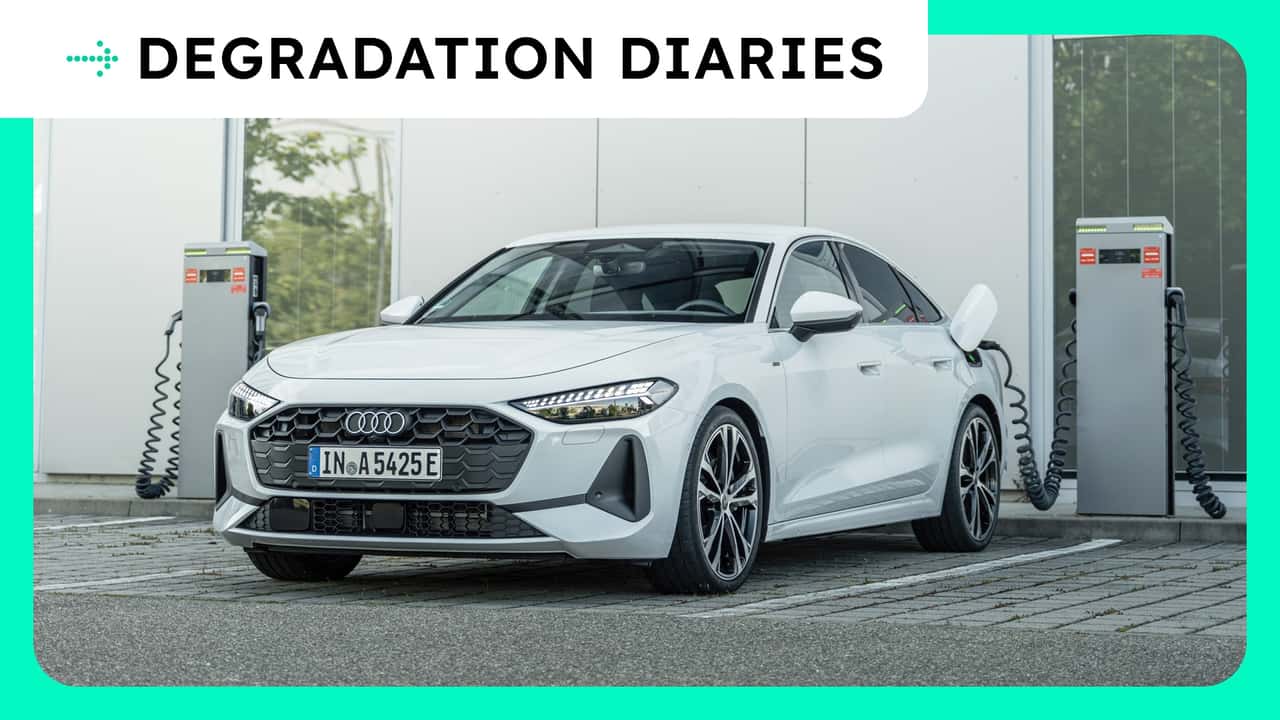
Photo by: InsideEVs
Andrei Nedelea 
By: Andrei Nedelea
Sep 22, at 3:34pm ET
Add InsideEVs as a preferred source in Google
- (https://twitter.com/intent/tweet?url=https%3A%2F%2Finsideevs.com%2Ffeatures%2F806631%2Fphev-battery-degradation-diaries%2F&text=PHEV%20Batteries%20Take%20A%20Beating%20If%20Used%20Right.%20But%20They%20Still%20Last&via=InsideEVs)
- copy
Share
Comment
Plug-in hybrids are often described as the best of both worlds. They offer a lot of pure electric driving—over 100 miles in some Chinese models—while also providing the safety net of a conventional combustion engine. PHEVs have a lot going for them, and buying one can certainly stave off the range anxiety of a pure EV. But how much should you worry about its battery?
After all, to make the most of such a powertrain, you need to plug it in a lot. All EV batteries lose capacity over time as drivers charge and discharge them over and over again. And because PHEVs have a fraction of a pure EV’s battery capacity, they can go through a lot more charging cycles.
Welcome to Degradation Diaries, my column that breaks down everything you need to know about how EVs age.

Photo by: Iulian Dnistran / InsideEVs
The difference can be significant. Over 100,000 miles of electric driving, a 300-mile EV would theoretically complete around 333 full-equivalent cycles, while a PHEV with 40 miles of electric range would need roughly 2,500.
Those cycles can also frequently take PHEV batteries from nearly empty to full, which we know can harm EV batteries. Driving 30 or 40 all-electric miles daily might require topping up an EV once per week or less, whereas a PHEV might get fully recharged and depleted every day.
On top of that, most PHEVs use nickel-based lithium-ion batteries, typically nickel manganese cobalt (NMC), because they deliver higher energy and power density in a compact pack. These high-nickel battery packs will experience accelerated capacity loss if they spend a lot of time at very low or very high states of charge. And that could be more common among PHEVs.

Stay informed with our newsletter every weekday
back
Subscribe For more info, read our Privacy Policy & Terms of Use.
So, is it all a cause for worry? Maybe not, at least according to one large study. Germany's ADAC published the largest real-world look at plug-in hybrid battery degradation in late 2025, in collaboration with battery testing specialist Aviloo. They analyzed around 28,500 battery health measurements from BMW, Ford, Mercedes-Benz, Mitsubishi, Volkswagen Group, and Volvo PHEVs. They confirmed that the small-battery issue contributes to battery aging.
“Especially when PHEVs are used intensively in electric mode, their batteries quickly go through a high number of charging cycles,” the study said.
ADAC divided the cars into groups according to how much of their driving was electric and found that “vehicles with high proportions of electric driving have, on average, noticeably lower battery health values than vehicles with low proportions of electric driving.”
Photo by: Iulian Dnistran / InsideEVs
According to the study, at 100,000 km, the least used batteries averaged roughly 94% state of health, compared with about 85% for the most heavily used group. By 200,000 km, the respective trend lines were at roughly 91% and 82%.
Notably, battery aging also depended heavily on the manufacturer. Mercedes PHEVs aged well even at high mileage, while Volkswagen Group and Volvo also mostly appeared trouble-free. BMW’s results were all over the place, showing a visible link between electric use and degradation. Ford batteries lost capacity earlier than the others, while Mitsubishi performed worse, coming in last by a large margin.
Even so, ADAC concluded that most batteries should last an average vehicle’s lifetime and set longevity benchmarks owners can keep in mind. It suggested that a healthy PHEV pack should retain at least 92% of its original capacity at 31,000 miles (50,000 km), 88% at 62,000 miles (100,000 km), 84% at 93,000 miles (150,000 km), and 80% at 124,000 miles (200,000 km).
Plug-In Hybrids Have An Emissions Problem. Carmakers Want To Delay The Fix
BYD's PHEV Pickup Just Landed In The U.K. But Americans Still Can't Have It
BMW Buyers Turned To Plug-In Hybrids As EV Demand Softened In 2025
This Hot New Plug-In Hybrid Acts Like An EV—Complete With DC Fast-Charging
What do you think?
View
Comments
A growing body of research shows that you don’t have to worry much about EV batteries failing fast. It doesn’t look like PHEV batteries deteriorate too differently—even though they take a serious beating.
ADAC’s data suggests manufacturers have largely engineered these packs to withstand the workload of lots of electric driving, with most retaining plenty of useful capacity even after high mileage. So while frequent electric driving does appear to accelerate degradation, that’s no reason to avoid using a PHEV as intended.
We want your opinion!
What would you like to see on Insideevs.com?
Take our 3 minute survey.
- The InsideEVs team
Share this Story
- (https://twitter.com/intent/tweet?url=https%3A%2F%2Finsideevs.com%2Ffeatures%2F806631%2Fphev-battery-degradation-diaries%2F&text=PHEV%20Batteries%20Take%20A%20Beating%20If%20Used%20Right.%20But%20They%20Still%20Last&via=InsideEVs)
- copy
GO TO COMMENTS
(
)
Got a tip for us? Email: tips@insideevs.com
View all comments ( )
Trending
Here’s How To Make Your Holiday EV Road Trip Easier
The BMW i3 Won Me Over In The Corners. But It Also Felt Wrong
These Are The Top 10 Black Friday EV Deals. Some Are $25,000 Off
Tesla's EVs Could Get One Big Upgrade Next Year
Latest Stories
- ChargePoint's DC Fast Chargers Are Hitting The Ski Slopes Nov 25 - Charging -
- BMW Cars In The U.S. Will Soon Stop At Red Lights And Automatically Drive Off Again Nov 25 - Software -
- This BMW iX3 Drove Over 600 Miles On One Charge. The Catch? It Took Nearly 18 Hours Nov 25 - Range / Efficiency -
- The BMW i3 Won Me Over In The Corners. But It Also Felt Wrong Nov 24 - Test Drives -
- Here’s How To Make Your Holiday EV Road Trip Easier Nov 24 - Charging -
- New York Says 'Enough Is Enough' To In-Car Subscriptions Nov 24 - News -
- An Empty EV Tried To Park Itself 868 Times In One Night. The Video Is Hilarious Nov 24 - News -
RECOMMENDED FOR YOU
Do EVs Wear Tires Faster? Here's What The Studies Show
ChargePoint's DC Fast Chargers Are Hitting The Ski Slopes
Mercedes' Answer To Tesla FSD Requires Hands On The Wheel. Does That Make It Better Or Worse?
BMW Cars In The U.S. Will Soon Stop At Red Lights And Automatically Drive Off Again
I Like Electric Sedans. But Riding In The Back Of One Sucks
This BMW iX3 Drove Over 600 Miles On One Charge. The Catch? It Took Nearly 18 Hours
Rivian’s ‘Boring’ Commercial Van Is Turning Into A Secret Weapon