Home
Tesla
Model 3
Features
A Tesla Model 3 Slow-Charged In -15 Degree Temperatures. Here’s How It Went
Can a Level 1 charger top up the batteries after a freezing night outside?

Photo by: InsideEVs
Iulian Dnistran 
By: Iulian Dnistran
Feb 8, 2025 at 12:00pm ET
Add InsideEVs as a preferred source in Google
- (https://twitter.com/intent/tweet?url=https%3A%2F%2Finsideevs.com%2Ffeatures%2F749828%2Ftesla-model-3-freezing-night-level-1-charger%2F&text=A%20Tesla%20Model%203%20Slow-Charged%20In%20-15%20Degree%20Temperatures.%20Here%E2%80%99s%20How%20It%20Went&via=InsideEVs)
- copy
Share
Comment
- A Level 1 charger is sometimes bundled with a new EV.
- It can come in handy for emergencies and it can even work as a main charger in ideal conditions.
- If you have to park outside in the freezing temperatures, it's barely effective.
It's general knowledge that charging an EV at home is the best way to lower fuel bills and increase ownership satisfaction. But what happens if you buy an EV and don't have a Level 2 charger? Typically, new EVs come with a Level 1 charger in the trunk, which can be handy in emergencies.
But you really shouldn’t rely on one as the main source of power for an EV. Throw in some freezing temperatures, and you’ll have a very bad time. The FrozenTesla video embedded below showcases just how bad winter charging can be if you only have Level 1 access.
As a reminder, a Level 1 charger is typically plugged into a 110-volt outlet and can draw a maximum of around 15 amps, leading to charging speeds of approximately 1 to 2 kilowatts. If the car's battery pack has 70 kilowatt-hours, it could take up to 80 hours to get a full charge. That's an extremely long time.
More Stuff Like This
 A Tesla Model 3 Was Deep Frozen At -16 Degrees, Then Charged. Here’s How It Went
I Tested A Polestar 3 On A Frozen Lake. It Handles Ice Like A Pro Dancer
Watch Rivian Test Its Dual-Motor Powertrain On Frozen Alaska Roads
Mustang Mach-E Owners Prove You Shouldn't Worry About EV Range
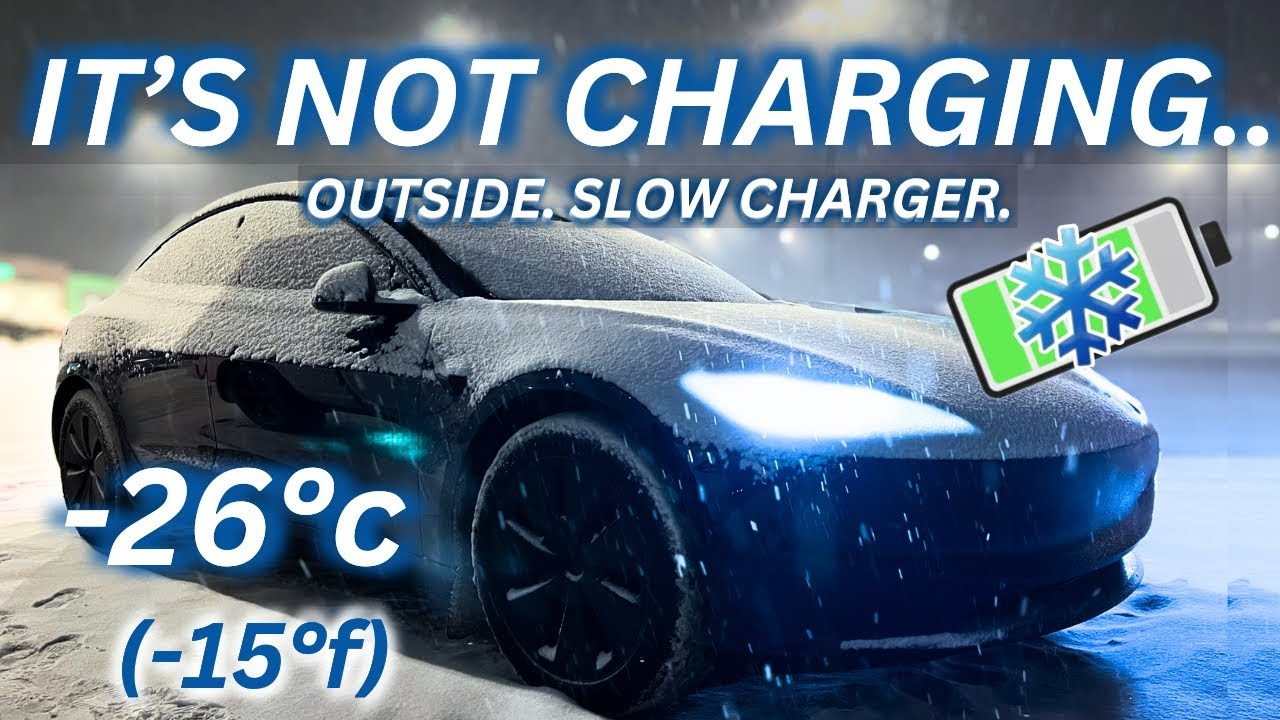
In the video, a facelifted Tesla Model 3 Long Range All-Wheel Drive was parked outside through a freezing Canadian night with temperatures dropping to -15 degrees Fahrenheit (-26 Celsius). During this time, it was plugged into a Level 1 charger to try and increase the state of charge.
The Tesla remained outside for 14 hours, during which the battery level went from 65% to just 70%. That's pretty terrible, but there’s an explanation. The charger was plugged into an extension cord that was too thin, forcing the charger to throttle the current to just 9 amps. The maximum possible is 12 amps which would have made a difference in this case.
According to a smartphone app monitoring this particular charging session, the car used most of the energy—roughly 15 kWh—simply to keep the battery warm. This resulted in a gain of just 1.14 kWh for the session. In other words, only 7% of the power from the outlet actually made it into the battery.
What do you think?
View
Comments
Using a thicker gauge extension cord would have allowed the charger to dispense its maximum output of 12 amps. Plugging into a 240-volt outlet would have helped even more, effectively doubling the amount of energy going into the battery.
Can you live with a Level 1 charger? Absolutely, but there’s additional planning involved which may not suit everyone.

Get the best news, reviews, columns, and more delivered straight to your inbox.
back
Subscribe For more info, read our Privacy Policy & Terms of Use.
We want your opinion!
What would you like to see on Insideevs.com?
Take our 3 minute survey.
- The InsideEVs team
Share this Story
- (https://twitter.com/intent/tweet?url=https%3A%2F%2Finsideevs.com%2Ffeatures%2F749828%2Ftesla-model-3-freezing-night-level-1-charger%2F&text=A%20Tesla%20Model%203%20Slow-Charged%20In%20-15%20Degree%20Temperatures.%20Here%E2%80%99s%20How%20It%20Went&via=InsideEVs)
- copy
GO TO COMMENTS
(
)
Got a tip for us? Email: tips@insideevs.com
View all comments ( )
Trending
I Tried Mercedes' Answer To Tesla FSD. Here's How It Went
Driven: BMW's Electric M3 Is The Real Deal
Tesla Opens Self-Driving Cybercab Orders To 'Select Customers' At $29,990
Tesla Model 3 Maintenance Guide: What Needs Servicing And What Doesn't
Latest Stories
- The Electric Baby Land Rover Defender And Range Rover GT Will Begin Production Next Year Nov 16 - News -
- Mercedes Is Bringing Hands-Free Driving To Certain U.S. Highways In 2027 Nov 16 - News -
- Tesla Keeps Killing Cars. Now It Wants To Build Cybercabs In Germany Nov 16 - News -
- Tesla Model 3 Maintenance Guide: What Needs Servicing And What Doesn't Nov 16 - Repair / Maintenance -
- Audi A2 e-tron First Drive: Does The Iconic Nameplate Live Up To The Hype? Nov 16 - First Drives -
- I Tried Mercedes' Answer To Tesla FSD. Here's How It Went Nov 16 - Tech Review -
- BMW Just Started Making EV Batteries In America. The New iX5 Will Be First In Line Nov 16 - Manufacturing / Production -
RECOMMENDED FOR YOU
Tesla Model 3 Maintenance Guide: What Needs Servicing And What Doesn't
The Electric Baby Land Rover Defender And Range Rover GT Will Begin Production Next Year
The Best EV Lease And Finance Deals In November 2026
Mercedes Is Bringing Hands-Free Driving To Certain U.S. Highways In 2027
The Best Affordable Electric Cars In 2026: Cheap, Reliable Options For Everyone
Tesla Keeps Killing Cars. Now It Wants To Build Cybercabs In Germany
The Boring Company Uses Tesla Model 3 Sleds To Shuttle Shipping Containers Through Its Tunnels