
VW And Skoda EV Owners Have Waited Years For Battery Preconditioning. It's Finally Coming
The two automakers are launching an over-the-air software update for the oldest Enyaq, ID.4, and ID.5 EVs on the road.

- Volkswagen and Skoda are adding a much-needed battery pre-heating feature to the oldest ID.4, ID.5, and Enyaq EVs on the road.
- Over 200,000 cars will get an over-the-air software update starting in the second half of November, 2027.
- The update will be rolled out in stages, and there are some prerequisites to keep in mind.
The first Volkswagen ID.4 and Skoda Enyaq electric crossovers to roll off the assembly lines back in 2020 marked a big step for the two automakers, but owners quickly faced an uncomfortable truth: their high-voltage batteries could not be preconditioned for fast charging, which resulted in longer-than-expected charging times during cold weather.
That’s no longer the case, though, as both Skoda and Volkswagen are releasing a new over-the-air software update that adds the long-awaited feature to the oldest Enyaq, ID.4, and ID.5 EVs on the road, manufactured from 2020 to 2024. From 2024 onward, all three models came with an automatic battery preconditioning feature, so they don’t need improvements in this area.

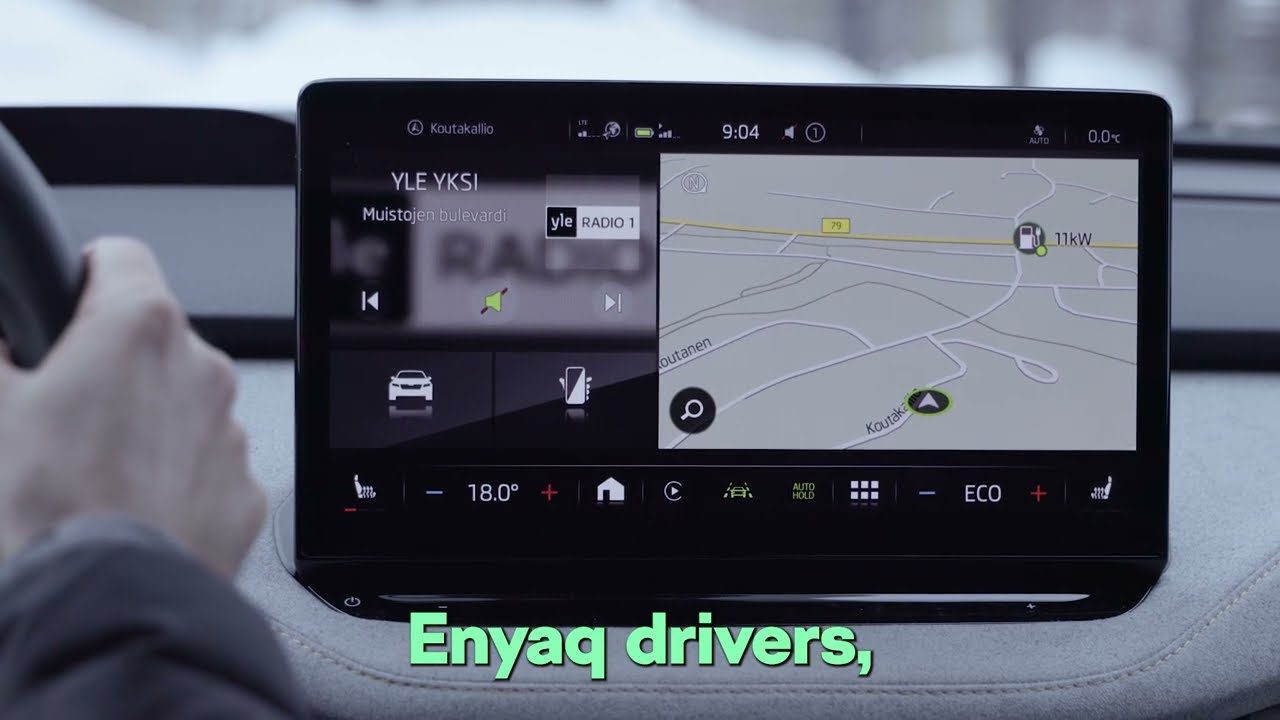
In the Skoda Enyaq’s case, software version 3.9 adds the battery pre-heating function, as well as an updated welcome screen that no longer needs user confirmation to boot up completely. Various security updates and a software fix for the Online Connectivity Unit (OCU) are also included.
Roughly 200,000 Enyaq EVs are scheduled to get the update, with the rollout happening in waves. The first cars will receive the new feature starting in the second half of November, followed by another wave two weeks later.
Owners of cars that have version 3.8 will be prompted to install the latest version, which happens automatically over the air. If an older version is running in the vehicle, the car will need to install version 3.8 first, which prepares the car for the battery pre-heating function, while version 3.8 introduces the function itself.

Skoda Enyaq battery preheating update
Meanwhile, cars running version 2.x will need a visit to an authorized service center to get the latest software updates that enable battery pre-conditioning.
The same improvements are also being offered to the Volkswagen ID.4 and ID.5, though the software version that includes them is 3.9.1. The latest ID. Software iteration also improves the reliability of the electric door handles and AC charging.
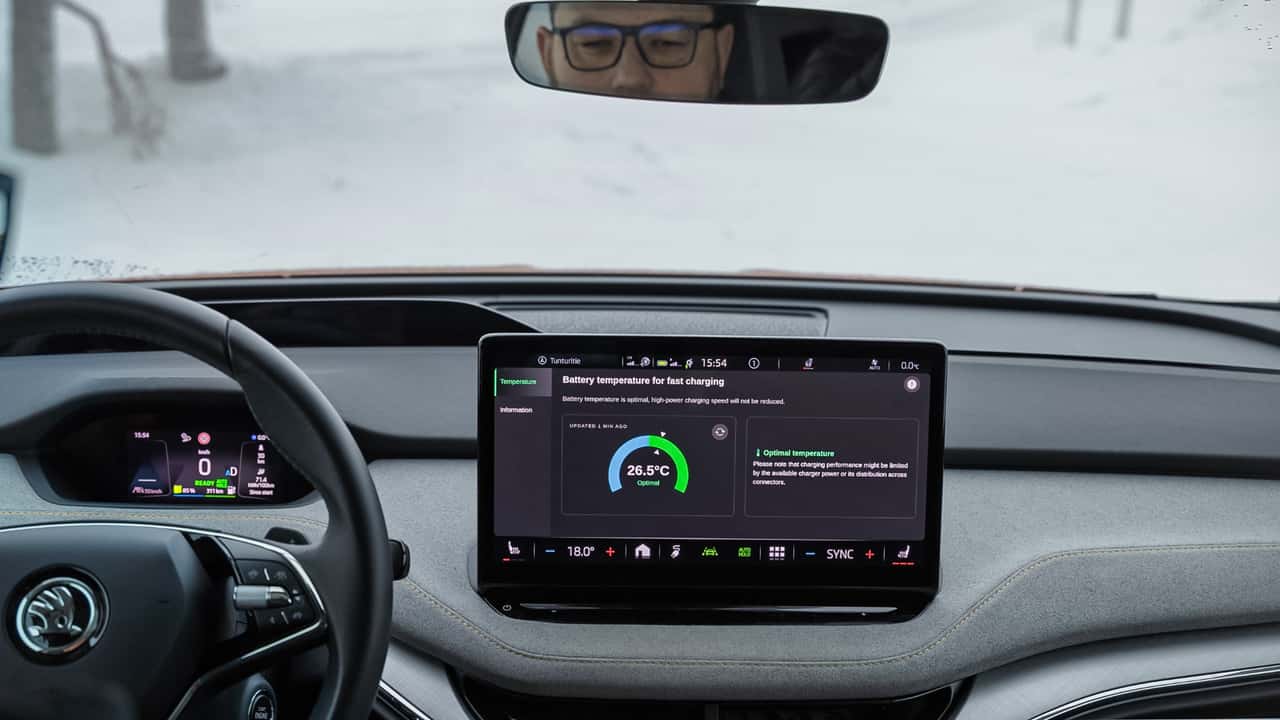
It’s worth noting that the new battery preconditioning feature that’s coming to older Enyaq, ID.4, and ID.5 EVs can only be manually activated on a new virtual screen in the infotainment system. What’s more, the button that turns on battery heating is only active when the battery temperature is below 68°F (20°C), according to Jiří Vlček, Skoda project manager for online updates. The new software also shows the battery’s current temperature, so drivers can easily monitor it.
Skoda engineers tested the new feature in freezing conditions.
After pressing the preconditioning button, the battery starts to gradually heat up until it reaches its optimum temperature of roughly 77°F (25°C). This can take about 30 to 40 minutes, and the automakers recommend that drivers take this into account when driving to a fast charger.
If the battery is at an optimal temperature, it can accept a higher power from a DC fast charger, shortening the time it takes to get back on the road.
„From the user’s perspective, battery pre-heating is a very simple and straightforward function, but from our perspective it requires intervention in the three most important control units of the vehicle: the vehicle control unit, the battery control unit and the infotainment system,” said Vlček. “This places enormous demands on implementation and on comprehensive testing to ensure the update functions correctly.”
Before this update, some owners had to resort to do-it-yourself methods to manually activate battery preconditioning, which involved a custom-made microcontroller or a dedicated diagnostics dongle and an OBD programming app. Now, owners can enjoy faster charging in freezing conditions without having to jerry-rig a feature that, by the looks of it, has always been possible.
Related Stories

RECOMMENDED FOR YOU
They Wanted The Fiesta ST To Beat These EV Hot Hatches. It Came Last
This Startup Wants To Turn Teslas Into Anything, From 11-Seat Minibuses To Pickups
VW’s EV Factory Is Now Taking Cars Apart. There’s Money In It
The 2027 Chevy Silverado EV Gets A Power Bump And A NACS Port
Volkswagen Can't Afford Its Upcoming Electric Golf Right Now
Tesla Sold FSD To Koreans Who Still Can't Use It. Now It's Facing A Complaint
Volkswagen's EVs Are Selling Like Crazy. That's Actually Hurting Its Profits