
This 400 kW EV Charger Uses Old EV Batteries To Avoid Costly Grid Upgrades
Allye’s new DC fast charger can use a simple 16A grid connection, energizing depots and temporary sites in hours instead of months.
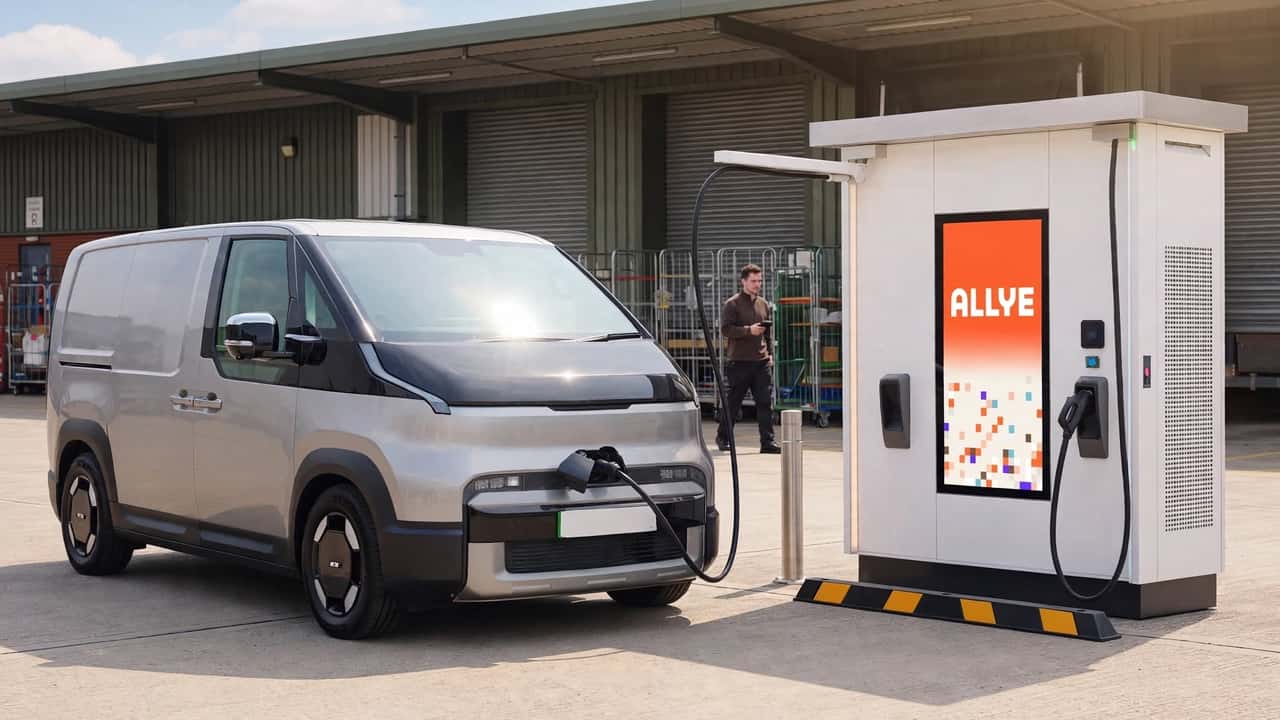

- Used EV batteries power Allye Energy’s new mobile DC fast charger.
- The battery-buffered charger can use as little as 16 amperes from the grid.
- At the same time, it can deliver up to 400 kW of power to two EVs.
Installing a big and powerful DC fast charger for electric cars is awesome, but it has some caveats. Typically, a new charging station needs extremely costly grid connection upgrades, and getting all the paperwork in place can take months.
That’s a problem for many companies that need a fast charger today at a location where EVs won’t be used for years on end. Thankfully, there are solutions out there, and one of them is now making use of second-life EV batteries to keep costs down.

Great Britain’s Allye Energy is now selling a battery-buffered EV fast charger that can go online in hours and only needs a modest grid connection to work. The new MEV is billed as the world’s first dedicated EV charger with built-in battery storage made from repurposed electric vehicle packs.
The charger can deliver up to 400 kilowatts of power to two EVs simultaneously through its integrated cables, or it can send power to multiple charging satellites if needed. The built-in EV batteries, which come from different manufacturers and have varying ages, offer either 155 or 232 kilowatt-hours of storage. Meanwhile, the minimum grid connection requires a three-phase 16-ampere hookup, with up to 125A supported.
The battery-backed charger tops up the batteries when the ports are not used, and then delivers energy from the batteries when an EV is plugged in.
Allye says the best use case for its new charger is depots where an industrial electrical connection is typically at hand. The all-in-one unit can simply be placed on the ground and hooked up to the mains through an industrial outlet or by hardwiring. Then, if the lease expires or the depot needs to be relocated, the charger can simply be lifted, put onto a truck, and sent on its way to the new location.
Gallery: Allye MEV Mobile DC Fast Charger With Buffer Batteries


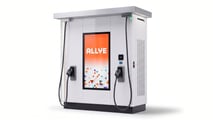
The standalone charger works with both 800-volt and 400-volt EVs, and uses 95% British-sourced components, including the batteries, which are sourced from UK-registered cars. To prevent cable theft, the units have cut detection, forensic marking, and quick-release terminals for fast replacement. Inside, there’s a pyro fuse for each battery pack, with off-gas detection and fire barriers between packs as standard.
To prove that its hardware and software are up for the job, Allye deployed one of its battery-buffered dispensers at J&M Murdoch’s refuse depot in Glasgow, where a grid upgrade was quoted at £300,000 ($400,000). Instead of spending an arm and a leg on the grid connection upgrade alone, the company went with a battery-backed EV charger instead, which was up and running within a day and is currently supplying around 200 kilowatt-hours of energy daily.
More Stories Like This

RECOMMENDED FOR YOU
The Ford Fathom's Home Backup System Will Be Way Cheaper Than The F-150 Lightning's
A YouTuber Turned An Old BMW i3 Into A Tiny Pickup Truck For $8,000
Seattle Is Installing Hundreds Of Curbside EV Chargers
Rivian Is Selling More Vans Than R1S And R1T EVs Combined
Electrify America’s Largest EV Charging Station Is Missing One Big Thing
How Cheap Chinese EVs Are Sneaking Around Europe's Tariffs
I Let Android Auto Plan My EV Roadtrip. Here’s How It Worked