
'A Weird Religious Stance:' GM Exec Thinks Vision-Only Approach To Self-Driving 'Ignores Physics'
GM says radar is so cheap that it doesn't make any sense to not use it.
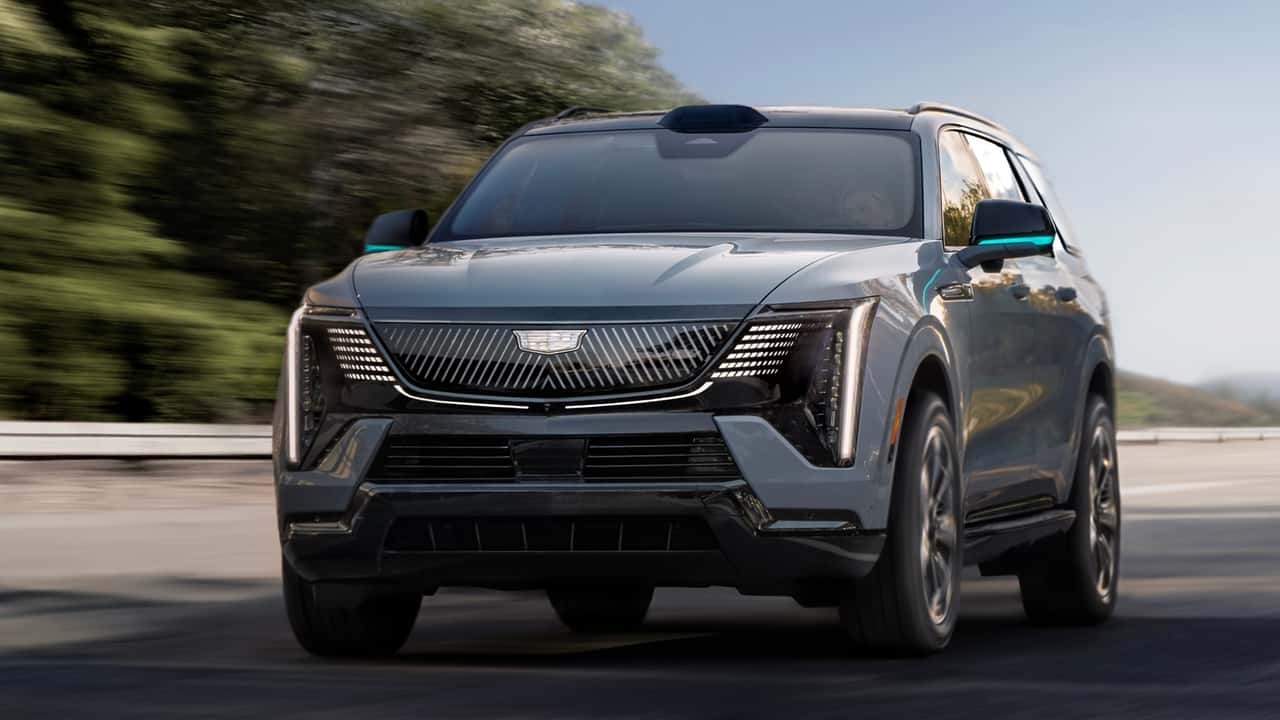

General Motors plans to launch an autonomous driving feature for the highway by 2028. And no, it isn't thinking about someday paring back its hardware to a camera-only setup like Tesla uses.
"If you scale back to vision-only, physics suggests you’ll be in trouble in certain situations. Radar is so cheap that dropping it doesn’t make sense—dropping it is a weird religious stance that ignores physics," GM Chief Product Officer Sterling Anderson said in an interview with The Verge. GM's beefed-up version of Super Cruise will launch in the 2028 Escalade IQ and will use radar, lidar, and cameras.
Tesla, of course, has stubbornly stuck with a camera-only approach to solving autonomous driving for personal cars, despite that road taking far longer than Elon Musk anticipated. Musk has also heavily criticized rivals that use lidar. Most other autonomous-vehicle developers see additional sensors as critical for safety, and Waymo specifically said that cameras "aren't enough" in a recent blog post.
Anderson, who led Tesla's Autopilot program before going on to cofound the self-driving startup Aurora, explained that having more sensors than just cameras isn't just superior, it's absolutely necessary.

"Lidar operates on a similar wavelength to visible light and helps co-train camera systems to get better faster," he said. "Cameras can’t see through dense fog or measure instantaneous velocity like radar can. Having a multisensor suite provides obvious safety advantages that physics simply demands."
Having the additional sensor capability may be especially helpful given than GM's goal is an autonomous highway system that can work even with the driver asleep, and one that won't ask the driver to take over suddenly. (Eventually, the company wants to expand that system to other roads, but it's starting with highways.) So the car needs to be far more capable than your typical driver-assistance system.
"We’re not handing back dynamically. This is not an exchange of 'you drive, now I’ll drive, oops, I don’t recognize this.' This is not Level 3," Anderson said. Instead, the car will offer a "graceful countdown," saying the driver needs to take over in something like 10 minutes. If they don't, he told The Verge, the car will pull over safely off the off-ramp until the driver takes over.
Check Out More Self-Driving Stories
RECOMMENDED FOR YOU
Tesla's Cybercab Fixes A Big Repairability Problem With Its Structural Batteries
GM Didn't Want Hybrids. Now It's Putting Them In Its Biggest SUVs: Report
This Cheap Tesla Model S With 135,000 Miles Has A Surprising Amount Of Range Left
ChargePoint’s New Charger Can Hit A Whopping 750 kW. That's Not Even Its Best Trick.
Tesla Designed The Cybercab To Use LFP Batteries In The Future
The Ford Fathom's Home Backup System Will Be Way Cheaper Than The F-150 Lightning's
Tesla And Turo Have A New Way To Get People Hooked On FSD