Home
General Motors
News
Your Next Cadillac Or Chevy EV Could Have A Recycled Battery
General Motors said it is now using old battery materials to power new electric vehicles.
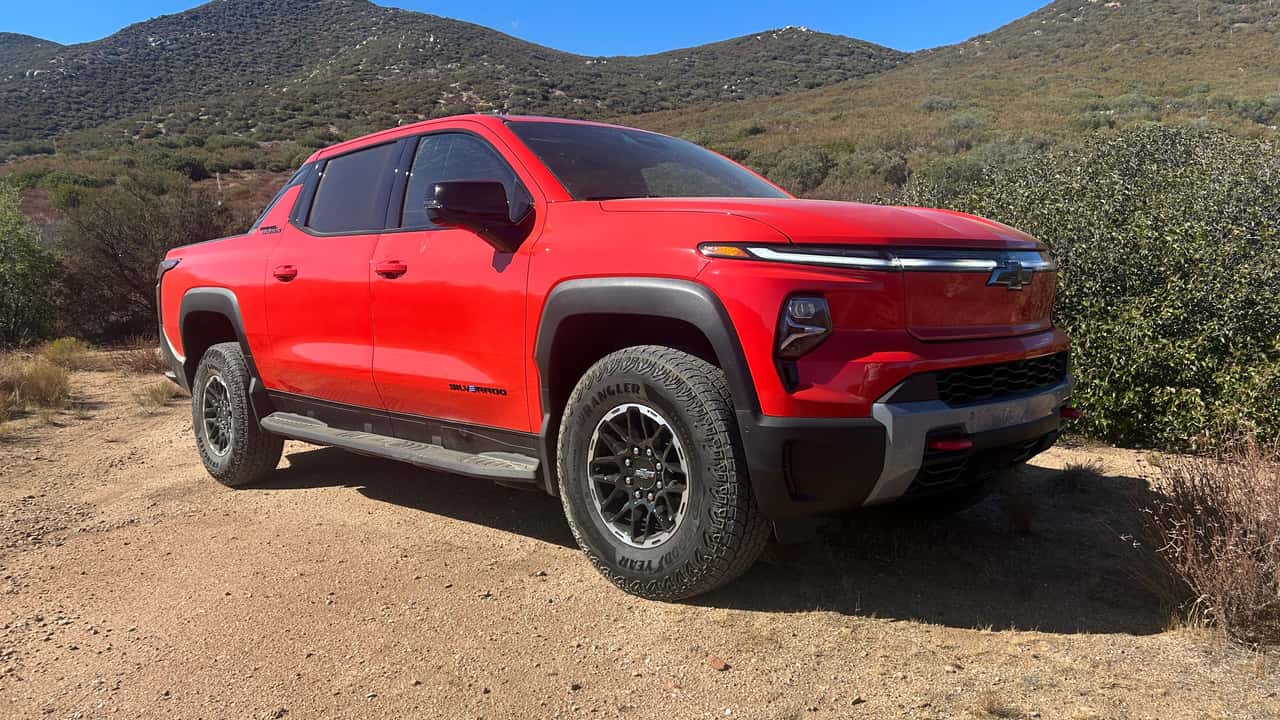
Photo by: Mack Hogan/InsideEVs
Suvrat Kothari 
By: Suvrat Kothari
Sep 22, at 12:26pm ET
Add InsideEVs as a preferred source in Google
- (https://twitter.com/intent/tweet?url=https%3A%2F%2Finsideevs.com%2Fnews%2F809134%2Fgm-recycled-ev-battery-cirba-solutions%2F&text=Your%20Next%20Cadillac%20Or%20Chevy%20EV%20Could%20Have%20A%20Recycled%20Battery&via=InsideEVs)
- copy
Share
Comment
Your next electric Cadillac, Chevy, or GMC may have had a past life. General Motors said Tuesday that it had started installing batteries containing recycled materials from old packs into new models as a part of a new pilot program.
The battery is the most expensive component in an EV, and it's also highly recyclable. Depending on the battery chemistry and the recycling process, GM said 95% of the nickel, cobalt, and manganese, and 80% of the lithium, can be recovered and processed for use in brand new cells.
At a large enough scale, that could help lower the cost of batteries, reduce the need for mineral extraction from expensive and environmentally damaging mining, and shrink the overall footprint of making EVs. It's the kind of closed-loop recycling the EV industry is slowly moving toward, whereby yesterday's batteries can power today's EVs.

GM Ultium Platform
GM said it worked with battery recycling company Cirba Solutions to recover materials from 80 end-of-life batteries as part of this pilot. Cirba recovered black mass, the dark powdery mix of cathode and anode materials, such as lithium, nickel, cobalt, manganese, and graphite, that is left over after batteries are broken down. The black mass isn't reusable on its own. It has to go through chemical processing before it can be converted into new cathode active material.
The cathode is the part of a cell that charged particles travel to during driving. When you hear about different battery chemistries—like lithium iron phosphate or nickel cobalt aluminum—that refers to the cathode material. Anodes are typically made of graphite, or sometimes a mix of graphite and silicon.
GM said the recovered black mass was transformed into 12 metric tons of new cathode active material made with 100% recycled nickel, cobalt, and manganese. That material then went into brand-new battery cells. Those batteries have since gone into production vehicles, including the Cadillac Lyriq, Vistiq, Escalade IQ and IQL, the Chevrolet Silverado EV Trail Boss, and the GMC Sierra EV AT4. In other words, this was a pilot but it wasn't just a lab experiment. The batteries are actually headed to customers.
"This new cathode active material was validated to the same high quality, safety and performance standards required for use in an electric vehicle, and cells made with recycled materials performed as well as those made from virgin material," Kurt Kelty, the vice president of battery and sustainability at GM said in a social media post.
Ultium EV Cells
Photo by: General Motors
Batteries don't need to be recycled the moment they're no longer useful in a vehicle. Before they're broken down for materials recovery, they can often find a second life in applications like energy storage. GM is working with battery recycling company Redwood Materials to deploy roughly 10,000 used EV batteries for energy storage. Once those batteries finally reach the end of their usable life, they can be recycled into new cells that can go back into new EVs.
GM is far from the only automaker exploring ways to reuse or remanufacture expensive EV batteries. Porsche said last week that it had produced prototype battery cells using recycled materials and plans to put them into production vehicles by 2028. Rivian is also working with Redwood Materials to power its Illinois factory with second-life batteries in energy storage systems.
What do you think?
View
Comments
It stands to reason that Tesla has a robust battery recycling program already, since it's been making EVs at scale longer than anybody. In a recent blog post, Tesla said it is "working to reduce our reliance on newly mined critical materials" and that in 2025 it recycled thousands of metric tons of material through its own facilities and third-party recyclers. "Wherever possible, we return these materials to our battery supply chain, refining them into components for new batteries," the company said.
Contact the author: suvrat.kothari@insideevs.com
Related Stories
EV Battery Recycling Is Getting Ready To Take Off
The BMW iX3 Is Made Of 1/3 Recycled Materials. Here's How BMW Did It
General Motors Has Big Plans For Your Old EV Battery
The Second-Life EV Battery Market Could Be Worth Billions By 2035
We want your opinion!
What would you like to see on Insideevs.com?
Take our 3 minute survey.
- The InsideEVs team
Share this Story
- (https://twitter.com/intent/tweet?url=https%3A%2F%2Finsideevs.com%2Fnews%2F809134%2Fgm-recycled-ev-battery-cirba-solutions%2F&text=Your%20Next%20Cadillac%20Or%20Chevy%20EV%20Could%20Have%20A%20Recycled%20Battery&via=InsideEVs)
- copy
GO TO COMMENTS
(
)
Got a tip for us? Email: tips@insideevs.com
View all comments ( )
Trending
Lucid Is Slashing $15,000 Off The Gravity, But The Deal Won’t Last Long
The Remnants Of The Electric Saab That Never Was Are Going Up For Auction
What We Both Thought After Driving The Rivian R2
Aptera Finally Built Its First Car For Customer Delivery
Latest Stories
- The U.S. Let Volvo Keep Selling Cars. Polestar Got A No. What About Mercedes? Nov 22 - News -
- Tesla FSD V15 Makes Your Drive Look Like Grand Theft Auto Nov 22 - News -
- Waymo Is Recalling Its Robotaxis Because They're Not Great At Dealing With Human Instructions Nov 21 - Autonomous Vehicles -
- This EV-Swapped 1967 Porsche 912 Has 300 HP And A Split Battery Pack Nov 21 - News -
- This Plug-In Hybrid SUV Towed A Boeing 747 On Only 2 Wheels. Yes, Really. Nov 21 - Towing -
- BYD's Latest SUV Can Hide Its Steering Wheel When You Don't Need It Nov 20 - China -
- What We Both Thought After Driving The Rivian R2 Nov 20 - Podcast -
RECOMMENDED FOR YOU
Chevy, GMC, and Cadillac EV Owners Can Now Plug And Charge At Electrify America
The U.S. Let Volvo Keep Selling Cars. Polestar Got A No. What About Mercedes?
GM Didn't Want Hybrids. Now It's Putting Them In Its Biggest SUVs: Report
Tesla FSD V15 Makes Your Drive Look Like Grand Theft Auto
GM's Future Cars Will Be Very Different. Here's Everything We Learned
Waymo Is Recalling Its Robotaxis Because They're Not Great At Dealing With Human Instructions
Ford Just Started Fathom LFP Battery Production In Michigan. It's A Big Deal