Home
Tesla
Cybercab
News
The Tesla Cybercab Has No Brake Lines Or Brake Fluid. Here’s How It Stops
The two-seater doesn’t have a steering wheel or pedals. As a result, controlling the brakes and steering needed a rethink.
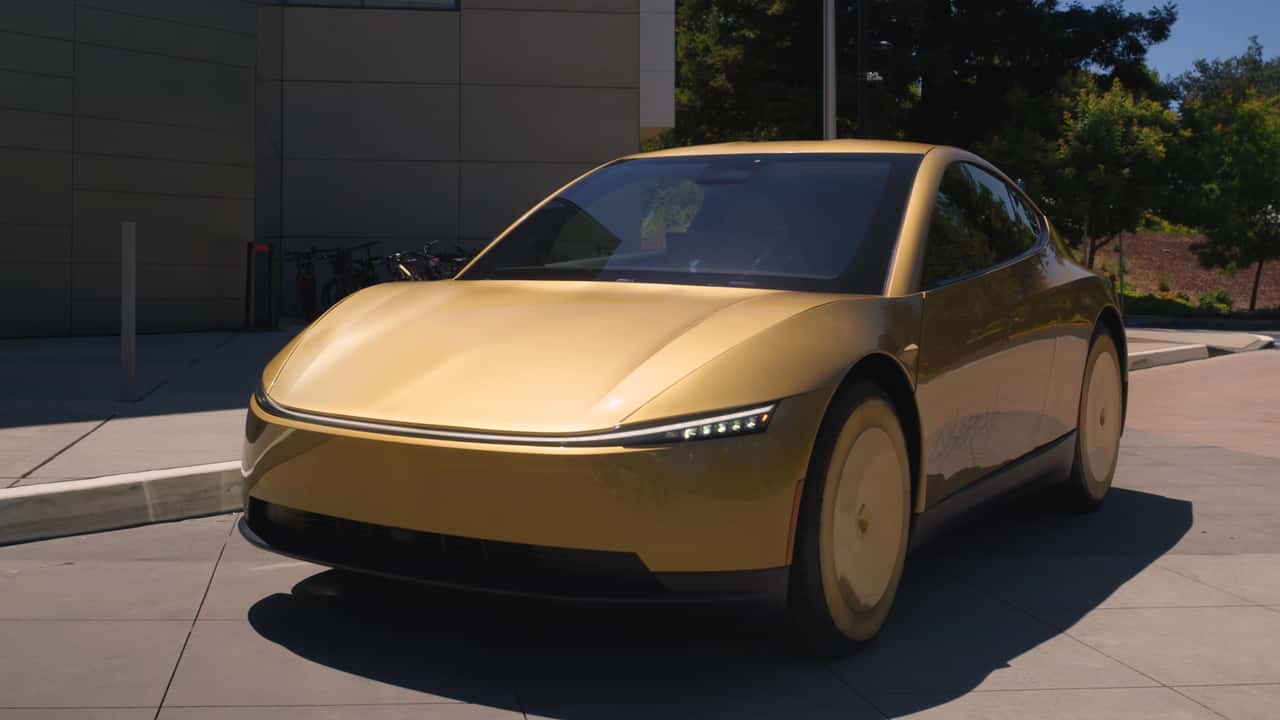
Photo by: Tesla
Iulian Dnistran 
By: Iulian Dnistran
Sep 4, at 5:11am ET
Add InsideEVs as a preferred source in Google
- (https://twitter.com/intent/tweet?url=https%3A%2F%2Finsideevs.com%2Fnews%2F807121%2Ftesla-cybercab-brakes-no-fluid%2F&text=The%20Tesla%20Cybercab%20Has%20No%20Brake%20Lines%20Or%20Brake%20Fluid.%20Here%E2%80%99s%20How%20It%20Stops&via=InsideEVs)
- copy
Share
Comment
- Tesla has unveiled the production version of the Cybercab two-door EV.
- The car doesn’t have a steering wheel or pedals, but it also lacks a traditional braking system.
- There is no brake fluid, and there are no brake lines going to the wheels.
The Tesla Cybercab is officially here, with the first production models scheduled to hit Austin streets later today, as part of the company’s growing Robotaxi fleet. The smallest passenger EV in Tesla’s portfolio was officially launched last night during a private, closed-door event where several interesting tidbits of information were made available for the first time.
We already knew that the Cybercab doesn’t have a steering wheel or pedals, despite the potential regulatory roadblocks associated with this design decision. However, what we didn’t know was that the two-seater EV also doesn’t have a traditional braking system.

Photo by: Tesla
According to multiple reports from people who attended last night’s event, the Tesla Cybercab doesn’t use brake fluid and doesn’t have brake lines or a central master cylinder. Instead, each caliper has an individual electronically controlled actuator that applies braking force to the rotor.
This type of braking system is called dry brake-by-wire, and the Cybercab is one of the first production cars in the world fitted with it–China’s Chery Exceed EX7 debuted with a similar system in April. Other vehicles have brake-by-wire systems, too, but they’re typically a dual-layer setup with an electronic brake controller backed by a hydraulic master cylinder that interprets electronic signals.
Because the Cybercab doesn’t have a steering wheel, the steering system is also electronic, without a steering column. The steer-by-wire box is located at the rear of the front-mounted electric motor.
According to Tesla CEO Elon Musk, having electric brakes avoids the complexity of a hydraulic system because there’s no need to route plumbing all around the vehicle. That said, cables still need to be routed to the calipers, but the approach might shave some pennies off the final build because it eliminates several individual components, including the brake fluid reservoir, brake lines, and hydraulic brake master cylinder.
What do you think?
View
Comments
The braking system’s supplier hasn’t been disclosed, but there are just a handful of companies that currently offer electronic braking systems, including Brembo, ZF, and Bosch. Besides lowering manufacturing costs, going for a fluid-less braking system allows the car’s brain to apply different forces to each wheel when braking, whereas a traditional hydraulic system will send the same pressure to each caliper.
Coincidence or not, Brembo has used several Tesla vehicles to showcase its Sensify electronic braking system in the past, but there’s no confirmation that the Italian manufacturer is behind the Cybercab's braking system.
More Cybercab Stories
Tesla’s Cybercab Is Finally Giving Paid Robotaxi Rides. Here’s What It Can And Can’t Do
Tesla Adds Cybercabs To Its Texas Robotaxi Fleet Ahead Of Launch Event
Full Tesla Cybercab Specs: EPA Documents Confirm Battery Size, Weight, Power, And Preliminary Range
Tesla Begins Cybercab Production. Now Comes The Hard Part

Stay informed with our newsletter every weekday
back
Subscribe For more info, read our Privacy Policy & Terms of Use.
We want your opinion!
What would you like to see on Insideevs.com?
Take our 3 minute survey.
- The InsideEVs team
Share this Story
- (https://twitter.com/intent/tweet?url=https%3A%2F%2Finsideevs.com%2Fnews%2F807121%2Ftesla-cybercab-brakes-no-fluid%2F&text=The%20Tesla%20Cybercab%20Has%20No%20Brake%20Lines%20Or%20Brake%20Fluid.%20Here%E2%80%99s%20How%20It%20Stops&via=InsideEVs)
- copy
GO TO COMMENTS
(
)
Got a tip for us? Email: tips@insideevs.com
View all comments ( )
Trending
I Drove Volvo’s Long-Range Plug-In Hybrid XC60. It’s A Great Stepping Stone To An EV.
I've Driven Dozens Of Chinese Cars. Americans Are Missing Out On These 4 Features
I’m Thankful For My Electric Car
$30,000 Ford Fathom: Inside The Structural LFP Battery That Makes It All Possible
Latest Stories
- $30,000 Ford Fathom: Inside The Structural LFP Battery That Makes It All Possible Nov 28 - Battery Tech -
- I've Driven Dozens Of Chinese Cars. Americans Are Missing Out On These 4 Features Nov 28 - China -
- EVs Outsold Gas And Diesel Cars Combined In The EU In October Nov 27 - News -
- This Audi E-Tron EV Has 125,000 Miles. Replacing Its Battery Was A Huge Pain Nov 27 - Repair / Maintenance -
- Rivian's Winter Sale Is Live: Save on Chargers, Accessories, And More Nov 27 - Pricing -
- I Drove Volvo’s Long-Range Plug-In Hybrid XC60. It’s A Great Stepping Stone To An EV. Nov 27 - First Drives -
- A Used Cybertruck Is Selling A Month Faster Than A Ford F-150 Nov 26 - News -
RECOMMENDED FOR YOU
Tesla's Driverless Cybercab Is Now Available In Dallas
$30,000 Ford Fathom: Inside The Structural LFP Battery That Makes It All Possible
Tesla Opens Self-Driving Cybercab Orders To 'Select Customers' At $29,990
I've Driven Dozens Of Chinese Cars. Americans Are Missing Out On These 4 Features
Tesla's Cybercab Is Built In A Radical New Way. Here's How It Works
EVs Outsold Gas And Diesel Cars Combined In The EU In October
A Used Cybertruck Is Selling A Month Faster Than A Ford F-150