Home
News
News
Car Companies Have Way Too Many Batteries. They Have A Solution, But It Isn't Easy
Automakers built out their battery factories for more EVs than consumers are buying. Now they're turning those extra cells into cash.
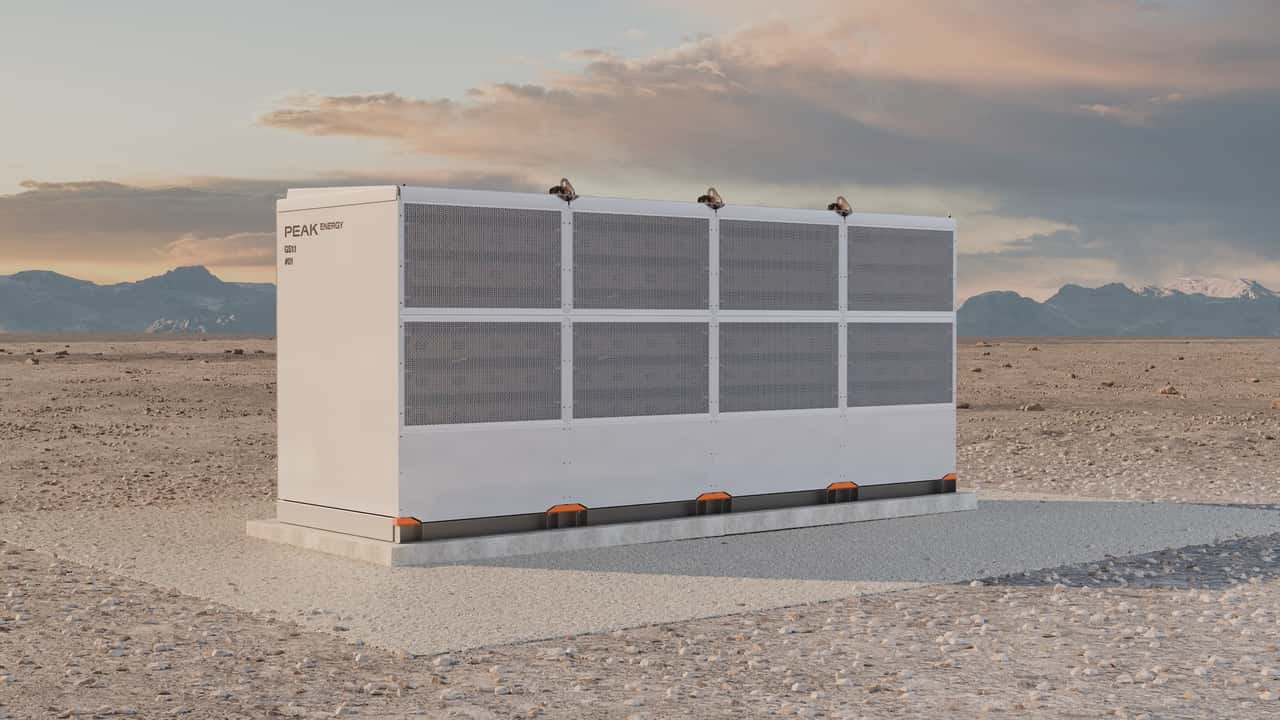
Photo by: Peak Energy
Rob Stumpf 
By: Rob Stumpf
Apr 16, at 2:06pm ET
Add InsideEVs as a preferred source in Google
- (https://twitter.com/intent/tweet?url=https%3A%2F%2Finsideevs.com%2Fnews%2F793070%2Fcar-companies-too-many-batteries%2F&text=Car%20Companies%20Have%20Way%20Too%20Many%20Batteries.%20They%20Have%20A%20Solution%2C%20But%20It%20Isn%27t%20Easy&via=InsideEVs)
- copy
Share
Comment
- Automakers have a huge excess of battery capacity due to shifted EV demand.
- This capacity is now being redirected from cars to stationary battery power.
- AI data centers and critical infrastructure are poised to be major adopters of these storage solutions.
When the demand for new electric cars didn't quite fire off as expected, automakers decided to write down their investments into EV programs and battery manufacturing. But the big wigs at a few auto and battery companies have decided to put all that extra capacity to work anyway. The new business opportunity: battery energy storage systems, or BESS, as Reuters noted in a new feature on Wednesday.

Stationary energy storage is a growing market right now. Giant grid-scale battery packs can store electricity from renewable sources, which are intermittent. They can also help reduce costs and manage grid loads during times of high demand.
One of the largest new customer bases in this market are all of those new AI data centers popping up across the U.S. The tech companies aren't just using the batteries for emergencies like a traditional compute warehouse. They're also using BESS units to help handle load shifts more predictably handle the huge power bills that AI resources generate. This means that they can partake in valley filling (recharging the packs during off-peak hours when rates are cheaper) and peak shaving (utilizing battery power to reduce short-term consumption spikes during high-demand hours).
Conveniently, these BESS solutions all use something that the auto industry already has an abundance of: batteries.
By the numbers, automakers planned for around 275 gigawatt-hours of capacity, according to Benchmark Mineral Intelligence data cited by Reuters. This year, total U.S. battery demand is only expected to his 182 GWh, and of that, 37% is expected to be for the BESS market. This means that while automotive battery capacity demand is expected to double by the top of the decade, that's still not enough to mop up the excess capacity built out by U.S. automakers.
Photo by: BMW
This idea isn't necessarily new on its own. Tesla has been building its Powerwall and Megapack utility-scale batteries for over a decade, meaning that it was ahead of the game long before demand necessitated the pivot. Meanwhile, the old guard firms are the new kids on the block in the BESS space.
Ford, for example, announced that it would transition its factory space in Kentucky to build BESS packs in December. The keys to its second plant in Tennessee would be handed over to Ford's partner in the battery space, SK On.
GM said that its Ultium Cells plant in Nashville would also move towards building BESS solutions. It will spend around $70 million to retool and retrain workers so as not to flush away its $2.3 billion partnership with LG Energy Solution.
What do you think?
View
Comments
That investment speaks to the extra work that automakers now need to invest in order to pivot to the BESS market. It's not as easy as just flipping a switch and throwing batteries in a new housing. Most EV batteries in the U.S. use nickel-heavy battery chemistries that favors density. Storage systems tend to favor LFP packs, which are cheaper and can be sustained at a higher state-of-charge without degrading as significantly.

Stay informed with our newsletter every weekday
back
Subscribe For more info, read our Privacy Policy & Terms of Use.
There's no denying that this is a smart move for automakers. Even though EV demand may have shifted in the near-term, automakers have already built out the factory capacity and signed sourcing contracts for critical minerals. Moreover, energy demand is rising and storage has become more critical infrastructure than ever. Big Auto has a choice: Write-down those costs, or make the most of what they have and pivot.
More EV Battery News
Volvo’s Flagship EV Truck Now Has Over 400 Miles Of Range
Rivian's Factory Will Run On Its Own Used EV Batteries
These EV Fast Chargers Are Completely Off-Grid—And Free
The Next BMW i7 Will Get Its Batteries From An Unexpected Source
We want your opinion!
What would you like to see on Insideevs.com?
Take our 3 minute survey.
- The InsideEVs team
Share this Story
- (https://twitter.com/intent/tweet?url=https%3A%2F%2Finsideevs.com%2Fnews%2F793070%2Fcar-companies-too-many-batteries%2F&text=Car%20Companies%20Have%20Way%20Too%20Many%20Batteries.%20They%20Have%20A%20Solution%2C%20But%20It%20Isn%27t%20Easy&via=InsideEVs)
- copy
GO TO COMMENTS
(
)
Got a tip for us? Email: tips@insideevs.com
View all comments ( )
Trending
Tesla Opens Self-Driving Cybercab Orders To 'Select Customers' At $29,990
Solid-State Cells Can Make The U.S. Competitive In Batteries Again: CEO
I Took A Rivian R2 On A Camping Trip To The Middle Of The Desert
Google’s Gemini AI Assistant Now Works On Apple CarPlay
Latest Stories
- Tesla Opens Self-Driving Cybercab Orders To 'Select Customers' At $29,990 Nov 13 - News -
- Do EVs Wear Tires Faster? Here's What The Studies Show Nov 13 - Features -
- The VW ID. Buzz Is Getting A New Job As A Robotaxi Nov 13 - News -
- Audi A4 EV Delayed Amid VW Group Financial Troubles: Report Nov 13 - News -
- Tesla Just Killed Its Cheapest All-Wheel-Drive Model Y Nov 13 - News -
- A Record Number Of Uber Miles Are Happening In EVs Nov 13 - News -
- Slate Is Selling A $30 'Screenless GPS' For Its Low-Tech Truck Nov 12 - News -
RECOMMENDED FOR YOU
Tesla Opens Self-Driving Cybercab Orders To 'Select Customers' At $29,990
Do EVs Wear Tires Faster? Here's What The Studies Show
The VW ID. Buzz Is Getting A New Job As A Robotaxi
A Record Number Of Uber Miles Are Happening In EVs
Audi A4 EV Delayed Amid VW Group Financial Troubles: Report
Slate Is Selling A $30 'Screenless GPS' For Its Low-Tech Truck
Tesla Just Killed Its Cheapest All-Wheel-Drive Model Y