Home
News
Battery Tech
Europe Is Learning An Uncomfortable Truth About Local Battery Production
The continent is striving to localize its electric vehicle battery supply chain. Turns out, it’s not so easy.
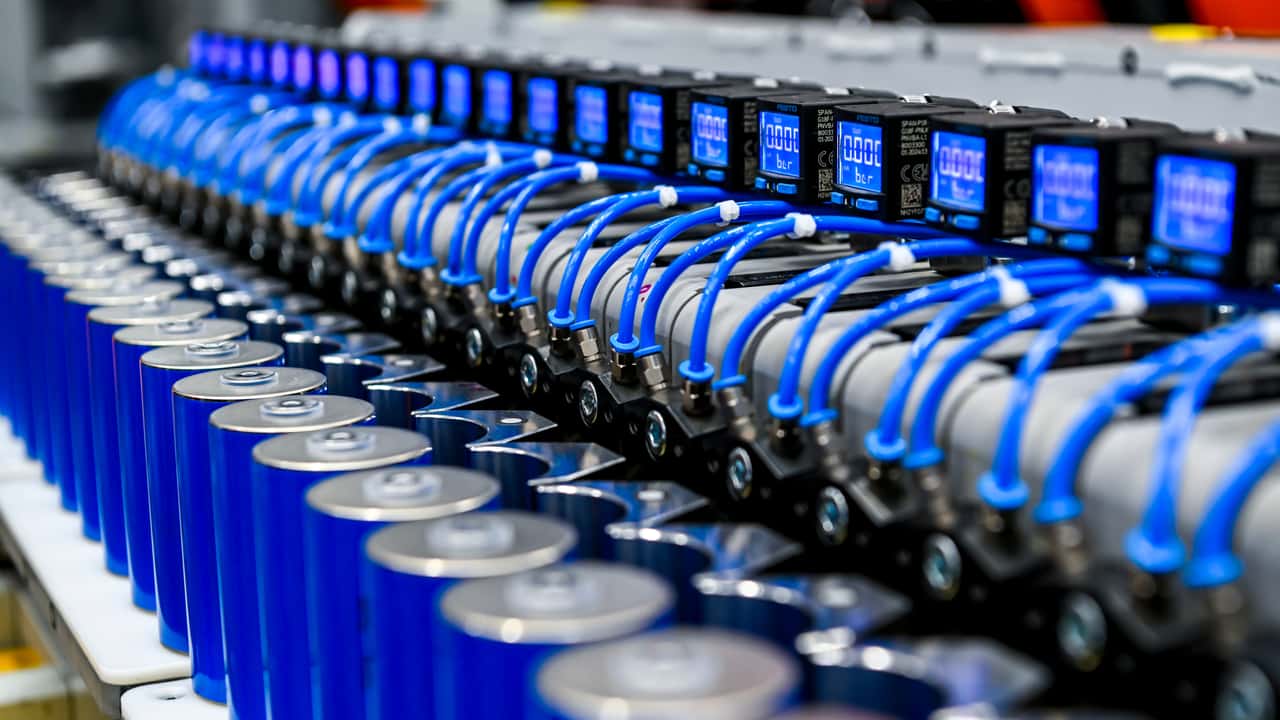
Photo by: BMW
Suvrat Kothari 
By: Suvrat Kothari
Mar 1, at 8:00am ET
Add InsideEVs as a preferred source in Google
- (https://twitter.com/intent/tweet?url=https%3A%2F%2Finsideevs.com%2Fnews%2F788575%2Feurope-ev-battery-production-uncomfortable-truth%2F&text=Europe%20Is%20Learning%20An%20Uncomfortable%20Truth%20About%20Local%20Battery%20Production&via=InsideEVs)
- copy
Share
Comment
- European companies canceled several large battery manufacturing projects over the past couple of years.
- Many local manufacturing projects are still underway to localize the supply chain.
- But they're finding it extremely hard to compete with Chinese batteries on cost.
Europe’s quest to localize its electric vehicle industry is increasingly at odds with the economics of a China-dominated battery supply chain, as evidenced by a string of recent high-profile battery project cancellations. The continent’s EV adoption is soaring, but much of that is driven by battery materials and equipment procured from China.
As Automotive News highlighted in a recent report, European companies are now finding it simply too hard to decouple from that.
Last year, Porsche began scaling back production at its Cellforce battery division to focus on R&D. The reason? Manufacturing was no longer “economically viable,” the carmaker said.
Sweden’s Northvolt, which was aiming to put Europe on the map as a battery production leader, filed for bankruptcy in 2024 due to mounting losses and production-related challenges. Stellantis-backed Automotive Cells Company shelved two battery factory projects in Germany and Italy last month. The “prerequisites” to start those plants hadn’t been met, the company said.

Volkswagen Group's PowerCo battery division's assembly plant in Salzgitter, Germany.
Photo by: Volkswagen
As the outlet reported Wednesday, a key factor impairing Europe’s ability to become independent in battery production is China’s manufacturing might, vastly more mature supply chain, and prolonged state-backed incentives.
A joint statement from the CEOs of the Volkswagen Group and Stellantis issued early this month perfectly sums up what’s happening on the continent.
“We are investing heavily to build an integrated European sector, essential for our technological sovereignty, but consumers legitimately expect affordable electric vehicles,” Stellantis CEO Antonio Filosa and VW CEO Oliver Blume said. “However, the more prices need to be kept down, the greater the need to import the cheapest batteries.”
In other words, Chinese batteries are needed to make EVs affordable. The country lords over most of the global battery supply chain, from mineral refining to production. It's especially dominant in the world's cheapest battery chemistry: lithium iron phosphate (LFP). China's scale and overcapacity mean it can make batteries more cheaply than anybody else.
In the U.S., battery plants are being delayed and scaled back for different reasons. The loss of the $7,500 tax credit and other pro-EV regulations is stunting demand for battery cells. Stateside, companies including GM, Ford and Stellantis have walked away from battery projects or redirected those resources toward stationary storage applications—rather than EVs. In America, Chinese EV batteries are less in-demand due to high tariffs on them.
Still, America's battery industry is maturing. And Europe’s own battery manufacturing ecosystem is anything but stalling. The Volkswagen Group’s battery division PowerCo has significantly ramped up production at its Salzgitter, Germany, plant, which has an annual capacity of 20 gigawatt-hours, enough to supply batteries for 250,000 EVs. But the majority of the manufacturing tools are imported from Asia, mainly China, according to Automotive News.
Volkswagen's prismatic battery cell production in Germany.
Photo by: Volkswagen
Policymakers are now trying to push back against that dependence. Last year, the EU allocated €1.8 billion in interest-free loans for European battery companies to manufacture cells locally—the program is called Battery Booster. The continent is also pursuing local sourcing requirements for critical minerals used in batteries, similar to the Inflation Reduction Act (IRA) in the U.S.
The U.S. serves as a good example here of what could happen. In the months following the IRA’s passage, battery project announcements surged. But many of them were canceled later under the Trump administration, leaving automakers and battery suppliers with billions in losses.
What do you think?
View
Comments
Europe’s EV market seems less politically polarized, and sales continue to boom, which could give its policy framework a better shot at success. And if that happens, it could serve as a blueprint for other parts of the world also looking to break up from China.
Contact the author: suvrat.kothari@insideevs.com
Related Stories
Donut Lab's Solid-State Battery Charges Fast. But Experts Still Have Questions
Jeep's Parent Company May Use Chinese EV Tech In Its Cars
Volvo Is Recalling 40,000 EX30s Because They Might Catch On Fire
Ford's $30,000 EV Pickup Uses LFP Batteries For An Unexpected Reason
We want your opinion!
What would you like to see on Insideevs.com?
Take our 3 minute survey.
- The InsideEVs team
Share this Story
- (https://twitter.com/intent/tweet?url=https%3A%2F%2Finsideevs.com%2Fnews%2F788575%2Feurope-ev-battery-production-uncomfortable-truth%2F&text=Europe%20Is%20Learning%20An%20Uncomfortable%20Truth%20About%20Local%20Battery%20Production&via=InsideEVs)
- copy
GO TO COMMENTS
(
)
Got a tip for us? Email: tips@insideevs.com
View all comments ( )
Trending
Lucid Is Slashing $15,000 Off The Gravity, But The Deal Won’t Last Long
The Remnants Of The Electric Saab That Never Was Are Going Up For Auction
What We Both Thought After Driving The Rivian R2
Aptera Finally Built Its First Car For Customer Delivery
Latest Stories
- The U.S. Let Volvo Keep Selling Cars. Polestar Got A No. What About Mercedes? Nov 22 - News -
- Tesla FSD V15 Makes Your Drive Look Like Grand Theft Auto Nov 22 - News -
- Waymo Is Recalling Its Robotaxis Because They're Not Great At Dealing With Human Instructions Nov 21 - Autonomous Vehicles -
- This EV-Swapped 1967 Porsche 912 Has 300 HP And A Split Battery Pack Nov 21 - News -
- This Plug-In Hybrid SUV Towed A Boeing 747 On Only 2 Wheels. Yes, Really. Nov 21 - Towing -
- BYD's Latest SUV Can Hide Its Steering Wheel When You Don't Need It Nov 20 - China -
- What We Both Thought After Driving The Rivian R2 Nov 20 - Podcast -
RECOMMENDED FOR YOU
Ford Just Started Fathom LFP Battery Production In Michigan. It's A Big Deal
The U.S. Let Volvo Keep Selling Cars. Polestar Got A No. What About Mercedes?
Solid-State Cells Can Make The U.S. Competitive In Batteries Again: CEO
Tesla FSD V15 Makes Your Drive Look Like Grand Theft Auto
Ford Tested 36,000 Mustang Mach-E Batteries. Here’s How They Held Up After 100,000 Miles
Waymo Is Recalling Its Robotaxis Because They're Not Great At Dealing With Human Instructions
China Has An Iron Grip On EV Batteries. Here's America’s Plan To Break It