Home
News
News
Canada's Chinese EV Deal Doesn't End With Imports
Canada doesn't just want to let in Chinese imports. It wants to work with Chinese car companies to export EVs all over the world.
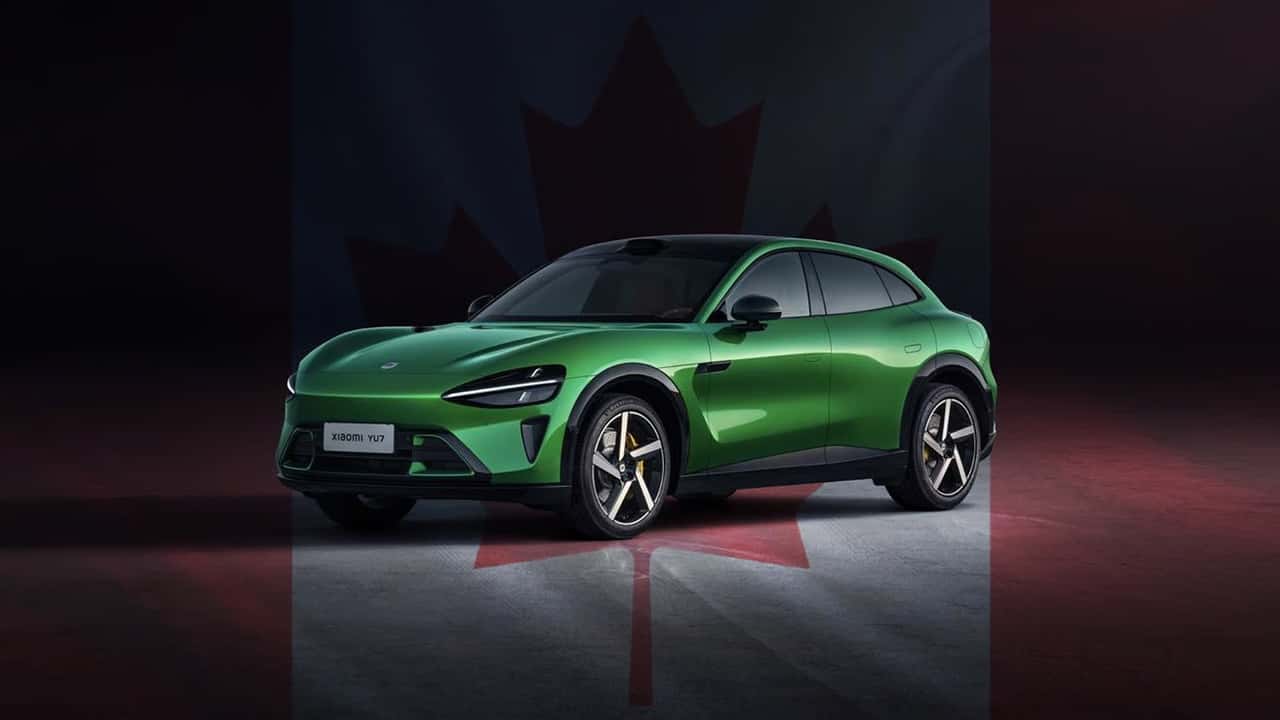
Photo by: InsideEVs
Rob Stumpf 
By: Rob Stumpf
Feb 10, at 9:00am ET
Add InsideEVs as a preferred source in Google
- (https://twitter.com/intent/tweet?url=https%3A%2F%2Finsideevs.com%2Fnews%2F786817%2Fcanada-china-joint-venture-export%2F&text=Canada%27s%20Chinese%20EV%20Deal%20Doesn%27t%20End%20With%20Imports&via=InsideEVs)
- copy
Share
Comment
Canada is thinking about doing something that would have been politically radioactive not long ago: building EVs with China.
That’s right—not importing them, but actually building them on Canadian soil with Canadian suppliers, then exporting them to the rest of the world.
Critical Materials subscribers got this news brief early.
The must-read auto and tech briefing hits your inbox every weekday morning.
Sign up here.
Bloomberg shares some thoughts from Canadian Industry Minister Mélanie Joly:
Canadian auto parts firms such as Magna International Inc., Linamar Corp. and Martinrea International Inc. already have operations in China, and could participate in a joint-venture assembly plant in Canada.
“We believe that these great Canadian champions can partner with Chinese EV companies to make a Canadian-Chinese car to export it around the world,” Joly said in an interview with Bloomberg News on Friday.
[…]
The minister argued that a co-created EV could still be competitive globally despite the higher labor costs of building in Canada compared to China. She pointed to Honda Motor Co., which builds its affordably priced Civic car in Ontario, as an example. “We can find a way to square the circle,” she said.
That’s a pretty sharp pivot from a country that only months ago had a 100% tariff on Chinese cars to mirror the U.S. After all, it heavily collaborated with its neighboring automakers in Detroit, like General Motors and Ford—but after some politically-charged fallout, that relationship has gone belly-up and the import duty fees against China dropped.
Zoom out a bit and things start to make more sense.
What do you think?
View
Comments
Canada’s auto sector is now squeezed from multiple directions. Between tariffs from the U.S., stalled investments from legacy automakers and a global EV market dominated by Eastern automakers like BYD, the Great White North has recognized that betting only on the States is a single point of failure that it just can’t risk.
Now the bigger question will be whether a Canadian-Chinese car will be both competitive and politically palatable. But the fact that Canada is at least willing to consider the idea (and publicly, at that) should show how quickly the automotive chessboard is shifting.
More Of Today's EV News
 'I'm Not So Upset': Why Volvo's CEO Isn't Too Worried About Tariffs
Nio's EV Drivers Really Love This One Signature Feature
The Toyota Highlander Just Went Electric
Lucid's $50,000 EV Is Coming. It Doesn't Plan To Go Much Cheaper Than That
We want your opinion!
What would you like to see on Insideevs.com?
Take our 3 minute survey.
- The InsideEVs team
Share this Story
- (https://twitter.com/intent/tweet?url=https%3A%2F%2Finsideevs.com%2Fnews%2F786817%2Fcanada-china-joint-venture-export%2F&text=Canada%27s%20Chinese%20EV%20Deal%20Doesn%27t%20End%20With%20Imports&via=InsideEVs)
- copy
GO TO COMMENTS
(
)
Got a tip for us? Email: tips@insideevs.com
View all comments ( )
Trending
I Drove The Electric And Gas-Powered BMW X5. I Know Which One I'd Pick.
The 2027 Ford Mustang Mach-E Has More Range As Standard
GM's Next-Generation EV Platform Has 30% Less Wiring And 20% Less Battery
Can The BMW iX3 Take Down The Tesla Model Y L And Rivian R2?
latest articles
- ‘Propulsion-Agnostic’: GM Wants To Bring Tesla-Style Software Features To Its Gas SUVs, Too Oct 22 - Features -
- Want The Best Range Rover? Get The Electric One: First Drive Oct 22 - First Drives -
- I Drove The Electric And Gas-Powered BMW X5. I Know Which One I'd Pick. Oct 22 - First Drives -
- The Ferrari Luce Officially Starts At $560,800 Oct 22 - News -
- The 2027 Ford Mustang Mach-E Has More Range As Standard Oct 22 - Official -
- BMW’s Electric M3 Had To First Win Over One Of Its Own Oct 22 - News -
- Seattle Is Installing Hundreds Of Curbside EV Chargers Oct 22 - Charging -
RECOMMENDED FOR YOU
Tesla Says 75% Of New Car Buyers Subscribe To FSD In North America
Seattle Is Installing Hundreds Of Curbside EV Chargers
'End Of The Year': Tesla Says Cybercab Customer Deliveries Will Begin Soon
Spotify’s First Native In-Car App Is Hitting Audi EVs First
The Midterms Won't Mean Much For EV Policy, Analysts Say
GM Is Adding Its Own Version Of Tesla's Sentry Mode To Cars
General Motors Isn't 'Walking Away' From EVs, Top Exec Says