Home
Volvo
News
'The Second Generation Plug In-Hybrid': Why Volvo's Future PHEVs Will Feel A Lot More Like EVs
But will they be EREVs? Well, it’s complicated.

Photo by: Volvo
Mack Hogan 
By: Mack Hogan
Jan 24, at 7:00am ET
Add InsideEVs as a preferred source in Google
- (https://twitter.com/intent/tweet?url=https%3A%2F%2Finsideevs.com%2Fnews%2F785349%2Fsecond-generation-volvo-plug-in-hybrids-erevs%2F&text=%27The%20Second%20Generation%20Plug%20In-Hybrid%27%3A%20Why%20Volvo%27s%20Future%20PHEVs%20Will%20Feel%20A%20Lot%20More%20Like%20EVs&via=InsideEVs)
- copy
Share
Comment
- Volvo's CEO says current PHEV technology isn't that great for efficiency, nor for the customer's experience.
- Future Volvo PHEVs will offer around 100 miles of electric range, and the sort of acceleration and smoothness that EV buyers expect.
- But it won't be an EREV, or at least not technically.
Volvo was one of the first car companies to offer plug-in hybrid (PHEV) versions of all of its most popular models, and it remains a major player in the space today. So it may surprise you to hear how unimpressed CEO Håkan Samuelsson is with the current version of the technology.
“So far, it's really a combustion car that you added some small battery to be able to drive in cities quietly, but it’s not doing much for economy,” Samuelsson told reporters at the launch of the all-electric EX60 this week.
That’s why Volvo’s next-generation plug-ins are going to feel a lot less like overcomplicated gas cars and a lot more like EVs. Executives say they’ll be able to travel around 100 miles on battery power alone, while delivering enough electric power that the gas engine is basically never necessary for getting around.
But is Volvo jumping onto the extended-range electric vehicle (EREV) bandwagon with these new models? Not quite. Let me explain the weird jargon, and why I’m excited for automakers to start launching next-generation PHEVs.
The Problem With Today’s PHEVs

I like the current-generation Volvo XC90, but the grumbly four-cylinder engine makes it feel like an overtaxed gas car under load.
Photo by: Volvo
Samuelsson is right: Today’s PHEVs are almost all adapted from gasoline cars, and you can tell. Many don’t drive like EVs under all conditions, with the gas engine kicking on during hard acceleration and highway cruising. And because there’s a delay in between putting your foot down and the car accelerating—as the engine has to fire, engage the correct gear or ratio, and rev up—they are sometimes jerkier than conventional gas cars, and nowhere near as smooth as a proper EV whenever the engine is engaged.
Range and charging issues persist, too. Most PHEVs are designed to cover the average person’s commute on battery power alone, often offering between 25 and 50 miles of range. While that looks good on paper, it often means that if you have a few extra stops to make, or a night where you don’t plug in, you’re going to be leaning on that gas engine. That reinforces to consumers that these are primarily gas vehicles, with an electric powertrain as a bonus. Perhaps that is why many owners don’t plug them in.
The Next Generation
Volvo's next generation of plug-ins must feel like “an electric vehicle with a backup engine,” Volvo Chief Strategy Officer Michael Fleiss told reporters during an interview.
They must offer enough electric power and range to feel like EVs in the vast majority of situations, he said, and offer the fast acceleration that EV buyers expect. To ensure that, Volvo's upcoming PHEVs must have around 100 miles of EV range and around 500 to 600 miles of combined range.
The Scout Motors Terra offers an optional gas-powered range extender, which gives the EREV around 500 miles of overall driving range. That's a great selling point for an off-road vehicle designed for exploring remote areas.
Photo by: Scout Motors
That may sound like a familiar concept to our regular readers. A growing number of companies have started pushing the concept of "extended-range electric vehicles," or EREVs. These are essentially EVs with backup gas generators. EREVs like the Scout Motors Terra and Ram 1500 REV will offer over 100 miles of electric range, and the companies say they will feel like EVs in the vast majority of situations.
More EREV Stories
2027 Ram 1500 REV: A First Look At The Production-Ready Extended Range Truck
Scout Motors Reservations Are Overwhelmingly For The 'Harvester' EREV
The Next Ford F-150 Lightning Will Get A Gas Engine
Are EVs With Gas Engines The Future?
Yet Fleiss notes that Volvo's next-gen PHEVs won't quite be EREVs, at least by the conventional definition. True EREVs like the Scout, Ram and BMW i3 have no mechanical connection between the engine and the wheels, meaning the engine can only be used as a generator for the batteries.
This is mechanically simpler than a typical plug-in-hybrid, which still needs a transmission (or some other way way to vary gear ratios) and a way to blend disparate power sources. But it comes with a tradeoff. For high-speed highway driving, it is more efficient to use the engine to power the wheels directly, rather than using it as a generator. That's why the Chevy Volt—often mistakenly, retroactively labeled an EREV—can still connect its engine to its drive wheels.
That's the strategy Volvo will use, Fleiss says, mirroring a lot of Chinese automakers that already offer traditional PHEVs with EREV-like range figures. Some even call those products EREVs, which Fleiss noted may contribute to the confusion around these terms.
A Glimpse Of Volvo's Future
Gallery: Volvo XC70
58





Source: Volvo
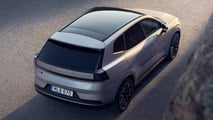
The good news is you don't really need to wait to find out how these next-gen Volvo PHEVs will work. The new Chinese- and European-market Volvo XC70 offers 124 miles of pure electric range. Unlike most PHEVs, it also supports vehicle-to-load functionality and DC fast charging, meaning you can power your home or appliances using the car's battery and quickly top it off on a road trip.
Unfortunately, the XC70 isn't coming to the U.S., or at least not yet. Because it is built in China, the XC70 would be slapped with an over-100% tariff, making it impossible to sell at a competitive price, or at least to do so profitably.
Yet the technology itself is coming here. Fleiss and Samuelsson confirmed that Volvo's South Carolina factory is scheduled to build a future plug-in hybrid model. Will it be the XC70? Volvo won't say. But whatever it is, it's going to feel a lot more like an EV than today's Volvo PHEVs.
What do you think?
View
Comments
“I strongly believe that when a customer drives such a car, the next car [they buy] will be an electric vehicle, because they will probably charge or fill [their PHEV] three or four times a year with fuel. The rest will be electric," Fleiss said. "That's why we call it bridging technology. It bridges into EVs. But if the customer is not willing already, we are happy to continue with the plug-in hybrids.”
Contact the author: Mack.Hogan@InsideEVs.com
We want your opinion!
What would you like to see on Insideevs.com?
Take our 3 minute survey.
- The InsideEVs team
Share this Story
- (https://twitter.com/intent/tweet?url=https%3A%2F%2Finsideevs.com%2Fnews%2F785349%2Fsecond-generation-volvo-plug-in-hybrids-erevs%2F&text=%27The%20Second%20Generation%20Plug%20In-Hybrid%27%3A%20Why%20Volvo%27s%20Future%20PHEVs%20Will%20Feel%20A%20Lot%20More%20Like%20EVs&via=InsideEVs)
- copy
GO TO COMMENTS
(
)
Got a tip for us? Email: tips@insideevs.com
View all comments ( )
Trending
Kia EV3 Lease Deals Are Here, And It’s Cheaper Than The Chevy Bolt And Nissan Leaf
I Let Android Auto Plan My EV Roadtrip. Here’s How It Worked
This Chevy Bolt Has 470,000 Miles. Here’s How Much A New Battery Was
Here's What It's Like To Take Delivery Of A Rivian R2
latest articles
- Waymo Plans To Have 20,000 Cars By The End Of 2027 Oct 20 - News -
- The Boring Company Uses Tesla Model 3 Sleds To Shuttle Shipping Containers Through Its Tunnels Oct 20 - News -
- How Much Range Do EVs Lose When Parked? (And How to Stop It) Oct 20 - EV 101 -
- This Chinese EV Is Now Made In Europe. More Are Coming Oct 20 - News -
- GM Is Closing Its Detroit EV Battery Plant Oct 20 - Industry -
- The 2027 Lexus NX Plug-In Hybrid Gets A Bigger Battery And Fast Charging Oct 20 - Official -
- Kia EV3 Lease Deals Are Here, And It’s Cheaper Than The Chevy Bolt And Nissan Leaf Oct 20 - Pricing -
RECOMMENDED FOR YOU
2027 Volvo EX60 Blows Past EPA Rating In Real-World Range Test
How Much Range Do EVs Lose When Parked? (And How to Stop It)
Volvo Taps Nvidia To Bring ‘Eyes-Off And Mind-Off’ Driving To Its Cars
This Chinese EV Is Now Made In Europe. More Are Coming
The Volvo EX60 Was Supposed To Sell Thousands In The U.S. This Year. It’s Not Happening
GM Is Closing Its Detroit EV Battery Plant
All The EVs That Got Canceled Or Delayed In 2025 And 2026