Home
Hyundai
Ioniq 5
News
Why This 2025 Hyundai Ioniq 5 Needs A New Battery: P1AA700 Issue Explained
Some early-model 2025 Ioniq 5s may experience charging issues. Don't worry, though: The fix is usually a free battery replacement.
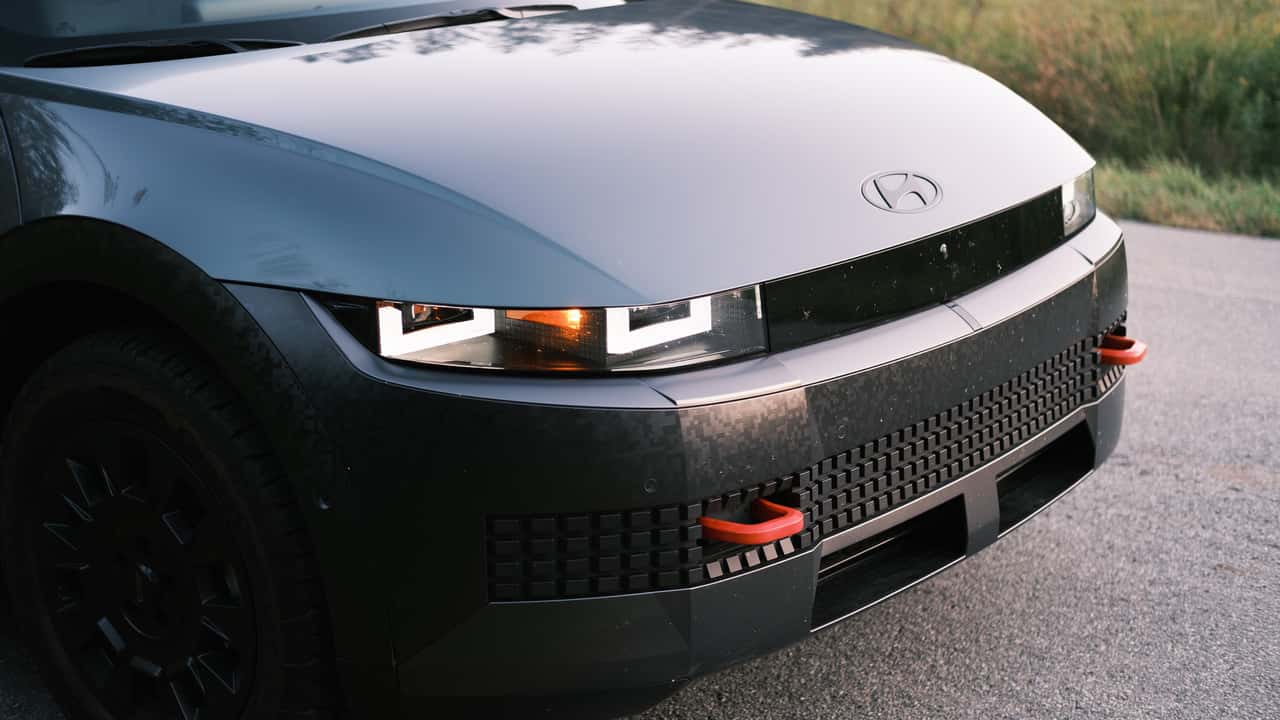
Photo by: Patrick George
Mack Hogan 
By: Mack Hogan
Dec 26, 2025 at 1:49pm ET
Add InsideEVs as a preferred source in Google
- (https://twitter.com/intent/tweet?url=https%3A%2F%2Finsideevs.com%2Fnews%2F782848%2F2025-hyundai-ioniq-5-p1aa700%2F&text=Why%20This%202025%20Hyundai%20Ioniq%205%20Needs%20A%20New%20Battery%3A%20P1AA700%20Issue%20Explained&via=InsideEVs)
- copy
Share
Comment
I like to remind people that they really do not have to worry about their electric-vehicle batteries.
The vast, vast majority of all batteries survive until the car is crashed, mechanically totaled or travels over 300,000 miles. A small subset has inadequate cooling or bad battery management and degrades by that point. And a few have manufacturing defects, which almost always will require in-warranty replacements.
File this Hyundai Ioniq 5 in that last category. A small subset of early-production 2025 Ioniq 5s—the first models built in North America, with the North American Charging System (NACS) plugs—"may experience a charging issue where a voltage difference between battery cells prevents the High Voltage Battery from fully charging," a technical service bulletin filed with the National Highway Traffic Administration reads.
The solution: Replace the battery. But if you want to see what the experience of a growing battery voltage differential looks like, watch the video below from The Ioniq Guy. Founder Corbin runs one of the best channels for Hyundai issues, in part because he's currently on his third Ioniq vehicle, and second Ioniq 5.
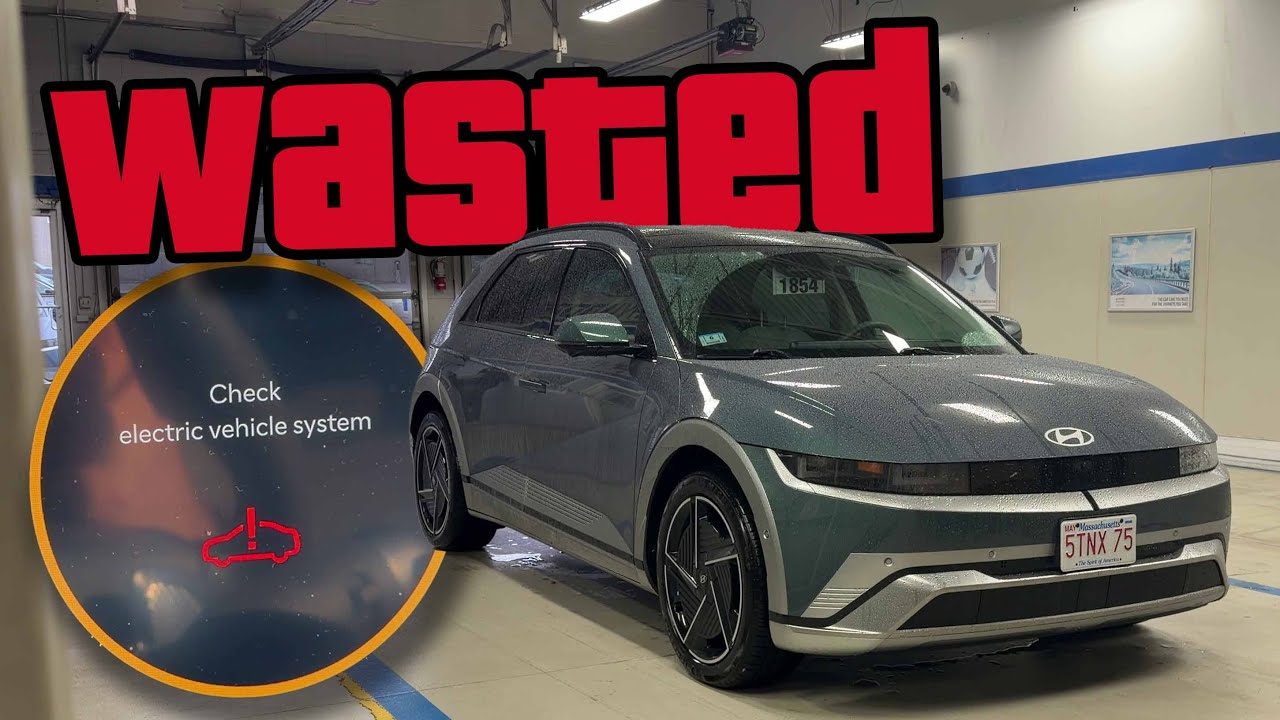
On a recent holiday road trip, his 2025 Ioniq 5 stopped hitting its peak charging rate, and struggled to maintain its charge curve. Corbin immediately flagged this. He is, after all, the kind of EV nerd (like me) that follows his own charging curve on various machines to track the car's performance. What he saw was concerning, and persisted at a variety of different charging stations.
His charging speed continued to slow down until, eventually, the car could not fast charge at all. Level 2 charging worked until, eventually, the battery died.
And knowing what we do about voltage differential, this tracks. Electric car battery packs are made up of hundreds of cells, and they all must be charged and discharged equally. Battery packs are not stable when cells are imbalanced, which can lead to dangerous conditions, so the car's "battery management system" (BMS) monitors cell voltages and keeps everything equally charged. But when the logic of the BMS fails or a cell has a charging or discharging issue, that voltage differential will initially slow down the maximum charging speed until the imbalance grows, at which point the car will trigger a fault code and shut iself down.
Corbin's car issued a P1AA700 fault code—a generic troubleshooting code that can be read by an OBD2 code reader—for a Cell Voltage Deviation. Hyundai quickly recognized this as the telltale sign of a voltage-differential failure and ordered a replacement battery for the Ioniq 5. (He also had a great explainer video on the P1AA700 issue before his own personal experience.)
In an email to InsideEVs, Corbin confirmed that the company fast-tracked him a battery. But the coolant refill process may not have been performed correctly, leading to a low-coolant issue shortly after he received the vehicle. He'll have a full update on the saga sometime soon.
It's surely a frustrating experience. But understanding the mechanics of a battery failure also helps demystify the technology. This is not rocket science. A cell must reliably charge and discharge at a predictable rate. A BMS must monitor for charge imbalances and rebalance them. The cooling system must keep the system at a safe and efficient temperature. As long as those components all do their job, batteries can easily last for hundreds of thousands of miles.
But here's the best bit: They are all also guaranteed for eight years or 100,000 miles. Any production quality issue with the battery cells or fault in BMS logic is likely to manifest within the first 100,000 miles of a car's life, so most failures lead to in-warranty replacement. And modern EV batteries just don't fail very often.
What do you think?
View
Comments
Point is: You really shouldn't worry about it.
Contact the author: Mack.Hogan@insideevs.com.
We want your opinion!
What would you like to see on Insideevs.com?
Take our 3 minute survey.
- The InsideEVs team
Share this Story
- (https://twitter.com/intent/tweet?url=https%3A%2F%2Finsideevs.com%2Fnews%2F782848%2F2025-hyundai-ioniq-5-p1aa700%2F&text=Why%20This%202025%20Hyundai%20Ioniq%205%20Needs%20A%20New%20Battery%3A%20P1AA700%20Issue%20Explained&via=InsideEVs)
- copy
GO TO COMMENTS
(
)
Got a tip for us? Email: tips@insideevs.com
View all comments ( )
Trending

Lucid Is Slashing $15,000 Off The Gravity, But The Deal Won’t Last Long
The Remnants Of The Electric Saab That Never Was Are Going Up For Auction
What We Both Thought After Driving The Rivian R2
Aptera Finally Built Its First Car For Customer Delivery
Latest Stories
- Waymo Is Recalling Its Robotaxis Because They're Not Great At Dealing With Human Instructions Nov 21 - Autonomous Vehicles -
- This EV-Swapped 1967 Porsche 912 Has 300 HP And A Split Battery Pack Nov 21 - News -
- This Plug-In Hybrid SUV Towed A Boeing 747 On Only 2 Wheels. Yes, Really. Nov 21 - Towing -
- BYD's Latest SUV Can Hide Its Steering Wheel When You Don't Need It Nov 20 - China -
- What We Both Thought After Driving The Rivian R2 Nov 20 - Podcast -
- Hyundai’s N Vision 74 Was One Of The Coolest Car Designs In Recent Memory. Now It's Shelved Nov 20 - News -
- The Remnants Of The Electric Saab That Never Was Are Going Up For Auction Nov 20 - News -
RECOMMENDED FOR YOU
The Best EV Lease And Finance Deals In November 2026
Waymo Is Recalling Its Robotaxis Because They're Not Great At Dealing With Human Instructions
Hyundai’s N Vision 74 Was One Of The Coolest Car Designs In Recent Memory. Now It's Shelved
This EV-Swapped 1967 Porsche 912 Has 300 HP And A Split Battery Pack
The Best Hybrid SUVs To Buy In 2026
This Plug-In Hybrid SUV Towed A Boeing 747 On Only 2 Wheels. Yes, Really.
Hyundai Is Recalling Nearly 30,000 Kona EVs Because Their Airbags May Not Deploy