Home
Volkswagen
News
The Volkswagen ID. Polo Is A 280-Mile, Sub-$30,000 EV For The Masses
The all-new electric subcompact hatchback will be available with LFP and NMC batteries made in Europe.
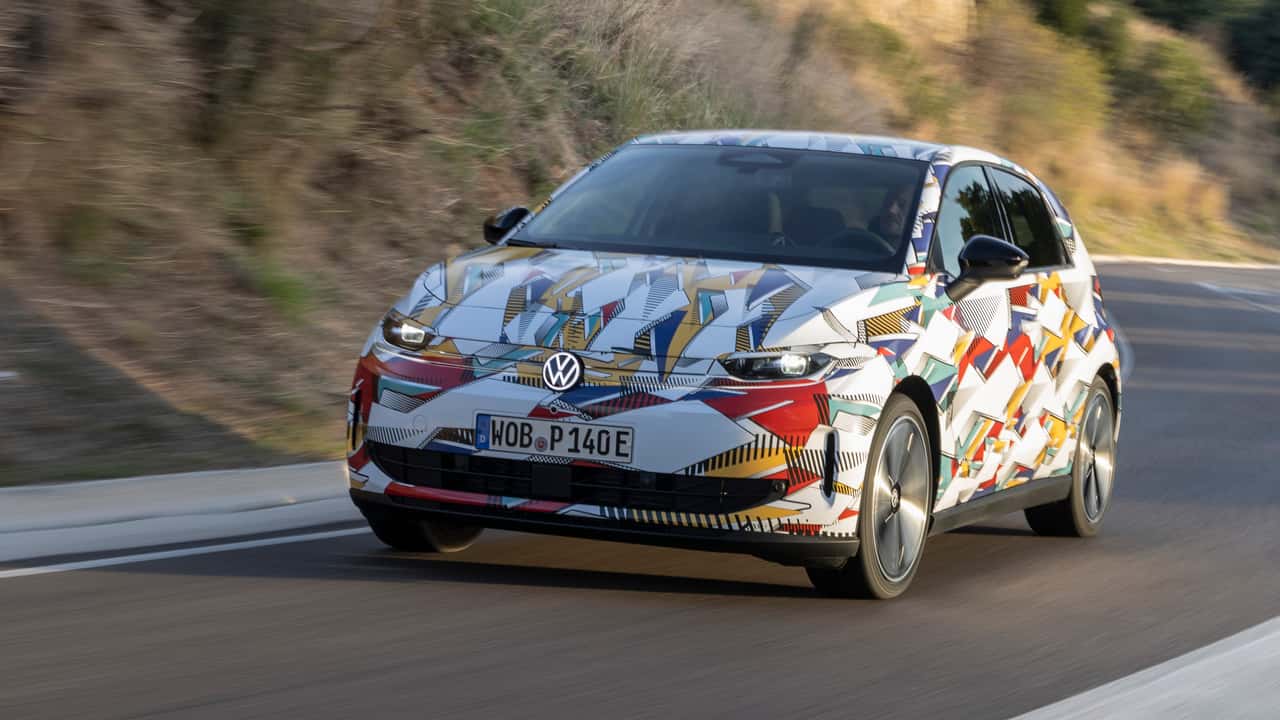
Photo by: Volkswagen
Iulian Dnistran 
By: Iulian Dnistran
Dec 15, 2025 at 6:00am ET
Add InsideEVs as a preferred source in Google
- (https://twitter.com/intent/tweet?url=https%3A%2F%2Finsideevs.com%2Fnews%2F781265%2Fvolkswagen-id-polo-specs-official-range-power-battery%2F&text=The%20Volkswagen%20ID.%20Polo%20Is%20A%20280-Mile%2C%20Sub-%2430%2C000%20EV%20For%20The%20Masses&via=InsideEVs)
- copy
Share
Comment
- The Volkswagen ID. Polo is nearly here.
- The German automaker revealed the official technical specifications of the upcoming subcompact EV.
- Built entirely in Europe, the ID. Polo will start from less than $29,000 (25,000 Euros) when it goes on sale next year.
With increasing competition from China, Volkswagen is finally putting its might to good use by making a truly affordable electric car for the masses. This is the all-new ID. Polo, a subcompact EV designed, developed and built in Europe with an emphasis on affordability.
When it goes on sale at the end of April next year, the Volkswagen ID. Polo will start from less than $29,000 (25,000 Euros) in Europe, including VAT, making it one of the most attractive offerings in the segment that’s currently ruled by the Renault 5.

Photo by: Volkswagen
We only know the technical specs for now, with Volkswagen opting for a multi-step reveal of the ID. Polo. The interior will be unveiled in January, and the final design of the car will go under the spotlight closer to the scheduled market launch.
All ID. Polo variants will be powered by a newly developed AP290 drive unit that will sit exclusively at the front. In other words, the electric hatchback, including the hot ID. Polo GTI, scheduled for 2027, will be front-wheel drive.
That appealing starting price, which is close to the Renault 5’s entry MSRP, will more than likely be applied to the entry-level version of the ID. Polo, which will be powered by a 37-kilowatt-hour (usable) lithium iron phosphate battery pack and a 114-horsepower (85-kilowatt) front motor.
The same LFP pack will also be available with a slightly more potent, 181 hp (99 kW) front motor. However, regardless of the drive unit, Volkswagen says these two versions are expected to be capable of covering up to 186 miles (300 kilometers) on a full charge on the WLTP cycle. On the EPA cycle, that would be around 160 miles, though we don't expect this car to make it to the U.S. anytime soon. The LFP battery can accept up to 11 kW of power from an AC source and up to 90 kW from a DC fast charger. According to Volkswagen, it takes approximately 27 minutes to go from 10% to 80% on a fast charger. The charge port is located on the front right.
Photo by: Volkswagen

Stay informed with our newsletter every weekday
back
Subscribe For more info, read our Privacy Policy & Terms of Use.
Two other versions of the ID. Polo will also be available, including a sporty GTI-badged model. Offering 208 hp (155 kW) in the mid-range model and 222 hp (166 kW) in the GTI, both Polos are powered by a 52 kWh nickel manganese cobalt (NMC) pack that ups the maximum range to 280 miles (450 km) on the WLTP cycle. On the EPA cycle, that would translate to about 240 miles. This larger battery can also charge faster from a DC source, at up to 130 kW, making for a 10% to 80% top-up in 23 minutes. Meanwhile, the AC charging input is the same as on the LFP battery, 11 kW.
The battery packs were developed by Volkswagen Group’s PowerCo unit and feature a cell-to-pack design. The batteries are mounted in the floor, between the two axles, with Volkswagen calling this latest evolution of its modular electric drive platform MEB+.
There’s a MacPherson suspension setup at the front, while the rear gets a rather basic torsion beam. Disc brakes are offered on all four wheels, with a new one-box brake system combining the hydraulic and brake-by-wire systems into a single unit.
Gallery: Volkswagen ID. Polo
18






Source: Volkswagen
The Volkswagen ID. Polo will be sold alongside the gas-powered Polo, and both are nearly identical in size. The EV is 159.5 inches (4,052 millimeters) long, 71.4 in (1,816 mm) wide and 60.2 in (1,530 mm) tall, while the wheelbase measures 102.3 in (2,600 mm). In other words, Volkswagen’s electric car for the people is roughly 10 inches shorter and has a wheelbase that’s 3 inches smaller than the new Chevrolet Bolt. It tips the scales at roughly 3,333 pounds (1,512 kilograms), making it 813 lbs (369 kg) heavier than the base-spec gas Polo.
That said, the ID. Polo has four doors and seats five, and Volkswagen is adamant that it’s more spacious inside than the gas model, thanks to the slightly longer wheelbase and the fact that the electric platform allows for more wiggle room.
What do you think?
View
Comments
Volkswagen still hasn’t taken the wraps off the new EV in this latest batch of official photos, but it’s clear that the production model will be very similar to the ID. 2all concept revealed in 2023. In fact, the ID. Polo’s dimensions are nearly identical to the show car’s. Design-wise, there’s a full-width rear light bar and a fairly conventional front end. The front doors have conventional grab handles, but the rear doors seem to have some sort of hidden handles–just like the concept.
We’ll know more about the all-new Volkswagen ID. Polo as we get closer to its official debut, but so far, it looks like the German automaker has put all the right ingredients for a good car.
More Volkswagen Stories
Everything We Know About The Rivian-Volkswagen Joint Venture
VW EVs Are Finally Getting Access To Tesla Superchargers
Volkswagen Adds Smartwatch Support For U.S. Vehicles
Many Volkswagen EVs Don’t Have Battery Preconditioning. Now, There’s A Solution
We want your opinion!
What would you like to see on Insideevs.com?
Take our 3 minute survey.
- The InsideEVs team
Share this Story
- (https://twitter.com/intent/tweet?url=https%3A%2F%2Finsideevs.com%2Fnews%2F781265%2Fvolkswagen-id-polo-specs-official-range-power-battery%2F&text=The%20Volkswagen%20ID.%20Polo%20Is%20A%20280-Mile%2C%20Sub-%2430%2C000%20EV%20For%20The%20Masses&via=InsideEVs)
- copy
GO TO COMMENTS
(
)
Got a tip for us? Email: tips@insideevs.com
View all comments ( )
Trending
Kia EV3 Lease Deals Are Here, And It’s Cheaper Than The Chevy Bolt And Nissan Leaf
I Let Android Auto Plan My EV Roadtrip. Here’s How It Worked
This Chevy Bolt Has 470,000 Miles. Here’s How Much A New Battery Was
Here's What It's Like To Take Delivery Of A Rivian R2
latest articles
- The Best Affordable Electric Cars In 2026: Cheap, Reliable Options For Everyone Oct 21 - Buying Advice -
- Electrify America’s Largest EV Charging Station Is Missing One Big Thing Oct 21 - Charging -
- Can The BMW iX3 Take Down The Tesla Model Y L And Rivian R2? Oct 20 - News -
- Waymo Plans To Have 20,000 Cars By The End Of 2027 Oct 20 - News -
- The Boring Company Uses Tesla Model 3 Sleds To Shuttle Shipping Containers Through Its Tunnels Oct 20 - News -
- How Much Range Do EVs Lose When Parked? (And How to Stop It) Oct 20 - EV 101 -
- This Chinese EV Is Now Made In Europe. More Are Coming Oct 20 - News -
RECOMMENDED FOR YOU
VW Will Automatically Limit Some ID.4 Batteries To 80% Charge This Week Unless Owners Opt Out
The Best Affordable Electric Cars In 2026: Cheap, Reliable Options For Everyone
The Next VW ID. Buzz Could Get More Tech And A Lower Price Tag
Electrify America’s Largest EV Charging Station Is Missing One Big Thing
Volkswagen’s U.S. EV Sales Tumble 90%
Can The BMW iX3 Take Down The Tesla Model Y L And Rivian R2?
Volkswagen’s Family Of Cheap EVs Already Looks Like A Hit