Home
News
Technology
Your Mail Truck Is Probably 30 Years Old. Its Electric Replacement Is Finally Arriving
After at least 31 years of diligent public service, your local mail truck deserves a nice retirement package.
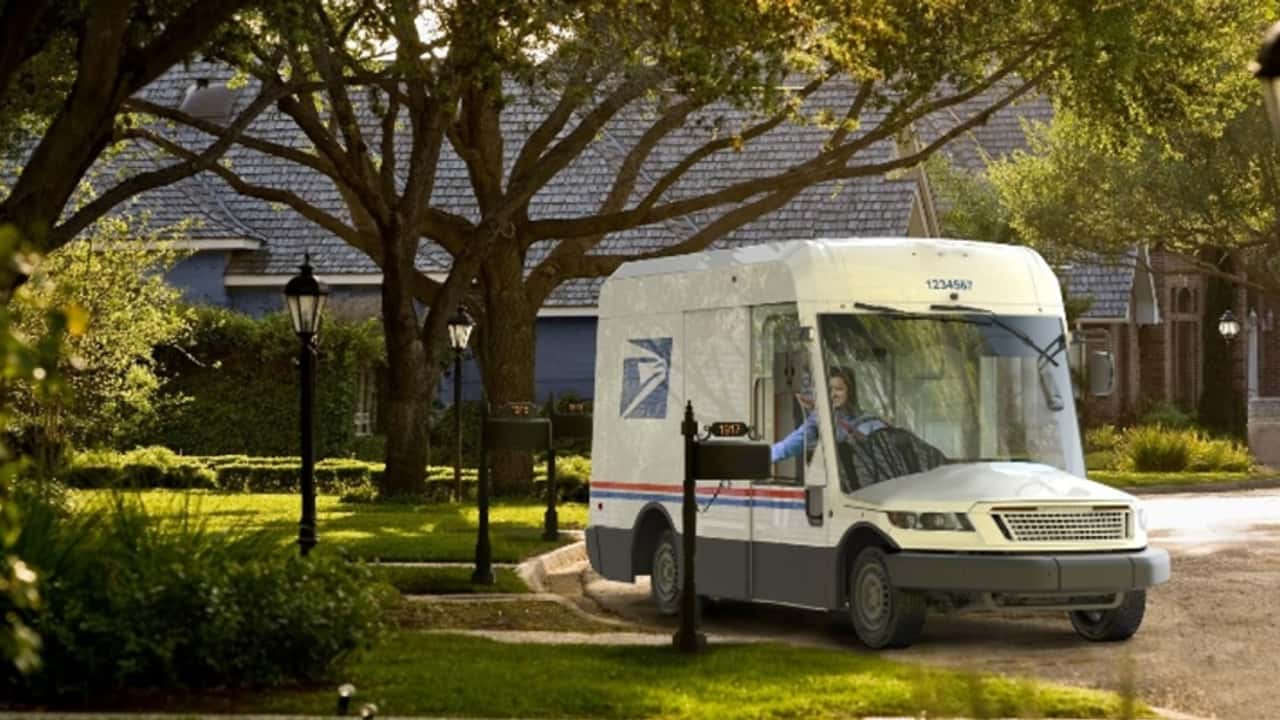
Photo by: Oshkosh
Mack Hogan 
By: Mack Hogan
Dec 1, 2025 at 2:44pm ET
Add InsideEVs as a preferred source in Google
- (https://twitter.com/intent/tweet?url=https%3A%2F%2Finsideevs.com%2Fnews%2F780498%2Fusps-electric-delivery-truck%2F&text=Your%20Mail%20Truck%20Is%20Probably%2030%20Years%20Old.%20Its%20Electric%20Replacement%20Is%20Finally%20Arriving&via=InsideEVs)
- copy
Share
Comment
Below this paragraph is a photograph of the Grumman LLV, the main vehicle of the United States Postal Service. It is an icon. It has been the main mail truck in just about every neighborhood I’ve ever lived in, for my entire life, for a simple reason. Despite the last LLV rolling off the line in 1994—three years before I was born—it is still, by far, the most prominent postal vehicle in the country.
But its reign may finally end soon, replaced at last by a new electrified option, the “Next Generation Delivery Vehicle” (NGDV).

The Grumman LLV.
With The Drive confirming that some NGDVs are entering service for the holiday season, and our friend John Voelcker reviewing one for Car and Driver, it seems the long-delayed LLV successor is finally ready for prime time. So why did the LLV last so long, and what’s going on with its electric replacement?
A Long Life Vehicle
The mission for the LLV was to be just that—a Long Life Vehicle. Considering the newest one is 31 years old and you’ve almost certainly seen a couple of them this week, I’d call that a job well done.
The issue is that this sort of longevity comes with its own challenges. While the General Motors “Iron Duke” 2.5-liter four-cylinder engine in the Grumman is reliable, it and its three-speed transmission are horrendously inefficient by modern standards. For vehicles that spend a lot of time stopping and starting in cities and suburbs, it’s a less-than-stellar choice. And with no air conditioning and a 1980s military contractor’s idea of a comfortable cabin, I’m sure your mail carrier is ready to move into something newer.
Some of them already have. The full-fleet successor to the LLV has been so delayed that many departments have had to purchase right-hand-drive Ram ProMaster or Mercedes Metris vans, among other stop-gap options. But those were never going to dominate America’s streets. That job is left ot the NGDV
A New Generation
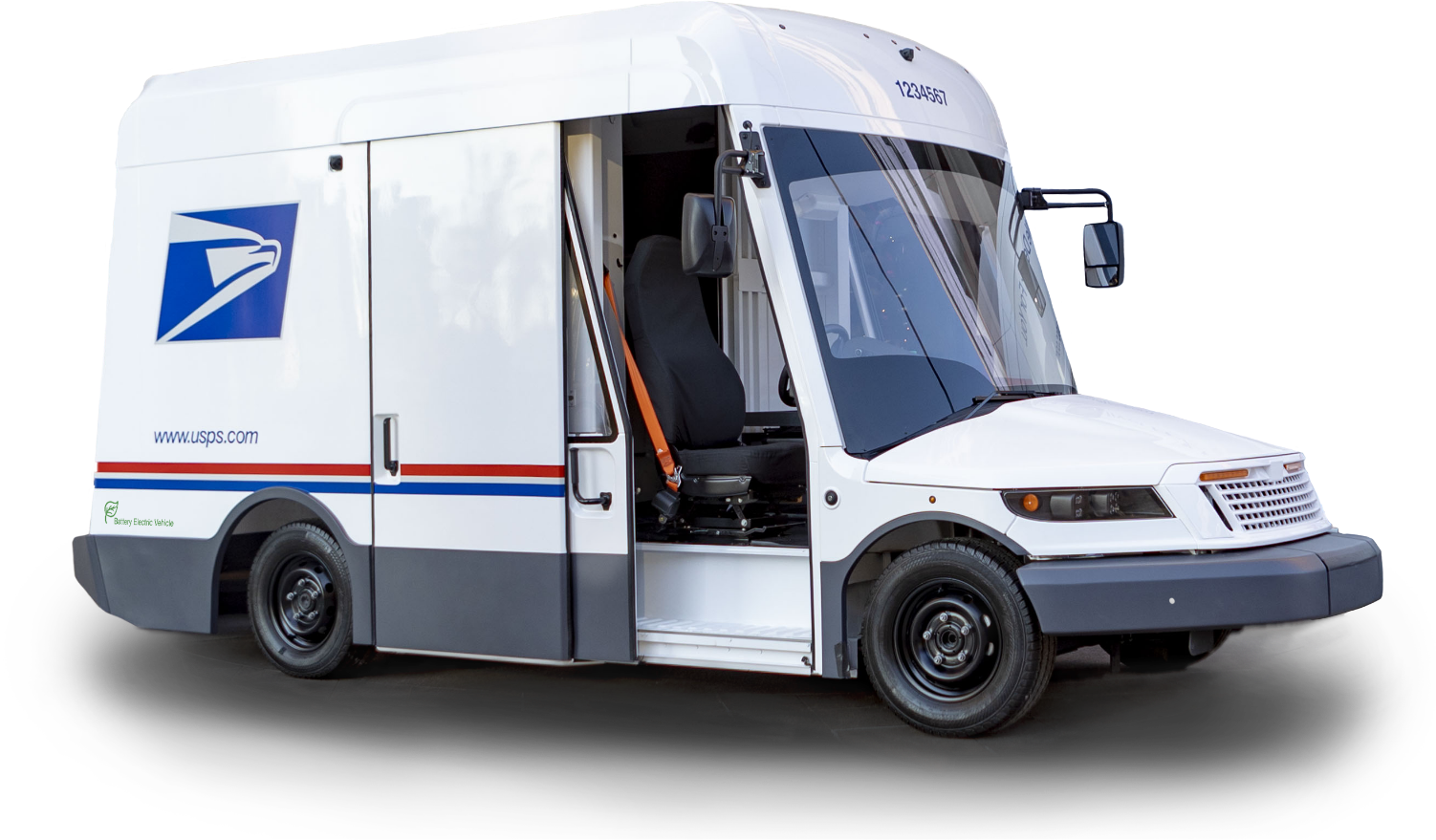
This is the Oshkosh NGDV, which will eventually replace the LLV.
Photo by: Oshkosh
Defense contractor Oskosh Corporation won the USPS contract to deliver the next-generation mail carrier. The company will provide the postal service with up to 165,000 examples of the vehicle. Around 70% of them will be electric, with the “more challenging routes” being served by gas-powered NGDVs with a Ford-sourced 2.0-liter four-cylinder turbo. Some of the gas models will even get all-wheel drive, but most NGVDs send power to their front wheels alone.
But if you know anything about the NGDV, it’s that it, well, looks like that. I’m struggling for polite words. Broad-headed, some would say. Pixar-car proportions with military-industrial-complex charm. Whatever, maybe we’ll grow into loving it. It’s not like the LLV was much to look at, and at least this one is a funny-looking fella. At the very least, the giant windscreen and hanging mirrors should make them safer and easier to operate.
Speaking of which, the biggest benefit of the new design is a modern suite of safety features. These vehicles will spend their whole lives operating around people’s homes and neighborhoods, so it’s good that they now come with automatic emergency braking, rear pedestrian detection and a backup camera. Air conditioning will also make a huge difference for drivers, and I’m sure the new model is comfier than the last.
The NGDV is also larger than the LLV. That's important, as the rise of e-commerce means that Americans get more large packages than ever before.
Photo by: US Postal Service
Plus, with 120 miles of EPA range from a 94-kilowatt battery, the electric NGVD should have plenty of endurance for the daily mail run. Extremely rural areas will likely still skip the electric NGDV, but for them, the postal service has gas NGVDs and more extreme options. Those include the right-hand-drive Jeep Wrangler postal carriers you see out in the Rockies (these are typically in rural places where mail carriers supply their own vehicles).
The 201-hp electric version should be far sprightlier in the city than the LLV, with its ancient three-speed automatic transmission. And since it has instant torque and no creep, thank God, it should be a very agreeable car for frequent stops.
More To Come
So, when will the NGVD arrive in your neighborhood? Well, look outside. It may already be there. The Drive reports that the USPS is on track to have nearly 10,000 in service by the end of the year, with a lot of new vehicles coming online during the busy holiday season.
Over time, the USPS will acquire around 160,000 vehicles. Considering the postal service uses about 190,000 vehicles daily, the NGVD is primed to become the backbone of the fleet.
What do you think?
View
Comments
That day can’t come soon enough. Every Grumman LLV you see is a public servant with at least 30 years of near-daily service. They’ve all earned the right to retire.
Contact the author: Mack.hogan@insideevs.com.
Related Stories
USPS To Purchase 9,250 Ford E-Transit Electric Delivery Vans
US Postal Service Says It Will Only Buy Electric Delivery Vehicles After 2026
Oshkosh Defense Gas & Electric Mail Trucks To Be Powered By Ford
Ford, Chevy And Mercedes Still Can't Touch Rivian's Electric Van
We want your opinion!
What would you like to see on Insideevs.com?
Take our 3 minute survey.
- The InsideEVs team
Share this Story
- (https://twitter.com/intent/tweet?url=https%3A%2F%2Finsideevs.com%2Fnews%2F780498%2Fusps-electric-delivery-truck%2F&text=Your%20Mail%20Truck%20Is%20Probably%2030%20Years%20Old.%20Its%20Electric%20Replacement%20Is%20Finally%20Arriving&via=InsideEVs)
- copy
GO TO COMMENTS
(
)
Got a tip for us? Email: tips@insideevs.com
View all comments ( )
Trending
Diesel Prices Are Surging. This Electric Trucking Company Is Seeing More Interest
Tesla Opens Self-Driving Cybercab Orders To 'Select Customers' At $29,990
Solid-State Cells Can Make The U.S. Competitive In Batteries Again: CEO
I Took A Rivian R2 On A Camping Trip To The Middle Of The Desert
Latest Stories
- Diesel Prices Are Surging. This Electric Trucking Company Is Seeing More Interest Nov 14 - News -
- Tesla Opens Self-Driving Cybercab Orders To 'Select Customers' At $29,990 Nov 13 - News -
- Do EVs Wear Tires Faster? Here's What The Studies Show Nov 13 - Features -
- The VW ID. Buzz Is Getting A New Job As A Robotaxi Nov 13 - News -
- Audi A4 EV Delayed Amid VW Group Financial Troubles: Report Nov 13 - News -
- Tesla Just Killed Its Cheapest All-Wheel-Drive Model Y Nov 13 - News -
- A Record Number Of Uber Miles Are Happening In EVs Nov 13 - News -
RECOMMENDED FOR YOU
Lucid Overhauled The Air's Infotainment. You Might Need $950 Hardware To Get It
Diesel Prices Are Surging. This Electric Trucking Company Is Seeing More Interest
Mercedes Taps Wayve For Tesla FSD-Like System Within 2 Years
Tesla Opens Self-Driving Cybercab Orders To 'Select Customers' At $29,990
Hyundai's Tesla FSD Rival Is Delayed To 2029. But It May Be Worth The Wait
Do EVs Wear Tires Faster? Here's What The Studies Show
I Experienced The World’s First Electrostatic Speakers In A Production Car. Now I Can't Go Back