Home
News
Volvo Admits Software Is Hard. But Its 2026 Cars May Finally Fix the Problem
Tastes between countries, ages, and buyers are different. But Volvo is figuring out how to make things easier, its Head of Car UX said.
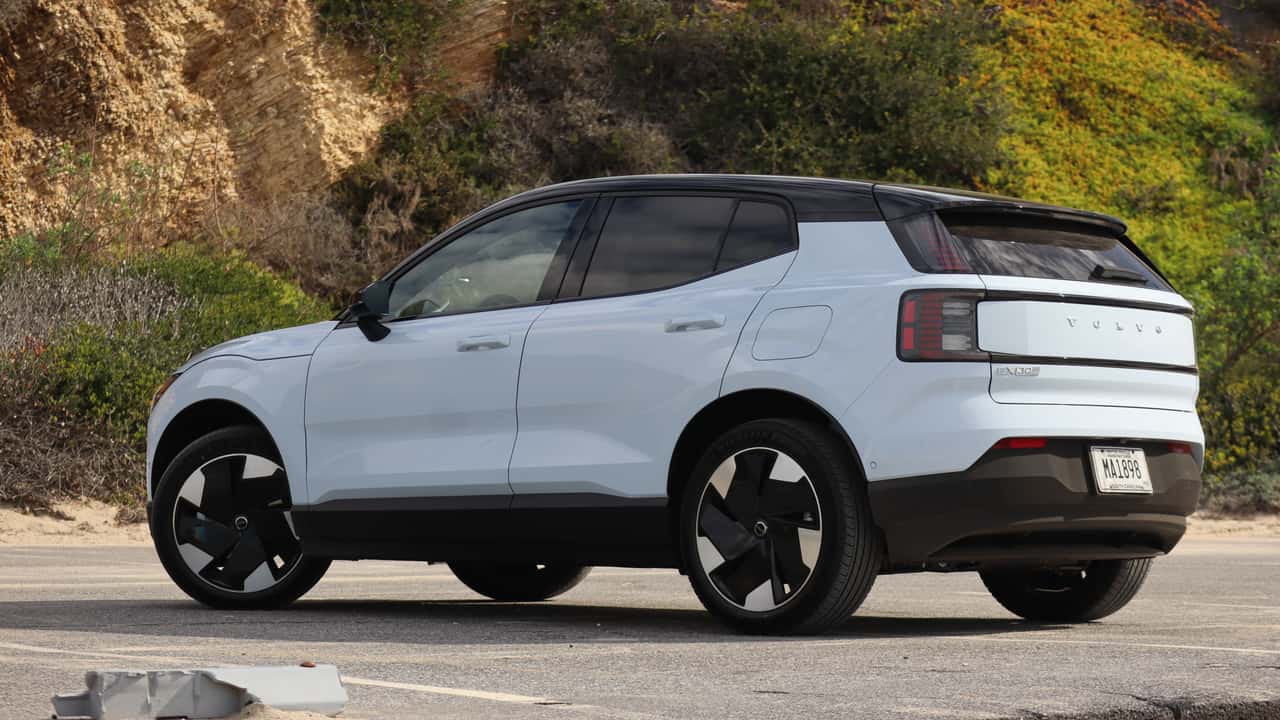
Photo by: Kevin Williams/InsideEVs
Kevin Williams 
By: Kevin Williams
Nov 21, 2025 at 5:46pm ET
Add InsideEVs as a preferred source in Google
- (https://twitter.com/intent/tweet?url=https%3A%2F%2Finsideevs.com%2Fnews%2F779728%2Fvolvo-ex30-2026-ex90-software%2F&text=Volvo%20Admits%20Software%20Is%20Hard.%20But%20Its%202026%20Cars%20May%20Finally%20Fix%20the%20Problem&via=InsideEVs)
- copy
Share
Comment
Car manufacturers are quickly learning that a software-defined vehicle is not an easy thing to, well, define. It’s a whole new world for auto manufacturers who once just had to worry about suspension design, engines or other oily bits, but now find themselves in the wonderful world of matching computer hardware specs with UX and UI design.
It hasn’t always gone all that well. Just ask Volvo. Its latest foray into its once fully-electric future has gone less than smoothly. The EX30 and EX90 debuted with a ground-up new infotainment software based on the Android Automotive architecture. Reception has been somewhat mixed, to say the least. Both our own editor-in-chief, Patrick George, and the editor-in-chief of our sister site, Motor 1, Jeff Perez, had a lot of gripes with Volvo’s interface.

Stay informed with our newsletter every weekday
back
Subscribe For more info, read our Privacy Policy & Terms of Use.
Yet, when I found myself in Santa Monica getting some seat time with Volvo’s 2026 model-year lineup, I didn’t experience the same issues. In fact, I found Volvo’s system quite agreeable and was generally flawless in operation in the two EX30 units I spent the bulk of my time with for the day.

2026 Volvo EX30
Photo by: Kevin Williams/InsideEVs
What gives? Am I a contrarian? Maybe somewhat. I am not a buttons-or-bust type of person when it comes to modern car interfaces. However, there’s more going on here. A conversation with the Head of Car UX for Volvo Cars, Jorge Furuya, revealed some key things about Volvo’s software-driven future, and some of the more unique challenges it and other brands face when it comes to creating and curating the whole car experience that pleases everyone across the globe.
Less Nagging, More Driving
Volvo says it’s getting better at software for a few reasons. For starters, it listened to feedback.
Initially, the bulk of the EX30’s complaints surrounded its driver awareness features; looking away from the road to the center-mounted and kind of narrow portrait-style center screen would induce a nag from the car’s minder. Add in the speed limit recognition from the car, and the reviewers constantly complained of a frustratingly annoying driving experience. Edmunds, for example, said the car gave a full 22 alerts within a short two-mile drive. That’s pretty bad.
The Volvo EX30 from 2025.
Photo by: Patrick George
All of that is gone now. Of course, the car still has its driver attention monitor, but the overall effect is a lot less intrusive. Over a full day of driving an EX30 Single Motor and an EX30 Cross Country, the car didn’t have any loud or annoying driver reminders. That in itself should go a long way to assuaging the claims that the car was borderline undrivable from how annoying the infotainment interface is to use.
Otherwise, the car’s UX is still about the same as it’s ever been, for better or worse. This means there’s a centrally mounted screen that houses all of the relevant drive data, and no real physical buttons. If you’ve loved the interface of any given Tesla, you’ll likely feel at home. But I fear that my colleagues in the industry who are anti-touchscreen may still find the interface frustrating.
2026 Volvo EX30
Photo by: Kevin Williams/InsideEVs
I thought it was pretty good. It felt very similar to the cars I’ve driven and experienced in China, and liked—although I admit that some of the interactions felt a little too menu and dialogue box heavy, and I wondered if there was just a little too much going on the main screen at one time. I got used to it, though.
Furuya says that this is kind of one of the biggest challenges the brand now faces in its new UX software journey: pleasing everyone, while still not falling too deep into ideas of what’s right and wrong. Yes, there are plenty of very real criticisms toward big-screen, intense software solutions, but some of the critiques can be sort of regionalized amongst consumer trends in different countries or even ages. Furuya compared it to how people use phones.
2026 Volvo EX30
Photo by: Kevin Williams/InsideEVs
“I think 15 years ago, there was still hesitant to make big transactions on their mobile phone, like say, big purchases,” he said. Today, Gen Z does this all of the time. In the context of cars, Furuya said the message here is twofold. One point is that the idea of what is acceptable or comfortable could change. But also, it revealed that sometimes the expectations between two different places are totally different—and reconciling those two spaces isn’t easy.
“There are two different experiences being developed with the car,” Furuya said, in reference to how Volvo’s team dances between satisfying its American and European customers against what buyers in China. “[There is] a completely different relationship and series of expectations of what the car should have, a number of reasons why that is,” he said. That’s not easy.
Photos of the Lynk & Co 900 in China, Shanghai Auto Show 2025
Photo by: Patrick George
For example, China loves voice-controlled commands and integrated passenger entertainment options. Just look at the interiors of cars like the Lynk & Co 900 or any given Li Auto: screens galore, but a lot of the screens in these interiors are focused on entertainment. By comparison, U.S. customers still prefer buttons and a bring-your-own-device experience for any sort of in-car infotainment. The Europeans, too; buttons are even being mandated back into cars for safety reasons there.
Plus, American Volvo buyers are still new to modern car technology. “When we first announced the [EX30 and EX90], I think that people in the U.S. were in a different state of the electrification journey,” he said. “[First] there was Tesla, and Tesla is a template.”
Furuya says that most of the industry may have been copying Tesla on some level. But now customers are starting to realize that other brands are solving the same design challenges, and they’re interested in what Volvo’s doing.
Things Should Get Easier (Hopefully)
Furuya said that Volvo’s infotainment system is still an ever-evolving beast, but it should get better the more time goes on. For example, the brand has been listening to customers who are allegedly enamored with the capability of the system and its ability to do, say, run apps. Furuya says that Volvo eventually wants to add more Android-level services to its vehicles based on what its clientele finds interesting.
Volvo EX90
Photo by: InsideEVs
From a technical standpoint, glitches should go down. For the 2026 model year, all of Volvo’s new vehicles, including its gas and plug-in hybrid models, will be powered by a Qualcomm Snapdragon chip. (That is, the flagship EX90, which has an updated Nvidia Drive OrinX chip used tandem with the Snapdragon processors. ) They’ll all run a similar version of the UX used on the EX90 and EX30.
The streamlining of technical equipment means that Volvo won’t have to tweak the software for each individual model so much, standardizing development and speeding things along. Furuya says this is very similar to what’s going on in China, and he’s right. Walk into any given BYD dealer, and each model will have a similarly-sized screen running the same software with minor tweaks, on roughly the same under-the-skin technical specifications.
This is encouraging, even if it’s still a little too soon to say if Volvo’s efforts and promises have paid off. I liked the EX30, but the brand’s biggest pain point has been the EX90’s software.
Volvo EX90 First Drive
Photo by: Volvo
Furuya says the updated Nvidia chip went a long way to making the car run better. At least from a short 15-minute experience with the EX90, the car felt as seamless as the EX30s I had driven all day. But a 15-minute drive isn’t really enough time to find out if a car will randomly brick itself or have severe problems with its ADAS features. I’ll have to take his word for it until one of us here at InsideEVs can get our hands on one for an extended period of time.
In the meantime, Volvo’s still got a huge road ahead of itself. But at least to me, things feel a little bit more hopeful.
What do you think?
View
Comments
Contact the author: kevin.williams@insideevs.com
(Correction 11/24/2025, 12:40 p.m. EST: An earlier version of this story attributed quotes from Volvo NA president Luis Rezende. This was incorrect; the interview subject was the Head of Car UX at Volvo, Jorge Furuya. Additionally, the EX90 uses a Qualcomm Snapdragon chip alongside Nvidia's OrinX. All Volvos will run a similar UX for the 2026 model year. We regret the errors.)
More Volvo EV News
American Polestar 3, Volvo EX90 Owners Can Use Their EVs To Power Their Homes
Volvo Bet Big On A Lidar Company. Why Is It Backing Off?
The 800-Volt Volvo EX60 Will Be Cheaper Than You Think
We want your opinion!
What would you like to see on Insideevs.com?
Take our 3 minute survey.
- The InsideEVs team
Share this Story
- (https://twitter.com/intent/tweet?url=https%3A%2F%2Finsideevs.com%2Fnews%2F779728%2Fvolvo-ex30-2026-ex90-software%2F&text=Volvo%20Admits%20Software%20Is%20Hard.%20But%20Its%202026%20Cars%20May%20Finally%20Fix%20the%20Problem&via=InsideEVs)
- copy
GO TO COMMENTS
(
)
Got a tip for us? Email: tips@insideevs.com
View all comments ( )
Trending
I Drove Volvo’s Long-Range Plug-In Hybrid XC60. It’s A Great Stepping Stone To An EV.
I’m Thankful For My Electric Car
Here’s How To Make Your Holiday EV Road Trip Easier
These Are The Top 10 Black Friday EV Deals. Some Are $25,000 Off
Latest Stories
- EVs Outsold Gas And Diesel Cars Combined In The EU In October Nov 27 - News -
- This Audi E-Tron EV Has 125,000 Miles. Replacing Its Battery Was A Huge Pain Nov 27 - Repair / Maintenance -
- Rivian's Winter Sale Is Live: Save on Chargers, Accessories, And More Nov 27 - Pricing -
- I Drove Volvo’s Long-Range Plug-In Hybrid XC60. It’s A Great Stepping Stone To An EV. Nov 27 - First Drives -
- A Used Cybertruck Is Selling A Month Faster Than A Ford F-150 Nov 26 - News -
- I’m Thankful For My Electric Car Nov 26 - Opinion -
- Volvo Is Bringing Humanoid Robots Into Its Factories. Here's When They'll Start Working Nov 26 - Manufacturing / Production -
RECOMMENDED FOR YOU
I Drove Volvo’s Long-Range Plug-In Hybrid XC60. It’s A Great Stepping Stone To An EV.
EVs Outsold Gas And Diesel Cars Combined In The EU In October
Volvo Is Bringing Humanoid Robots Into Its Factories. Here's When They'll Start Working
This Audi E-Tron EV Has 125,000 Miles. Replacing Its Battery Was A Huge Pain
The U.S. Let Volvo Keep Selling Cars. Polestar Got A No. What About Mercedes?
Rivian's Winter Sale Is Live: Save on Chargers, Accessories, And More
The Best EV Lease And Finance Deals In November 2026