Home
Hyundai
News
Hyundai Just Gave An Amazing Explanation Of How EV Motors Work
Love the smooth power output and instant torque on your EV? This is how automakers tune their electric motors to deliver just that.
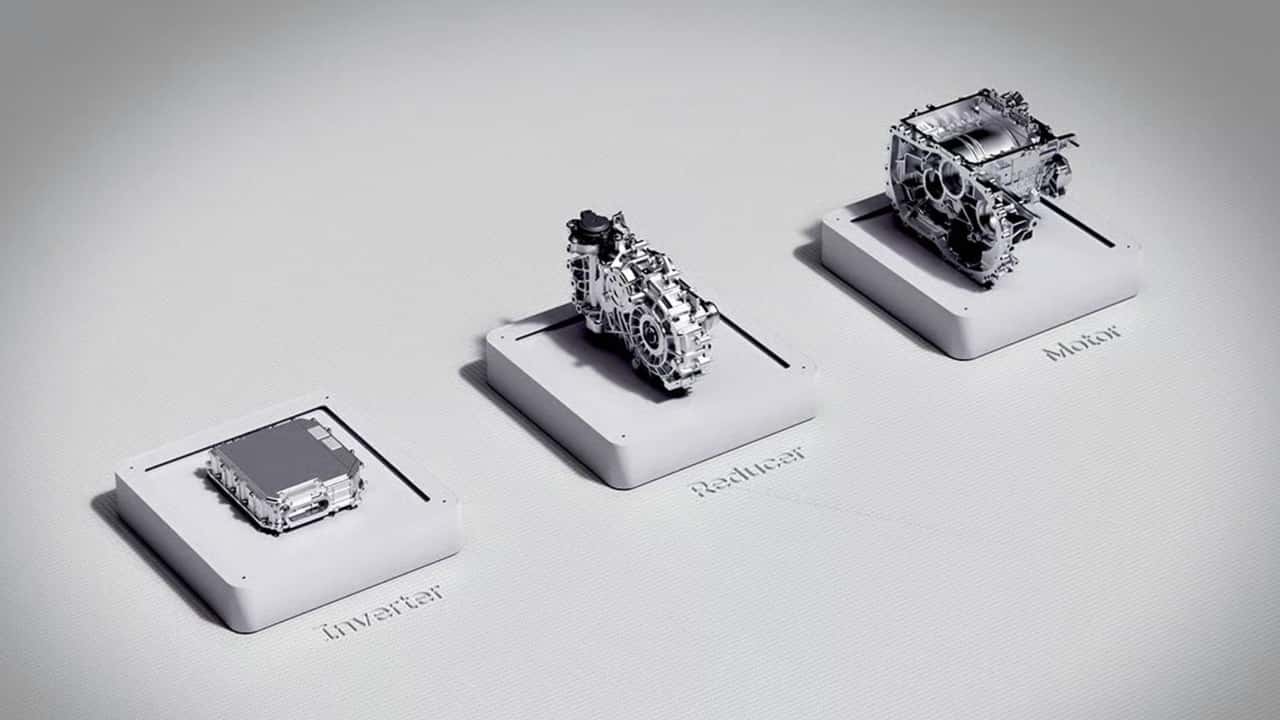
Photo by: Hyundai
Suvrat Kothari 
By: Suvrat Kothari
Nov 15, 2025 at 8:00am ET
Add InsideEVs as a preferred source in Google
- (https://twitter.com/intent/tweet?url=https%3A%2F%2Finsideevs.com%2Fnews%2F779037%2Fbest-explanation-how-ev-motors-work-hyundai%2F&text=Hyundai%20Just%20Gave%20An%20Amazing%20Explanation%20Of%20How%20EV%20Motors%20Work%C2%A0&via=InsideEVs)
- copy
Share
Comment
Electric powertrains are simpler than internal combustion engines, but they’re no less impressive when it comes to the technical wizardry that helps you go places. Batteries, of course, are at the heart of any EV, determining how far they can go or how quickly they juice up. But it's a vehicle's traction motors that actually harness that energy and translate it into forward motion.
The internals of these motors are fascinating and, I'd reckon, poorly understood by most. Hyundai recently explained exactly how its electric motors on its EVs work, and also outlined the tweaks that enabled the bonkers Hyundai Ioniq 5 N and the Kia EV6 GT performance crossovers. And the video may be one of the best breakdowns of how EV motors work on the internet.
For starters, the electric motor contains three key components: motor, reducer and inverter. The motor generates torque. The reducer transfers that torque to the wheels, whereas the inverter converts the high-voltage battery’s direct-current (DC) power to alternating current (AC), precisely controlling how and when that power gets used. Hyundai dove deep into the inverter in its latest explainer, saying it heavily influences power distribution and efficiency.
But before we dig into that, this is how an EV actually gets moving: DC power from the battery flows into the inverter, where it’s converted into AC for the motor. When the AC flows through the motor’s coils, it creates a magnetic field that constantly changes thanks to the alternating current, making the magnetized rotor at the center spin. All this happens within milliseconds of when you touch the throttle, delivering that instantaneous response that jolts your head back.

Hyundai Ioniq 5 N on track
Photo by: DW Burnett / Motor1
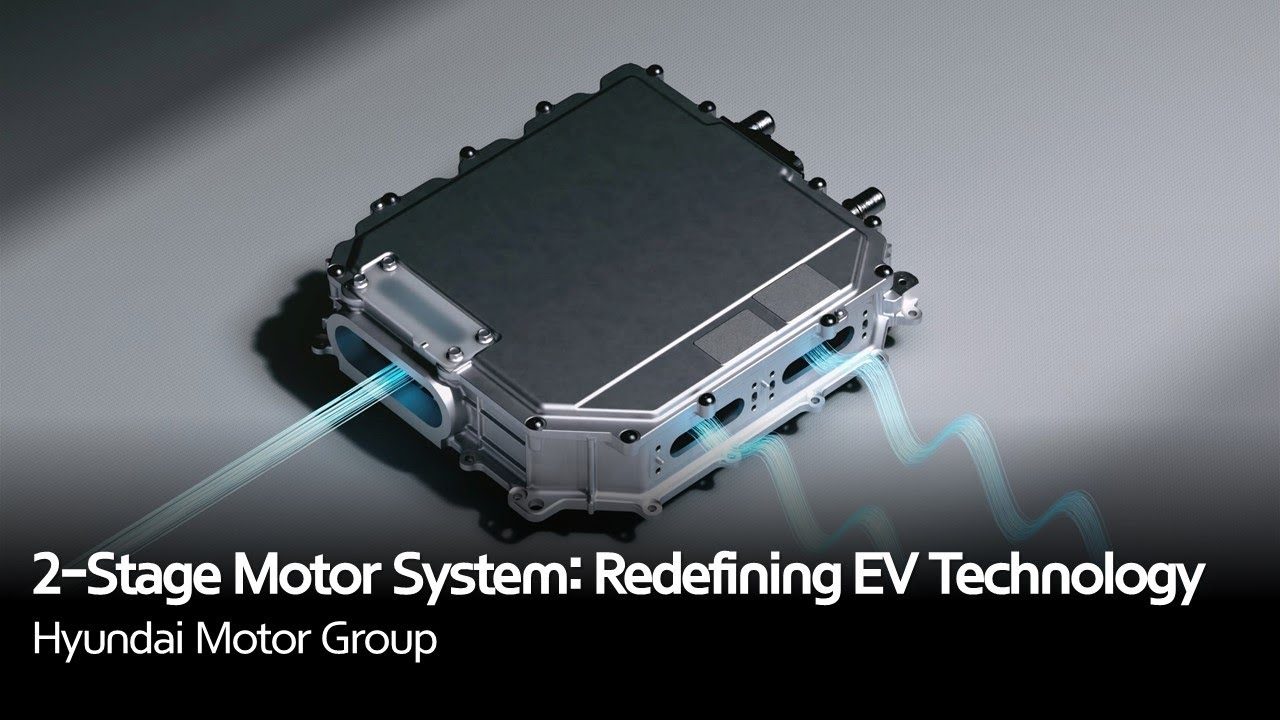
Now, how the vehicle responds after you press the throttle depends on how the inverter is configured, according to Hyundai. The company said you can unlock more performance with higher battery voltage or by increasing current at the motor, but these two approaches can make the drive systems larger and heavier. It can even lead to thermal management complexities.
But a smartly designed inverter can deliver that performance in the way it applies and controls that voltage. The company has designed what it calls a 2-Stage Motor System, which essentially doubles the number of switches—which regulate the power from the battery to the motor—in the silicon carbide inverter from six to twelve.
Photo by: Hyundai
In normal driving, the first six switches within the inverter do all the work. Floor it, and the system activates all twelve switches to deliver that neck-snapping acceleration which feels addictive on EVs (And makes your tires wear faster). The extra set of switches helps increase voltage by 70%, the automaker said.
Hyundai claims its 2-Stage Motor System doesn’t add any significant weight either. It condensed nine semiconductor modules into three, shrinking the inverter itself while delivering a lot more power.
For an combustion-equivalent comparison, think of Honda’s VTEC engines. The Japanese automaker’s variable valve timing lets an engine switch between two different camshaft profiles depending on how hard you’re driving. One helps with efficiency at low RPMs, whereas the other kicks in when you floor the throttle. It’s not an exact apples-to-apples comparison, but similar in principle to deliver the performance boost.
What do you think?
View
Comments
For a deeper dive into all of this, the video above is worth a watch.
Have a tip? Contact the author: suvrat.kothari@insideevs.com
Related Stories
Sodium-Ion Batteries Have Landed In America. Now Comes The Hard Part
Rivian's Also Reveals Base Pricing For Its Ridiculously Cool E-Bike
Everything We Know About The Rivian-Volkswagen Joint Venture
Mazda Begins Testing Its Long-Overdue U.S. EV
We want your opinion!
What would you like to see on Insideevs.com?
Take our 3 minute survey.
- The InsideEVs team
Share this Story
- (https://twitter.com/intent/tweet?url=https%3A%2F%2Finsideevs.com%2Fnews%2F779037%2Fbest-explanation-how-ev-motors-work-hyundai%2F&text=Hyundai%20Just%20Gave%20An%20Amazing%20Explanation%20Of%20How%20EV%20Motors%20Work%C2%A0&via=InsideEVs)
- copy
GO TO COMMENTS
(
)
Got a tip for us? Email: tips@insideevs.com
View all comments ( )
Trending
Diesel Prices Are Surging. This Electric Trucking Company Is Seeing More Interest
Tesla Opens Self-Driving Cybercab Orders To 'Select Customers' At $29,990
Solid-State Cells Can Make The U.S. Competitive In Batteries Again: CEO
I Took A Rivian R2 On A Camping Trip To The Middle Of The Desert
Latest Stories
- Diesel Prices Are Surging. This Electric Trucking Company Is Seeing More Interest Nov 14 - News -
- Tesla Opens Self-Driving Cybercab Orders To 'Select Customers' At $29,990 Nov 13 - News -
- Do EVs Wear Tires Faster? Here's What The Studies Show Nov 13 - Features -
- The VW ID. Buzz Is Getting A New Job As A Robotaxi Nov 13 - News -
- Audi A4 EV Delayed Amid VW Group Financial Troubles: Report Nov 13 - News -
- Tesla Just Killed Its Cheapest All-Wheel-Drive Model Y Nov 13 - News -
- A Record Number Of Uber Miles Are Happening In EVs Nov 13 - News -
RECOMMENDED FOR YOU
The Best Hybrid SUVs To Buy In 2026
Diesel Prices Are Surging. This Electric Trucking Company Is Seeing More Interest
The Best EV Lease And Finance Deals In November 2026
Tesla Opens Self-Driving Cybercab Orders To 'Select Customers' At $29,990
Hyundai Is Recalling Nearly 30,000 Kona EVs Because Their Airbags May Not Deploy
Do EVs Wear Tires Faster? Here's What The Studies Show
Nearly 1 In 3 Hyundais Sold In October Was A Hybrid As High Gas Prices Push Buyers To Pivot