Home
News
Battery Tech
China Is Making 800-Mile EV Batteries. Here’s Why America Can’t Have Them
Chinese automaker Chery is gearing up for a fight with CATL and BYD in the solid-state battery race.
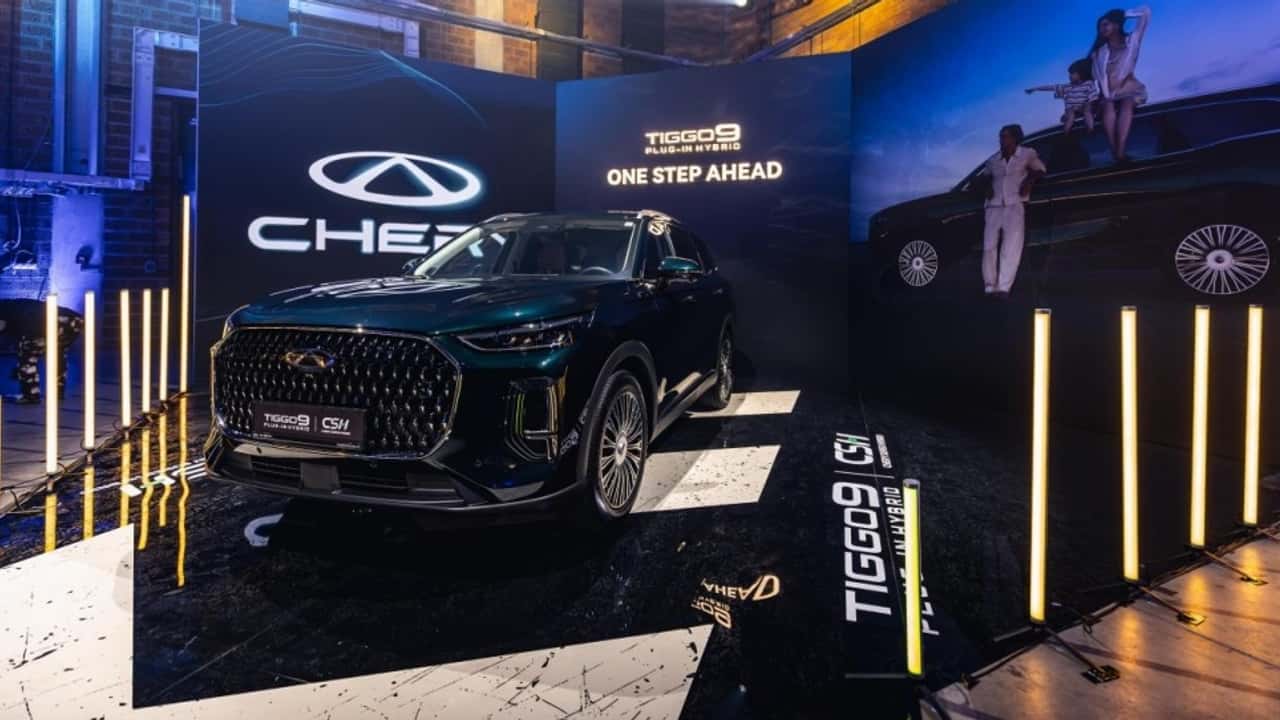
Photo by: Chery
Suvrat Kothari 
By: Suvrat Kothari
Oct 21, 2025 at 10:38am ET
Add InsideEVs as a preferred source in Google
- (https://twitter.com/intent/tweet?url=https%3A%2F%2Finsideevs.com%2Fnews%2F776394%2Fchina-800-mile-solid-state-ev-battery%2F&text=China%20Is%20Making%20800-Mile%20EV%20Batteries.%20Here%E2%80%99s%20Why%20America%20Can%E2%80%99t%20Have%20Them&via=InsideEVs)
- copy
Share
Comment
- China's Chery Automobile is the latest to enter the solid-state battery race.
- The company claims to have developed a battery that can deliver more than double the driving range of today's EVs.
- It plans to commercialize the technology in 2027, but it may remain elusive in North America.
Chinese carmaker Chery Automobile claims to have developed a new type of solid-state battery technology that can more than double the driving range of electric vehicles, while also being incredibly safe under harsh conditions. But China’s new export controls mean this cutting-edge technology may never arrive in North America.
Chery is China’s fourth largest automaker in terms of sales volume and the country’s biggest vehicle exporter ahead of BYD in the first six months of 2025, as per Bloomberg Intelligence. The company produces fully electric models, plug-in hybrids and internal combustion vehicles under brands including Chery, Exeed, Omoda, Jetour and iCar. Now, foray into solid-state batteries means BYD and CATL have one extra competitor to race against.

Chery QQ3 EV
Photo by: Chery
Battery experts consider solid-state batteries as the ultimate breakthrough that could eliminate range anxiety and shorten charging times while also being highly durable and long-lasting compared to traditional lithium-ion batteries. Some Chinese and Western automakers have started testing solid-state batteries on prototype vehicles, while a handful of electric cars with semi-solid-state batteries with a gel-like electrolyte are already on sale in China.
China’s Cailian News Agency reported last week that Chery has unveiled a prototype solid-state battery module with an energy density of 600 watt-hours per kilogram, which is more than double the average energy density of lithium-ion batteries currently on the market. Energy density this high is basically unheard of in the battery world, and if Chery manages to commercialize it, it could potentially deliver a driving range of 1,300 kilometers (807 miles) on the optimistic China Light-Duty Test Cycle (CLTC).
The automaker said during last week’s Chery Global Innovation Conference that this battery uses a lithium manganese rich cathode and an “in-situ polymerized solid-electrolyte.” According to a study published in the academic journal Royal Society Of Chemistry, these types of electrolytes—materials that allow ion movement in a cell during charging and discharging—are formed within the cell itself through a complex electrochemical process, instead of being made elsewhere and then inserted into a cell.

Stay informed with our newsletter every weekday
back
Subscribe For more info, read our Privacy Policy & Terms of Use.
Chery claimed that it’s solid-state battery module survived extreme torture tests and still continued to deliver power, according to CarNewsChina. It conducted extreme abuse tests such as nail penetration, which did not result in the battery catching fire or smoke. The company is now planning a pilot program next year, followed by broader rollout in 2027. If this ambitious timeline turns out to be successful, Chery might beat BYD and CATL to bring solid-state batteries to the market.
China is also actively trying to expand its technological lead and further consolidate its advantage in the battery industry. The country announced export controls last week on lithium-ion batteries, cathodes, graphite anodes and manufacturing equipment. There was special emphasis on restricting exports of batteries with energy densities of 300 Wh/kg or more as well as advanced lithium-iron phosphate (LFP) technology. The controls aren't an outright ban on exports, but rather they restrict and regulate the flow of these goods.
What do you think?
View
Comments
That said, automakers have been claiming eye-popping driving range figures from future solid-state batteries but none of it has materialized yet. Even if they succeed, early applications will likely be in high-end luxury or performance models. Widespread, mass-market adoption could take much longer.
Have a tip? Contact the author: suvrat.kothari@insideevs.com
Related Stories
Tesla Might Stop Including Physical Keys With Some New Cars
The Affordable 2027 Chevy Bolt Is A Heavy Update To The Old One. That Wasn't Easy
Tesla Added More Superchargers In Q3 Than The Next Nine Networks Combined
Porsche Finally Has A New CEO. He's Big On Hybrids
We want your opinion!
What would you like to see on Insideevs.com?
Take our 3 minute survey.
- The InsideEVs team
Share this Story
- (https://twitter.com/intent/tweet?url=https%3A%2F%2Finsideevs.com%2Fnews%2F776394%2Fchina-800-mile-solid-state-ev-battery%2F&text=China%20Is%20Making%20800-Mile%20EV%20Batteries.%20Here%E2%80%99s%20Why%20America%20Can%E2%80%99t%20Have%20Them&via=InsideEVs)
- copy
GO TO COMMENTS
(
)
Got a tip for us? Email: tips@insideevs.com
View all comments ( )
Trending
I Took A Rivian R2 On A Camping Trip To The Middle Of The Desert
Solid-State Cells Can Make The U.S. Competitive In Batteries Again: CEO
BYD's Futuristic EV Charger Can Run On Sunshine And Batteries
Google’s Gemini AI Assistant Now Works On Apple CarPlay
Latest Stories
- Do EVs Wear Tires Faster? Here's What The Studies Show Nov 13 - Features -
- The VW ID. Buzz Is Getting A New Job As A Robotaxi Nov 13 - News -
- Audi A4 EV Delayed Amid VW Group Financial Troubles: Report Nov 13 - News -
- Tesla Just Killed Its Cheapest All-Wheel-Drive Model Y Nov 13 - News -
- A Record Number Of Uber Miles Are Happening In EVs Nov 13 - News -
- Slate Is Selling A $30 'Screenless GPS' For Its Low-Tech Truck Nov 12 - News -
- America's Top 3 SUVs Are About To Be Hybrid Or Electric Nov 12 - News -
RECOMMENDED FOR YOU
Solid-State Cells Can Make The U.S. Competitive In Batteries Again: CEO
Do EVs Wear Tires Faster? Here's What The Studies Show
Ford Tested 36,000 Mustang Mach-E Batteries. Here’s How They Held Up After 100,000 Miles
The VW ID. Buzz Is Getting A New Job As A Robotaxi
China Has An Iron Grip On EV Batteries. Here's America’s Plan To Break It
Audi A4 EV Delayed Amid VW Group Financial Troubles: Report
Mercedes Wants To Rethink EV Batteries With This Clever New Technology