Home
News
GM Is Selling More EVs Than Ever. Here's Why It's Out $1.6 Billion
General Motors had a phenomenal third quarter of electric sales. But the cost of losing tax credits is about to add up.
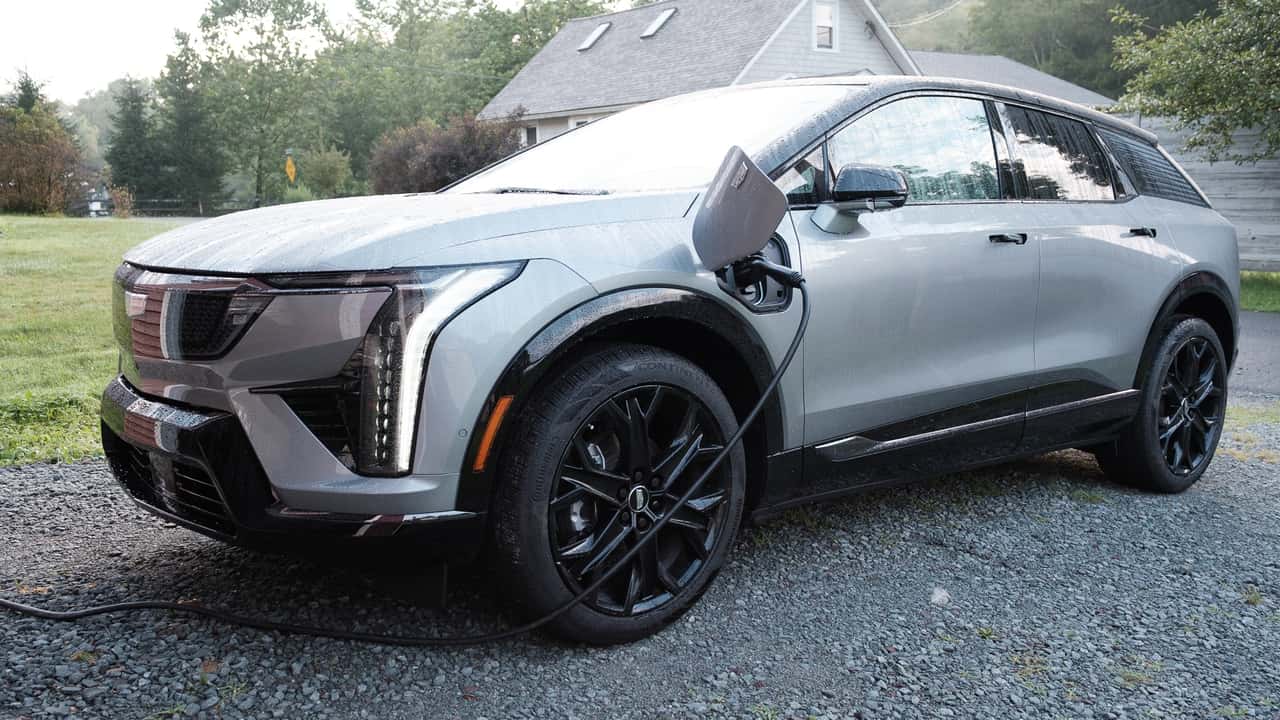
Photo by: Patrick George
Patrick George 
By: Patrick George
Oct 14, 2025 at 2:22pm ET
Add InsideEVs as a preferred source in Google
- (https://twitter.com/intent/tweet?url=https%3A%2F%2Finsideevs.com%2Fnews%2F775762%2Fgm-q3-billion-ev-adjustment-sales%2F&text=GM%20Is%20Selling%20More%20EVs%20Than%20Ever.%20Here%27s%20Why%20It%27s%20Out%20%241.6%20Billion&via=InsideEVs)
- copy
Share
Comment
- General Motors today announced $1.6 billion in additional costs as it adjusts its electric vehicle output.
- GM sold a record number of EVs in the third quarter, second only to Tesla in overall U.S. EV sales.
- But it's expecting a downturn with the tax credits gone, and without fuel economy penalties, it's no longer under the gun to keep growing its EV business.
On paper, General Motors should be the envy of the American automotive industry. It now sells more electric vehicles across more segments and price points than any other manufacturer, from luxury pickup trucks to, soon, the sub-$30,000 Chevrolet Bolt. It's been running second to Tesla in U.S. EV sales for some time now, and in the third quarter of this year, it easily passed the total electric sales it saw in all of 2024.
All of that feels like a big win. So why did EVs force GM to announce an unexpected $1.6 billion hit?

Stay informed with our newsletter every weekday
back
Subscribe For more info, read our Privacy Policy & Terms of Use.
Despite strong electric sales this year, GM officials today said that without the EV tax credit, the carmaker is expecting far less demand than it's seen thus far. That means retooling its factories to avoid an excess of EV inventory it can't sell—as well as to make more profitable gas-powered cars.
"Following recent U.S. government policy changes, including the termination of certain consumer tax incentives for EV purchases and the reduction in the stringency of emissions regulations, we expect the adoption rate of EVs to slow," the carmaker announced in a regulatory filing posted today. Like any publicly traded company, GM is required to list such unexpected charges with the U.S. Securities and Exchange Commission. "These charges include non-cash impairment and other charges of $1.2 billion as a result of adjustments to our EV capacity."
GM announced another $400 million in charges "related to contract cancellation fees and commercial settlements associated with EV-related investments," bringing the grand total to $1.6 billion. The news was reported by Bloomberg and other outlets.
Put simply, these charges show that it's expensive for a big, global carmaker like GM to adjust what cars it's producing at its factories, and at what pace. So even with impressive EV sales—about 145,000 through Q3—it's anticipating a downturn when people can't take advantage of tax credits, and it's having to make some changes.
This whiplash is expensive. And "whiplash" is the best way to describe how car companies made big pushes for electric cars and batteries made domestically under the Biden administration. Those years brought America both the EV tax credit and stricter fuel economy rules that were driving a largely electric new-car market in this country by the 2030s. Then everything changed.
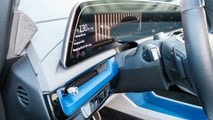
Gallery: 2025 Cadillac Optiq

23


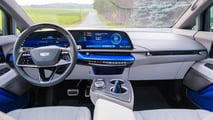
Source: Patrick George
The EV market reality never quite lined up with carmakers' rosy projections, and even before Biden left office, sales were often uneven at best. The Trump administration then yanked the rug out from GM and every other car company operating in the U.S. As of Sept. 30, they'll no longer have the EV tax credit to encourage sales. And they'll no longer have to pay any fines related to fuel economy rules, but they will have to pay steep duties on electric models imported from other countries.
Granted, that doesn't give GM a pass to stick an LS3 engine under the hood of every family crossover it makes. The carmaker knows it faces a mostly electric future someday, and deep down, any executive there will tell you that it'll deal with fuel economy regulations at some point again. (GM President Mark Reuss elaborated on this and more on this week's episode of the InsideEVs Plugged-In Podcast, which airs Friday.)
But for now, it's able to slow down. And while some competitors are issuing fire-sale price cuts on their EVs, GM has said not to expect any "irrational" discounts.
Slowing EV sales is certainly bad news for combating climate change and air pollution in America. And if all carmakers in the U.S. also slow down on their EV-related R&D investments, it leaves them caught behind far more advanced newcomers, like China's auto brands. Yet this $1.6 billion charge is a reflection of the financial realities involved with planning for years of investments in one area, and then having the federal government completely reverse course.
The Trump administration has certainly been no friend to EVs. But administration officials have argued that ending the so-called "EV mandate" and effectively killing fuel economy rules will make cars more affordable. Given that the average new car price rose past $50,000 for the first time in September, and that automakers are dealing with staggering tariff costs—GM's own bill was $1.1 billion just in the second quarter—that seems rather unlikely in the short term.
What do you think?
View
Comments
It's enough to make you wonder who's actually winning in this scenario.
Contact the author: patrick.george@insideevs.com
More GM EV News
Why GM Pulled The Plug On Hydrogen
The 2027 Chevy Bolt Will Be ‘Limited Run’ Only
EV Tax Credits Are Dead. Here Come The Deals And Discounts
GM Has Already Sold More Electric Vehicles In 2025 Than All Of 2024
We want your opinion!
What would you like to see on Insideevs.com?
Take our 3 minute survey.
- The InsideEVs team
Share this Story
- (https://twitter.com/intent/tweet?url=https%3A%2F%2Finsideevs.com%2Fnews%2F775762%2Fgm-q3-billion-ev-adjustment-sales%2F&text=GM%20Is%20Selling%20More%20EVs%20Than%20Ever.%20Here%27s%20Why%20It%27s%20Out%20%241.6%20Billion&via=InsideEVs)
- copy
GO TO COMMENTS
(
)
Got a tip for us? Email: tips@insideevs.com
View all comments ( )
Trending
The Mercedes-Benz EQS Sedan, EQS SUV, And EQE SUV Soldier On For 2027
The BMW iX5 Was Driven Until It Died. It Had A Surprising Amount Of Hidden Range Left
What We Both Thought After Driving The Rivian R2
Aptera Finally Built Its First Car For Customer Delivery
Latest Stories
- This Little Electric Truck Looks Like France's Answer To The Slate Nov 23 - News -
- Tesla's EVs Could Get One Big Upgrade Next Year Nov 23 - News -
- Hyundai Ioniq 5 Maintenance Guide: What Needs Servicing And What Doesn’t Nov 23 - News -
- 2027 Mercedes GLA Electric First Drive: A Big Upgrade Nov 23 - Car Reviews -
- China’s SC01 EV Sports Car Will Get Its Own Factory In Europe Nov 23 - Europe -
- The BMW iX5 Was Driven Until It Died. It Had A Surprising Amount Of Hidden Range Left Nov 23 - Range / Efficiency -
- The Mercedes-Benz EQS Sedan, EQS SUV, And EQE SUV Soldier On For 2027 Nov 23 - Pricing -
RECOMMENDED FOR YOU
Cadillac Is Bringing GM’s Super Cruise Hands-Free Driving System To Europe
Tesla's EVs Could Get One Big Upgrade Next Year
GM's Future Cars Will Be Very Different. Here's Everything We Learned
Hyundai Ioniq 5 Maintenance Guide: What Needs Servicing And What Doesn’t
Bentley’s First EV Is Already Sold Out, And Production Hasn’t Even Started
2027 Mercedes GLA Electric First Drive: A Big Upgrade
Over A Quarter Of BMW, Mini, And Rolls-Royce Models Sold In Q3 Had A Plug