Home
Stellantis
News
Stellantis Slows Down On Autonomy After Falling Behind In Electric Cars
High costs and technological challenges led the automaker to scrap its plans to develop autonomous systems in-house.
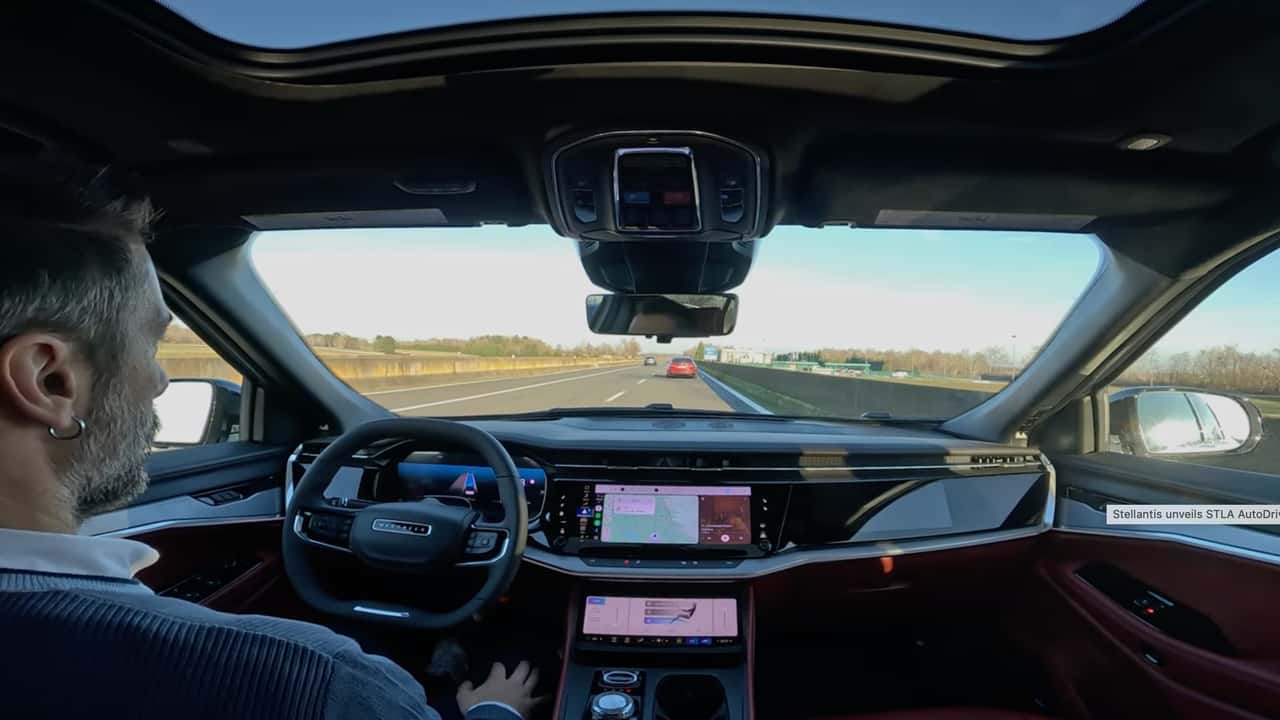
Photo by: Stellantis
Suvrat Kothari 
By: Suvrat Kothari
Aug 26, 2025 at 2:34pm ET
Add InsideEVs as a preferred source in Google
- (https://twitter.com/intent/tweet?url=https%3A%2F%2Finsideevs.com%2Fnews%2F770165%2Fstellantis-cancels-level-3-adas-plans%2F&text=Stellantis%20Slows%20Down%20On%20Autonomy%20After%20Falling%20Behind%20In%20Electric%20Cars&via=InsideEVs)
- copy
Share
Comment
- Stellantis will no longer pursue plans to develop its own hands-free and eyes-off advanced driver assistance system.
- High costs and technological challenges proved far too difficult to overcome.
- The automaker is already undergoing a challenging transition towards electric vehicles.
Stellantis, the parent company of Jeep, Dodge, Ram and several other popular car brands, is reportedly abandoning plans to develop higher levels of advanced driver assistance systems (ADAS) in-house.
The automaker, already lagging behind competitors in electric vehicle development and sales, is now pulling the plug on autonomy, Reuters reported Tuesday, citing three people familiar with the matter. High costs, technical hurdles and uncertain consumer demand were all factors in the decision.
As recently as February, those efforts appeared to be on track. Stellantis announced STLA AutoDrive 1.0 early this year, the company’s first SAE Level 3—hands off the wheel, eyes off the road—driver assistance system. In theory, it would allow the driver to take their hands and eyes off the road at up to 37 mph under certain conditions. The system would still prompt the driver to take over when deemed necessary.

Photo by: Stellantis
Advanced driver assistance systems are gaining traction among U.S. buyers. Market research firm AutoPacific said in July that systems such as General Motors’ Super Cruise, Ford’s BlueCruise and Tesla’s Full Self-Driving (Supervised) are now the most desired features among new car buyers. In InsideEVs’ own testing, such systems have proved particularly useful in stop-and-go traffic or long monotonous highway drives.
However, the vast majority of systems available currently on passenger cars are classified as Level 2, requiring complete driver supervision. Stellantis was developing a system a level above, where drivers could take their eyes and hands off the road under certain conditions.
“STLA AutoDrive will allow drivers to temporarily engage in non-driving tasks such as watching a movie, catching up on emails, reading a book, or simply looking out the window, reclaiming valuable time,” Stellantis said in a press release at the time. Like other ADAS systems, it would use a combination of adaptive cruise control and lane centering assist to deliver partial autonomy. It even showed demo videos of the electric Jeep Wagoneer S equipped with AutoDrive 1.0 driving on highways.
Photo by: Stellantis
Now, the automaker will reportedly instead rely on suppliers to deliver that technology, rather than developing it in-house. While potentially more cost-effective, this could be a long-term disadvantage. Part of the reason why automakers have been developing ADAS systems in-house is that it gives automakers full control over the technology, allows timely upgrades and better hardware-software integration.
However, the financial reality of developing these systems is hard to ignore. Automakers have been losing billions of dollars on their electrification efforts. Developing autonomous driving systems in-house without a clear roadmap to profitability and subscription revenue further hurts their bottom line, also to the tune of billions of dollars.
Fully autonomous driving has been a long-sought goal for tech companies and automakers alike, but not an easy one to attain. High costs and technical challenges led Uber to cancel its own robotaxi development plans in 2020, selling off the division to Aurora. GM last year scrapped its Cruise robotaxi division after a driverless Chevy Bolt EV struck a vehicle and dragged a pedestrian for several feet. However, GM has since been more focused on consumer applications for autonomy, such as its Super Cruise hands-free system.
What do you think?
View
Comments
As GM, Ford, Tesla and others race ahead, Stellantis could be left in the dust.
Have a tip? Contact the author: suvrat.kothari@insideevs.com
Related Stories
Ford BlueCruise 1.3 Review: Seriously Capable, But Not Perfect
GM’s Super Cruise Is Now In Over Half A Million Cars
Tesla Admits FSD Is 'Lagging By A Couple Years' Behind Waymo
Waymo Brings Robotaxis To Atlanta Days After Tesla's Mini Launch
We want your opinion!
What would you like to see on Insideevs.com?
Take our 3 minute survey.
- The InsideEVs team
Share this Story
- (https://twitter.com/intent/tweet?url=https%3A%2F%2Finsideevs.com%2Fnews%2F770165%2Fstellantis-cancels-level-3-adas-plans%2F&text=Stellantis%20Slows%20Down%20On%20Autonomy%20After%20Falling%20Behind%20In%20Electric%20Cars&via=InsideEVs)
- copy
GO TO COMMENTS
(
)
Got a tip for us? Email: tips@insideevs.com
View all comments ( )
Trending
A Tesla Model Y Without A Steering Wheel Is Coming: Musk
Every EV Motor Type Explained: They Aren't All The Same
I Tried Mercedes' Answer To Tesla FSD. Here's How It Went
Tesla Model 3 Maintenance Guide: What Needs Servicing And What Doesn't
Latest Stories
- Nearly 1 In 5 Tesla Model Ys Failed Their First German Inspection Nov 19 - News -
- Rivian’s Also Spinoff Pauses Deliveries Of Its $3,500 E-Bike After Months Of Delays Nov 19 - E-Mobility -
- The EV Charging Company That’s Quietly Conquering America Is Building A New U.S. Factory Nov 19 - Manufacturing / Production -
- A Tesla Model Y Without A Steering Wheel Is Coming: Musk Nov 18 - News -
- The BMW i3 Has The Nurburgring Skills To Match Its Impressive Range Nov 18 - News -
- Kia Made Its First EV 40 Years Ago. It Shows How Far Electric Cars Have Come Nov 18 - News -
- Ford Just Started Fathom LFP Battery Production In Michigan. It's A Big Deal Nov 18 - Battery Tech -
RECOMMENDED FOR YOU
This Chinese EV Is Now Made In Europe. More Are Coming
A Tesla Model Y Without A Steering Wheel Is Coming: Musk
Waymo Pulls Its Robotaxis Off All U.S. Highways After California Ban
The BMW i3 Has The Nurburgring Skills To Match Its Impressive Range
Waymo And Uber's Robotaxi Partnership Is Ending
Kia Made Its First EV 40 Years Ago. It Shows How Far Electric Cars Have Come
Waymo's Public Fast-Charging Problem Is Infuriating EV Drivers