Home
News
Safety
Feds Probe Tesla For Alleged Delay In Reporting Autopilot Crashes
Slow-rolling required crash reports is not a good look, but the company says it wasn't intentional.
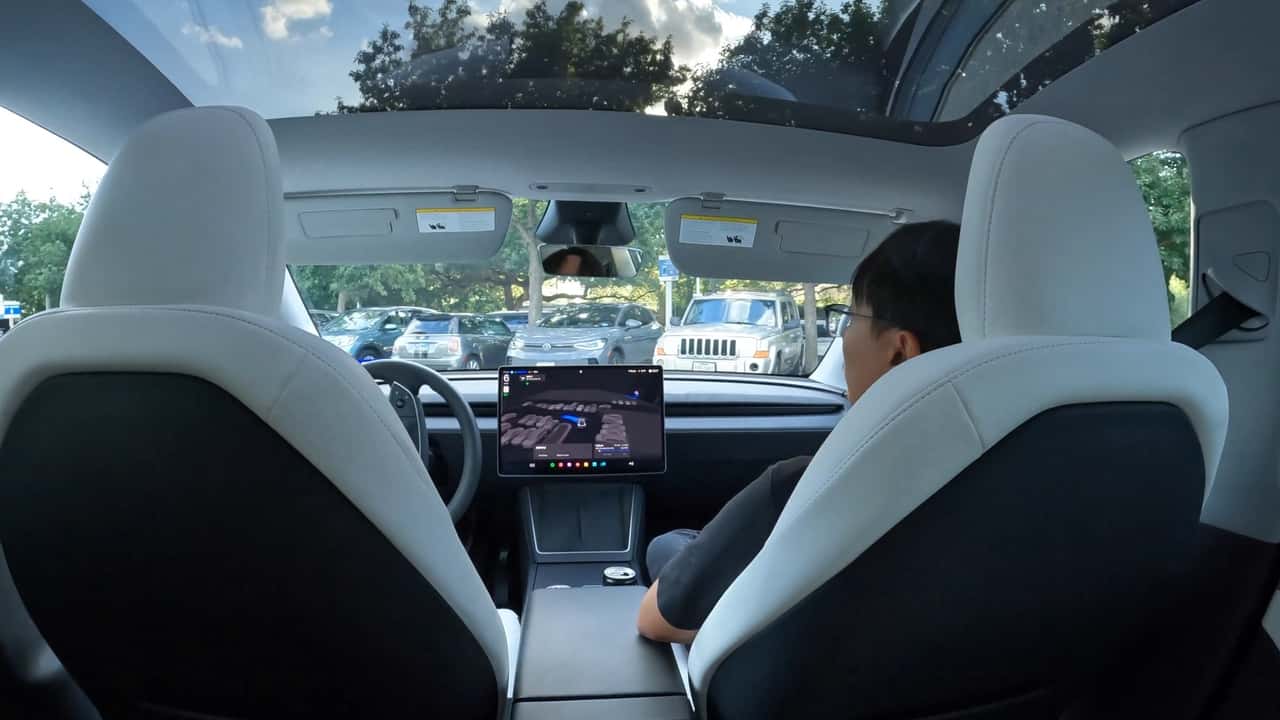
Photo by: Dan Burkland
Mack Hogan 
By: Mack Hogan
Aug 21, 2025 at 1:11pm ET
Add InsideEVs as a preferred source in Google
- (https://twitter.com/intent/tweet?url=https%3A%2F%2Finsideevs.com%2Fnews%2F769705%2Ffeds-probe-tesla-autopilot-crash-delays%2F&text=Feds%20Probe%20Tesla%20For%20Alleged%20Delay%20In%20Reporting%20Autopilot%20Crashes&via=InsideEVs)
- copy
Share
Comment
The National Highway Traffic Safety Administration opened an investigation into Tesla on August 19th, as Reuters first reported. The federal safety regulator is investigating Tesla for allegedly delaying mandatory reports for crashes involving its Autopilot driver-assistance features, including Full Self-Driving, the confusingly named system that is not legally self-driving.
"The Office of Defects Investigation (“ODI”) has identified numerous incident reports submitted by Tesla, Inc. (“Tesla”) in response to Standing General Order 2021-01 (the “SGO”), in which the reported crashes occurred several months or more before the dates of the reports. The majority of these reports involved crashes in which the Standing General Order in place at the time required a report to be submitted within one or five days of Tesla receiving notice of the crash," a federal filing reviewed by InsideEVs said.
Related Stories
 Tesla Is Once Again In Trouble Over Its Full Self-Driving Marketing
Tesla Thinks Full Self-Driving Is Ready For Europe. Regulators Say Not So Fast
Tesla's Full Self-Driving Outperforms Rivals In China’s Toughest Test Yet
Amazon’s Zoox Taxi Is Clear To Operate Without A Steering Wheel Or Pedals
'Open The Floodgates': Why Tesla's $243 Million Autopilot Crash Verdict Is Such A Big Deal
GM’s Super Cruise Is Now In Over Half A Million Cars
This is a potentially serious allegation, as Tesla has always faced scrutiny for its safety practices surrounding its driver-assistance features. I remember being yelled at by Tesla Public Relations way back in 2017—back when such a department was active—because already consumers believed that Tesla was selling autonomous cars. They are not, and no company sells a commercially available car that allows for eyes-off autonomy.
(The exception is if you are driving one of a few Mercedes products, on a highway, in Nevada or California, below around 40 mph and the weather is good; that's so rare that it's functionally irrelevant at the moment).
Tesla Autopilot and Full Self-Driving are both considered "Level 2" driver-assistance features in the parlance favored by the Society of Automotive Engineers. Level 2 systems can assist the driver with the functions of operating the vehicle—including braking, steering and acceleration—but are never legally driving. They are assisting the inputs of a driver who is in legal control of the vehicle at all times.
Though a Chevy or Tesla may let you take your hands off the wheel, you must always pay attention, as you are legally driving the vehicle and responsible for preventing any mistakes or collisions.
Photo by: Chevrolet
This technical, but crucial detail, is the difference between a "hands-free highway assistance feature" like General Motors' Super Cruise and a fully autonomous system, with no driver at all, like the one that operates Waymo's autonomous taxis.
But Tesla operates a robotaxi pilot program and sells a driver-assistance system that both use the same hardware. It's easy to see where consumers could get confused. Tesla, however, has long argued that any such lapses in judgment are made up for by the overwhelming safety of miles driven on Autopilot. By its own specific metrics, it says that Autopilot is safer than human driving, though it does not release enough data for independent experts to support that claim.
What do you think?
View
Comments
In general, it is guarded with information, and quick to blame drivers when incidents do occur. So the NHTSA probe is a serious inquiry into whether the company does intentionally slow-walk information that could damage the public perception of Full Self-Driving or Autopilot, and it'll be interesting to see what the facts support. The filing says that Tesla claimed that it was a failure of its internal data collection systems, which has now been corrected. Sometimes corporations are simply bad at filing mandatory reports by incompetence, which is always the default assumption over malice.
Contact the author: Mack.Hogan@insideevs.com.
We want your opinion!
What would you like to see on Insideevs.com?
Take our 3 minute survey.
- The InsideEVs team
Share this Story
- (https://twitter.com/intent/tweet?url=https%3A%2F%2Finsideevs.com%2Fnews%2F769705%2Ffeds-probe-tesla-autopilot-crash-delays%2F&text=Feds%20Probe%20Tesla%20For%20Alleged%20Delay%20In%20Reporting%20Autopilot%20Crashes&via=InsideEVs)
- copy
GO TO COMMENTS
(
)
Got a tip for us? Email: tips@insideevs.com
View all comments ( )
Trending
GM's Next-Generation EV Platform Has 30% Less Wiring And 20% Less Battery
Can The BMW iX3 Take Down The Tesla Model Y L And Rivian R2?
GM's OnStar AI Assistant Debuts In The Cadillac Lyriq
Electrify America’s Largest EV Charging Station Is Missing One Big Thing
latest articles
- The Ferrari Luce Officially Starts At $560,800 Oct 22 - News -
- The 2027 Ford Mustang Mach-E Has More Range As Standard Oct 22 - Official -
- BMW’s Electric M3 Had To First Win Over One Of Its Own Oct 22 - News -
- Seattle Is Installing Hundreds Of Curbside EV Chargers Oct 22 - Charging -
- Spotify’s First Native In-Car App Is Hitting Audi EVs First Oct 22 - Software -
- Tesla Says 75% Of New Car Buyers Subscribe To FSD In North America Oct 21 - News -
- 'End Of The Year': Tesla Says Cybercab Customer Deliveries Will Begin Soon Oct 21 - News -
RECOMMENDED FOR YOU
Think Chinese Cars Aren't Safe? These New Crash Tests Say Otherwise
The 2027 Ford Mustang Mach-E Has More Range As Standard
The BMW iX3 Just Aced Euro NCAP’s Newer, Stricter Safety Tests
BMW’s Electric M3 Had To First Win Over One Of Its Own
Teslas Will Now Deploy Their Airbags Before Crashes Happen Thanks To Cameras
Seattle Is Installing Hundreds Of Curbside EV Chargers
China’s Next Safety Target May Be Yoke Steering Wheels