Home
News
Technology
Plug-In Hybrids Now Have More Problems Than EVs Do: J.D. Power
Plug-in hybrids are among the most mechanically complex vehicles on the road. Unfortunately, that means more problems as well.
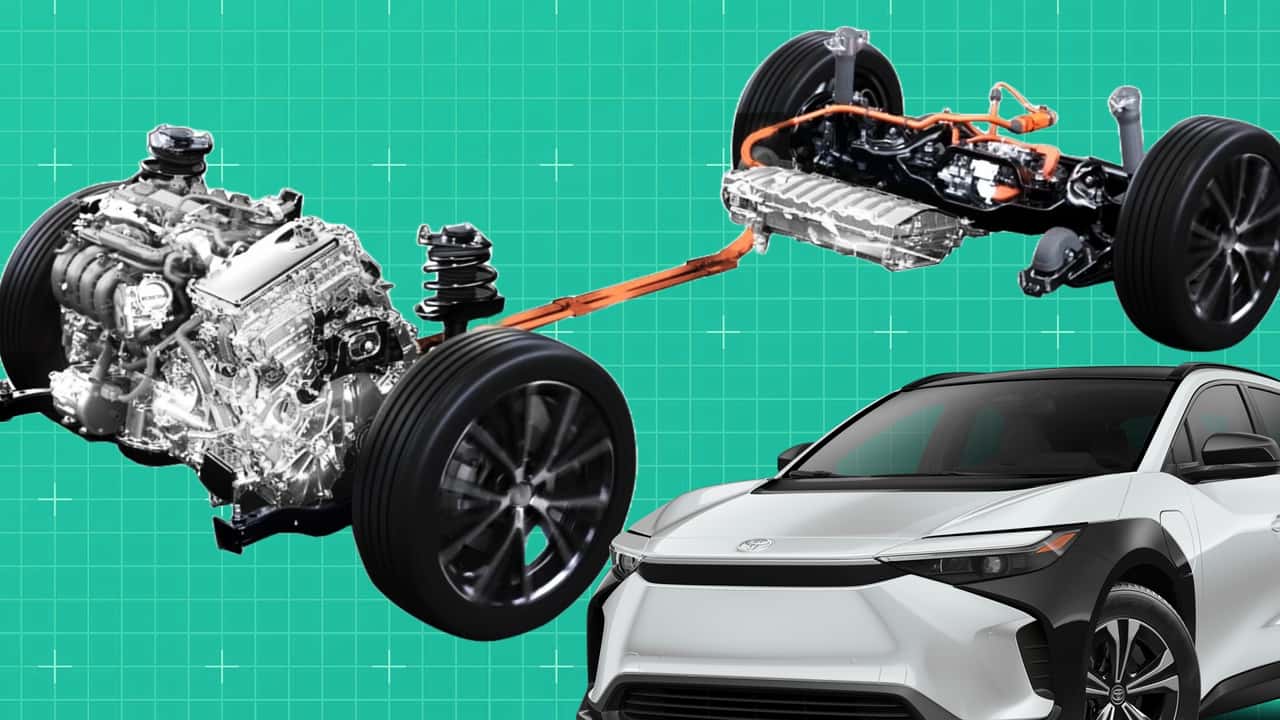
Photo by: InsideEVs
Patrick George 
By: Patrick George
Jun 30, 2025 at 3:31pm ET
Add InsideEVs as a preferred source in Google
- (https://twitter.com/intent/tweet?url=https%3A%2F%2Finsideevs.com%2Fnews%2F764309%2Fphev-ev-problems-jd-power-2025%2F&text=Plug-In%20Hybrids%20Now%20Have%20More%20Problems%20Than%20EVs%20Do%3A%20J.D.%20Power&via=InsideEVs)
- copy
Share
Comment
- Plug-in hybrid electric vehicles (PHEVs) have the most problems of any category of new vehicles, reports J.D. Power in the 2025 U.S. Initial Quality Study.
- That includes more problems than their battery electric vehicle (BEV) counterparts.
- Gasoline and standard hybrid vehicles have fewer problems than PHEVs and BEVs.
In theory, a plug-in hybrid is the ultimate bridge to a mostly-electric future. A customer gets a car they can put gas in anytime, but it's also capable of driving some usually short distance entirely on electric power, and of being recharged as conveniently as any EV.
In practice, however, a plug-in hybrid electric vehicle (PHEV) can also represent the worst of both worlds. Owners could be experiencing that at their repair shops, according to a new J.D. Power study.

Get the best news, reviews, columns, and more delivered straight to your inbox.
back
Subscribe For more info, read our Privacy Policy & Terms of Use.
The consumer research firm's 2025 U.S. Initial Quality Study now ranks PHEVs below electric vehicles for the first time ever in terms of problems per 100 vehicles, or PP100—the firm's benchmark for how many issues a car will have in the first 90 days of ownership.
A lower score reflects higher vehicle quality. The study was fielded from June 2024 through May 2025.

Volvo XC60 Recharge T8 Silver Dawn plug-in hybrid
"For the first time, PHEVs, on average, have more problems than their battery electric vehicle (BEV) counterparts," the study's authors said. That equates to scores of 237 PP100 for PHEVs vs. 212 PP100 for EVs. And here's some good news for EV fans: those cars are trending better because one consistent outlier in initial quality, Tesla, seems to be cleaning up its act. "The improvement in BEVs is driven by a 62 PP100 improvement for Tesla," the study said.
Both gasoline cars and normal hybrids rank better than EVs and PHEVs, the study said, at 184 PP100 and 196 PP100, respectively.
"As you can imagine, Tesla carries the lion's share of the EV market, so when they improve (as they did by 62 PP100 this year), they take the BEV average with it," said Frank Hanley, senior director of auto benchmarking at J.D. Power, in an email to InsideEVs. "Also, when comparing PHEVs to BEV or ICE models, they are getting impacted with issues from both the combustion engine (shifting, hesitation, etc.) as well as the electric engines (range, charging issues, etc.)"
In other words, Hanley said, PHEVs are getting hit twice, whereas EVs and internal-combustion cars only see issues in one or the other.
This makes sense if you understand how PHEVs work mechanically. All PHEVs sold in America feature a conventional gasoline-powered engine mated to a battery pack—generally much smaller in size than an EV battery pack, too.
While conventional hybrids work the same way, a PHEV gets a larger battery than those cars, and throws in the added complication of charging as well. It's a complex system that doesn't always work in concert as it should. They also require owners to actually plug them in to be most effective, and unfortunately, there's no direct evidence from U.S. automakers that consumers actually do that.
Lexus PHEV
Photo by: InsideEVs
Hanley declined to say which makes or models of PHEVs are more problematic than others, but as is often the case, brands like Lexus, Hyundai and Kia rank toward the top of its quality lists, and all of them offer PHEV options.
"Within PHEVs, there are models that have a strong performance as well as those that are problematic," Hanley said." The scores for PHEVs range from 206 PP100 all the way up to 362 PP100. This is no different than BEVs, where the range is 157 PP100 to 371 PP100."
Generally, Hanley said that when automakers offer many different powertrains, the PHEVs and EVs are problematic than their purely gas vehicles. "I would not say that one [brand] has consistently more problems on the PHEV models than their BEV models and vice versa."
The number of EVs for sale in the U.S. market far outnumbers the number of PHEVs for sale. But that class of vehicle has grown considerably in recent years, and today, PHEV options can be had from Alfa Romeo, Volvo, Audi, Dodge, Kia, Lincoln and even Ferrari.
But there's some good news in the latest J.D. Power study. The number of problems cited by owners in the first 90 days of ownership has improved slightly since last year. And most complaints center around software and infotainment systems rather than mechanical issues.
What do you think?
View
Comments
"Owners are having more touchscreen-related problems due to the inclusion of non-audio-related features like climate controls, garage door openers and even glove box releases," the firm said in a news release. "By retaining dedicated physical controls for some of these interactions, automakers can alleviate pain points and simplify the overall customer experience.”
Contact the author: patrick.george@insideevs.com
More PHEV News
Volvo Recalls 14,000 EVs And PHEVs Because Their Brakes Might Fail
Used Volvo V90 PHEV Ownership Update: Costs, Efficiency And Annoyances
The Future Of Plug-In Hybrids: Barely Using Any Gas At All
The 2025 Mazda CX-90 PHEV Isn't Great, Because Making Hybrids Is Hard
Making A Plug-In Hybrid Is A Lot Harder Than You Think
Mercedes U.S. EV Sales Plummeted In 2024 While PHEVs Surged
We want your opinion!
What would you like to see on Insideevs.com?
Take our 3 minute survey.
- The InsideEVs team
Share this Story
- (https://twitter.com/intent/tweet?url=https%3A%2F%2Finsideevs.com%2Fnews%2F764309%2Fphev-ev-problems-jd-power-2025%2F&text=Plug-In%20Hybrids%20Now%20Have%20More%20Problems%20Than%20EVs%20Do%3A%20J.D.%20Power&via=InsideEVs)
- copy
GO TO COMMENTS
(
)
Got a tip for us? Email: tips@insideevs.com
View all comments ( )
Trending
A Tesla Model Y Without A Steering Wheel Is Coming: Musk
Every EV Motor Type Explained: They Aren't All The Same
I Tried Mercedes' Answer To Tesla FSD. Here's How It Went
Tesla Model 3 Maintenance Guide: What Needs Servicing And What Doesn't
Latest Stories
- Rivian’s Also Spinoff Pauses Deliveries Of Its $3,500 E-Bike After Months Of Delays Nov 19 - E-Mobility -
- The EV Charging Company That’s Quietly Conquering America Is Building A New U.S. Factory Nov 19 - Manufacturing / Production -
- A Tesla Model Y Without A Steering Wheel Is Coming: Musk Nov 18 - News -
- The BMW i3 Has The Nurburgring Skills To Match Its Impressive Range Nov 18 - News -
- Kia Made Its First EV 40 Years Ago. It Shows How Far Electric Cars Have Come Nov 18 - News -
- Ford Just Started Fathom LFP Battery Production In Michigan. It's A Big Deal Nov 18 - Battery Tech -
- This GM EV1 Lives After A Painstaking Restoration Nov 18 - News -
RECOMMENDED FOR YOU
Lucid Overhauled The Air's Infotainment. You Might Need $950 Hardware To Get It
Rivian’s Also Spinoff Pauses Deliveries Of Its $3,500 E-Bike After Months Of Delays
Mercedes Taps Wayve For Tesla FSD-Like System Within 2 Years
The EV Charging Company That’s Quietly Conquering America Is Building A New U.S. Factory
Hyundai's Tesla FSD Rival Is Delayed To 2029. But It May Be Worth The Wait
A Tesla Model Y Without A Steering Wheel Is Coming: Musk
I Experienced The World’s First Electrostatic Speakers In A Production Car. Now I Can't Go Back