Home
Features
Europe’s EV Boom Was Real in 2025. The Real Fight Starts In 2026
The European continent is teeming with EVs, and it’s never been easier to own and charge one. But everything is under China's shadow.
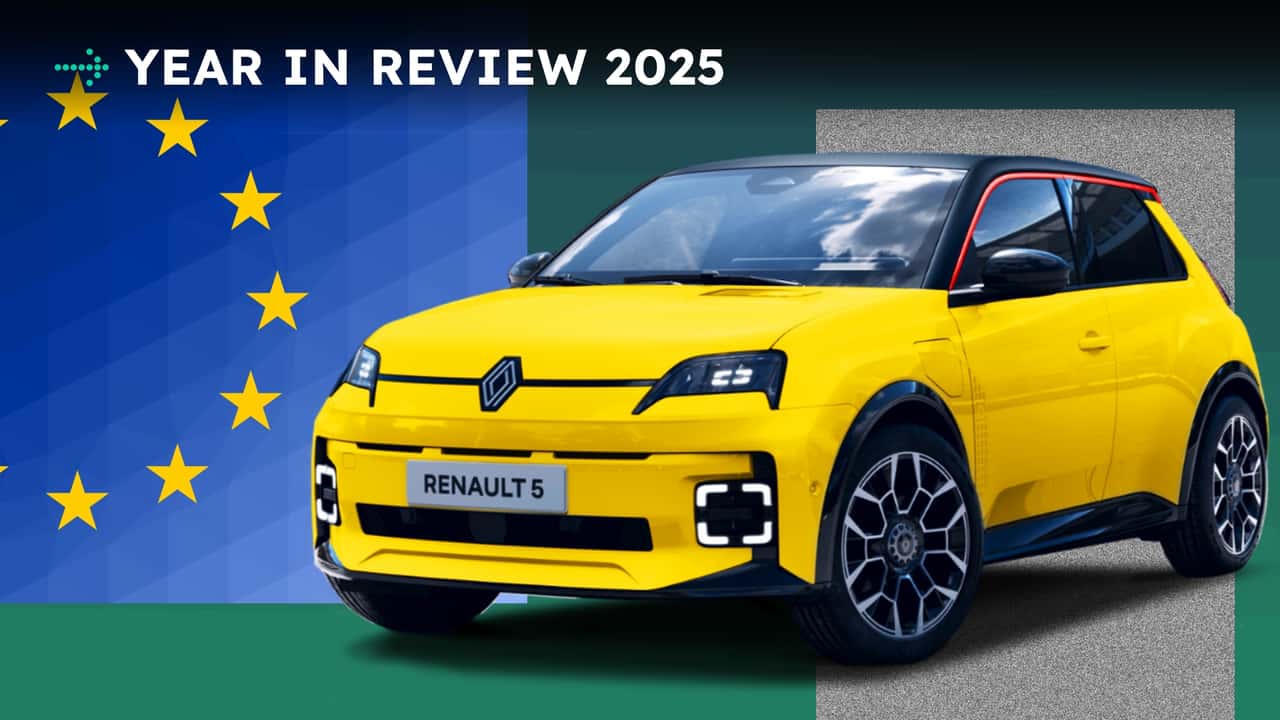
Photo by: InsideEVs
Andrei Nedelea 
By: Andrei Nedelea
Dec 31, 2025 at 11:15am ET
Add InsideEVs as a preferred source in Google
- (https://twitter.com/intent/tweet?url=https%3A%2F%2Finsideevs.com%2Ffeatures%2F783139%2Fev-adoption-europe-conclusions-2025%2F&text=Europe%E2%80%99s%20EV%20Boom%20Was%20Real%20in%202025.%20The%20Real%20Fight%20Starts%20In%202026&via=InsideEVs)
- copy
Share
Comment
More people are choosing to go electric in Europe—not necessarily because they care about the environment, but because it makes sense to do so, and it brings little compromise. Even in 2025, a year marked by the pullback of incentives and slower demand growth, the continent's EV sales rose.
But countless challenges lie ahead for the likes of Volkswagen, BMW, Renault and beyond. From Chinese competition to a charging arms race, here's what defined Europe's 2025 in the electric vehicle world—and what to expect in 2026 and beyond.
Charging Got Way Easier

Photo by: Ciprian Mihai/Autocritica
The expansion of public charging networks has made it remarkably easy to find an available, working charger. It's so much easier to charge today than it was even three years ago and the numbers back this up.
The European Commission reports that there are now more than 1 million chargers in the European Union. The statistic doesn't include Switzerland and Norway, which aren't part of the EU, but they do have expansive public and private charging networks.
EAFO data reveals that the outright leader is the Netherlands, which has almost 200,000 public chargers, more per capita than any other country in Europe, although most of them are low-power AC chargers. Norway, the world EV adoption leader, has around 30,000 stalls (around a third of which are DC fast chargers).
When I drove EVs across Europe earlier this year, I found that it wasn’t much more difficult than driving a combustion car, especially if you drive an 800-volt EV that only requires 20 minutes for an 80% top-up.
Europe’s EV Incentive Pullback
Photo by: Andrei Nedelea
Even though many European countries shrunk or eliminated EV incentives, subsidies and tax advantages, Europeans still bought 33% more plug-in vehicles through November of this year compared to 2024, according to a report published by Benchmark Mineral Intelligence, which includes the European Union, Switzerland, Norway and the United Kingdom.
The report estimates sales growth for plug-in vehicles in China at 19%, equating to over 11.6 million vehicles, compared with Europe’s 3.8 million.
The European Automobile Manufacturers’ Association (ACEA), which covers only the European Union, reported that pure electric vehicles accounted for 16.9% of all new vehicle purchases in the EU from January through November, up from 13.4% during the same period in 2024. That’s 1.66 million new EVs, mainly concentrated in Germany, Belgium, the Netherlands and France.

Stay informed with our newsletter every weekday
back
Subscribe For more info, read our Privacy Policy & Terms of Use.
ACEA data shows that EV sales in the EU went up 44.1% this November compared to the same month in 2024, with PHEVs also up an impressive 38.4% and non-plug-in hybrids rising more modestly at 4.2%.
The rising popularity of EVs created a sharp drop in pure combustion car sales. In France, sales of gas-powered cars declined by 32% in the first 11 months of 2025. Across the EU, the drop was 18.6%.
You Can’t Shake China
Photo by: InsideEVs/Andrei Nedelea
An increasing share of Europe’s plug-in cars is coming from China, as brands such as BYD and Geely expand across the continent. A Forbes report citing Schmidt Automotive Research found Chinese-brand plug-in share in Europe nearly doubled in 2025, rising from 3.4% to 6%, and it forecasts further growth in 2026 and beyond.
And if Europe’s charger growth feels impressive, China’s scale is still on another planet. According to China’s State Council, the country had 4.63 million public chargers and 14.7 million private chargers—about 19.3 million total—along with a public-network average power of 45.34 kW. China also has the highest charging power, with some new EVs capable of megawatt charging under the right conditions.
Europe, by contrast, largely tops out around 350–400 kW today—and that’s mostly fine, because most cars here can’t take much more than that anyway. Networks are starting to push higher, though: Ionity has begun deploying Alpitronic’s HYC1000 hardware, initially capped at 600 kW rather than the full 1 MW that they can provide.
Charging And Owning EVs Is Easy. Controlling The Supply Chain Is Hard
Photo by: Autocritica
Looking back at 2025, it’s clear Europeans want to buy EVs regardless of incentives. Sure, getting an EV cheaper with state help is nice, but it’s not needed as much now because there are more options at lower price points than before to choose from in Europe.
They are a lot more attainable than they were five years ago and a lot better, too, although still nowhere near reaching price parity with pure combustion cars. This year's sales star in Europe was the Renault 5 E-Tech, which I drove earlier this year. It gave me hope that local automakers still have a fighting chance against China. It's selling well, with Renault reporting that it has built over 100,000 examples in 15 months of production.
Renault is developing an even more affordable small EV, the Twingo E-Tech. And its budget arm, Dacia, is working on its own version based on the same platform, which promises an even lower entry price.
Chinese EV Exports Are Soaring, With Big Gains In Mexico And Europe
The EU Has Officially Dropped The 2035 Gas Car Ban
Ford Turns To Renault To Build Its Next Cheap EVs
The Safest Cars On Sale In Europe Now Are Chinese EVs
While buying and owning an EV in Europe is easier than ever and more people are doing so, the growing presence of Chinese manufacturers remains a cause for concern for the continent's domestic car industry. China holds an almost complete monopoly on battery production, and a significant share of the cells and upstream materials in Europe’s EVs still originate from China.
What do you think?
View
Comments
If this trend continues (and there’s no obvious end in sight), Europe could simply be trading its dependence on oil (most of which it imports) for a dependence on Chinese EV batteries. So Europe must first be able to produce EVs that buyers choose over Chinese-made models (and the new wave of next-generation EVs from Western manufacturers shows a lot of promise in that regard). Then it should look at ways of localizing the battery and EV tech supply chain to limit its dependence on China as much as possible.
What happens in 2026 will be a good indicator of where things are headed for the rest of the decade.
We want your opinion!
What would you like to see on Insideevs.com?
Take our 3 minute survey.
- The InsideEVs team
Share this Story
- (https://twitter.com/intent/tweet?url=https%3A%2F%2Finsideevs.com%2Ffeatures%2F783139%2Fev-adoption-europe-conclusions-2025%2F&text=Europe%E2%80%99s%20EV%20Boom%20Was%20Real%20in%202025.%20The%20Real%20Fight%20Starts%20In%202026&via=InsideEVs)
- copy
GO TO COMMENTS
(
)
Got a tip for us? Email: tips@insideevs.com
View all comments ( )
Trending
GM's Next-Generation EV Platform Has 30% Less Wiring And 20% Less Battery
Can The BMW iX3 Take Down The Tesla Model Y L And Rivian R2?
GM's OnStar AI Assistant Debuts In The Cadillac Lyriq
Electrify America’s Largest EV Charging Station Is Missing One Big Thing
latest articles
- Tesla Says 75% Of New Car Buyers Subscribe To FSD In North America Oct 21 - News -
- 'End Of The Year': Tesla Says Cybercab Customer Deliveries Will Begin Soon Oct 21 - News -
- The Midterms Won't Mean Much For EV Policy, Analysts Say Oct 21 - News -
- General Motors Isn't 'Walking Away' From EVs, Top Exec Says Oct 21 - News -
- GM Is Adding Its Own Version Of Tesla's Sentry Mode To Cars Oct 21 - News -
- Rivian Was The Second Best-Selling EV Brand In Q3 2026, But Still Far Behind Tesla Oct 21 - News -
- Chinese Cars Cost Way Less To Build Than European Ones. Here’s Why Oct 21 - China -
RECOMMENDED FOR YOU
Renault’s E-Space Concept Brings Back The Minivan With A 1980s-Inspired Twist
Tesla Says 75% Of New Car Buyers Subscribe To FSD In North America
The Renault 8 Gordini Is Back As A Gorgeous Rear-Wheel Drive EV
'End Of The Year': Tesla Says Cybercab Customer Deliveries Will Begin Soon
Chinese And European Car Companies Both Brought Their A-Game To The Paris Auto Show
The Midterms Won't Mean Much For EV Policy, Analysts Say
European Car Companies Can't Compete With Chinese Tech. In Paris, They Leaned On 'Heritage' Instead